What to see in Athens: the definitive guide to discovering its secrets in 2026 Vincci Hoteles

What to see in Athens: the definitive guide to discovering its secrets in 2026
What to see in Athens: the definitive guide to discovering its secrets in 2026
- 1. What to visit in Athens
- 1.1 Acropolis of Athens and the Parthenon: the ultimate treasure
- 1.2 Acropolis Museum: where the past comes to life
- 1.3 Ancient Agora: the beating heart of democracy
- 1.4 Plaka District: the traditional soul of Athens
- 1.5 Temple of Olympian Zeus and Arch of Hadrian: imperial grandeur
- 1.6 Lycabettus Hill: Athens’ ultimate viewpoint
- 1.7 Panathenaic Stadium: where the Olympic spirit was reborn
- 1.8 Athens Central Market: the local gastronomic heart
- 1.9 Annunciation of Saint Mary: Athens Cathedral
- 1.10 National Garden: Athens’ green lung
- 1.11 Monastiraki and Psiri: where ancient meets modern
- 2. The best viewpoints in Athens: unique perspectives of the Hellenic capital
- 3. Athenian gastronomy: a journey through Mediterranean flavors
- 4. Practical tips for visiting Athens
- 5. Vincci EverEden 4*: a luxury retreat on the Athens Riviera
- 6. Athens: much more than ancient ruins
This magical city, cradle of Western civilization, awaits you with its unique blend of ancient monuments that have survived for more than two millennia, soulful bohemian neighborhoods, breathtaking viewpoints, and a Mediterranean cuisine that wins hearts.
In this article, we reveal the must-see places that will make your stay in the Greek capital an unforgettable experience, along with hidden gems known only to those who truly love this city.
What to visit in Athens
Acropolis of Athens and the Parthenon: the ultimate treasure
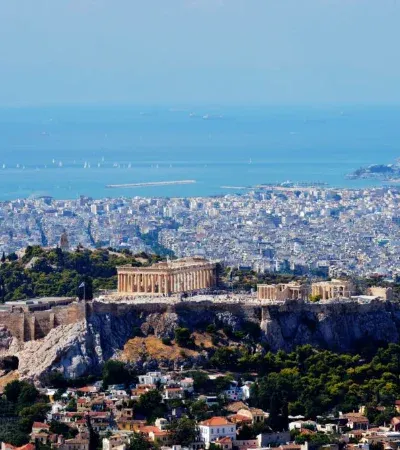
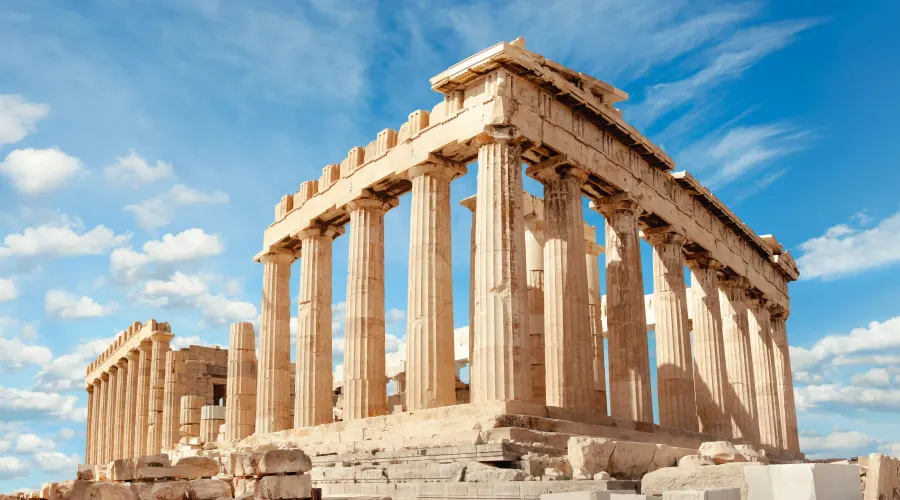
Your journey to Athens must begin, without a doubt, at the Acropolis, the city’s undisputed jewel and one of the most important archaeological complexes in the world, declared a World Heritage Site by UNESCO.The Parthenon, the temple dedicated to the goddess Athena, is the most iconic monument of the Acropolis and a masterpiece of Doric architecture. Interestingly, although at first glance the Parthenon appears to have perfectly straight lines, it was actually designed with slight curves (known as “optical refinements”) to correct visual illusions and make it look perfect from every angle. This mathematical precision reveals the genius of the Greek architects, who mastered geometry and human perception more than 2,400 years ago.
Once on the sacred hill of the Acropolis, don’t miss other essential temples such as the Erechtheion, famous for the Caryatids—those imposing sculpted female figures that support the temple’s porch—the elegant temple of Athena Nike, and the majestic Propylaea that mark the monumental entrance. Walking through the Acropolis is like stepping back into the golden age of Athens.
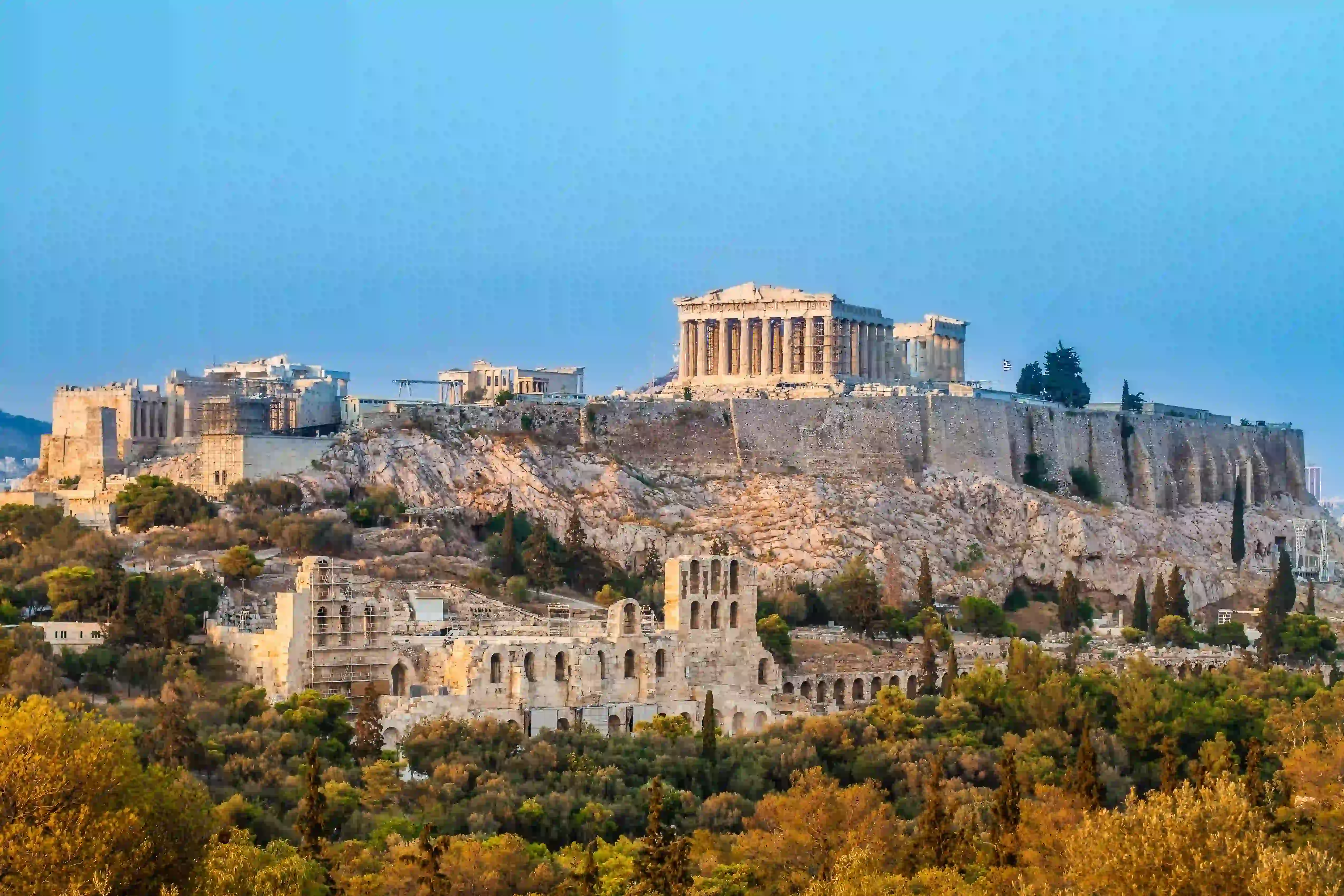 Acropolis of Athens.
Tips to make the most of your Acropolis visit
- Arrive early in the morning (opens at 8 a.m.) to avoid crowds and the midday Mediterranean heat.
- Wear comfortable non-slip footwear, as the marble polished by millions of footsteps can be slippery.
- Use the side entrance located on the southeast side near the Temple of Dionysus to avoid queues at the main gate.
Acropolis Museum: where the past comes to life
A few meters from the Acropolis, the Acropolis Museum is a modern architectural gem housing some of the most valuable pieces of ancient Greece. Designed by Swiss architect Bernard Tschumi, this cutting-edge building was conceived to offer a unique museum experience: its transparent glass floors allow you to see the archaeological excavations literally beneath your feet, creating a direct connection with layers of buried history.
One of the museum’s main highlights is the Parthenon Gallery, located on the top floor. This room is designed with the same dimensions and orientation as the original temple, and it displays the Parthenon friezes and sculptures exactly as they were arranged 2,500 years ago. This spatial reconstruction helps you understand how the temple looked in its full glory. The museum also houses the original Caryatids of the Erechtheion (the ones at the Acropolis are high-quality replicas installed to preserve the originals).
Don’t miss the museum’s terrace on the top floor, where you can enjoy breathtaking panoramic views of the Acropolis while having a coffee or a snack at the café-restaurant. It is the perfect place to reflect on the grandeur of what you have just seen.
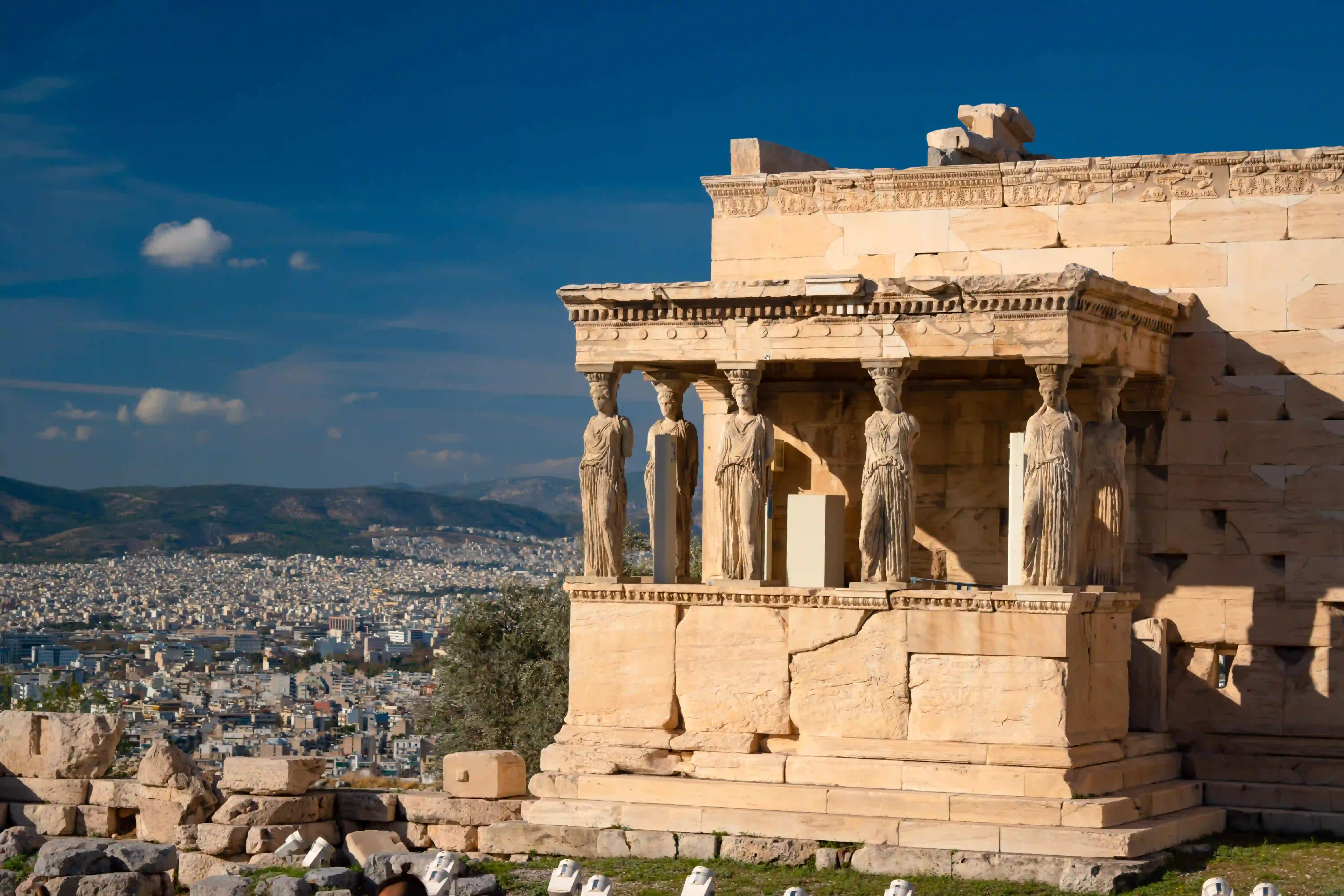 Caryatids of the Erechtheion - Athens.
Ancient Agora: the beating heart of democracy
The Ancient Agora was the true heart of public life in classical Athens: a multifunctional space where politics, trade, philosophy, and social life blended together. This is where Socrates delivered his philosophical speeches that would change Western thought, where citizens debated the future of their city-state, and where the first experiments in democracy in human history were born.
Among the remaining ruins, the Temple of Hephaestus stands out as the best-preserved Doric temple in all of Greece. Dedicated to Hephaestus, god of fire and metallurgy, this impressive building has survived more than 2,400 years almost intact, a remarkable testament to the craftsmanship of the ancient Athenians.
Another fascinating feature of the Agora is the Altar of the Twelve Gods, which the ancient Greeks considered the kilometer zero from which all distances in Athens were measured.
It is also worth visiting the Museum of the Agora, located in the reconstructed Stoa of Attalos (an ancient commercial portico). This museum offers a fascinating insight into daily life in ancient Athens.
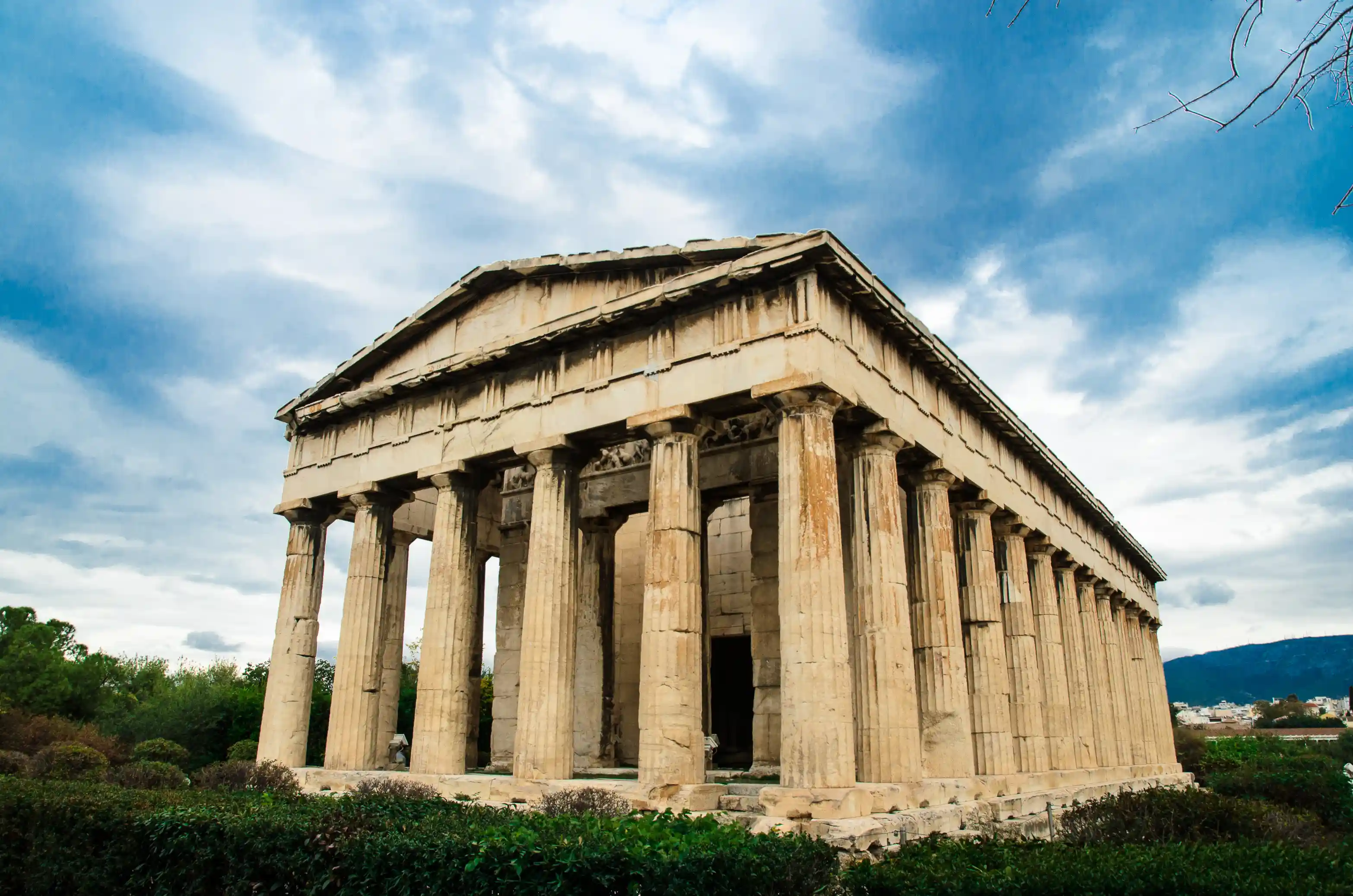 Temple of Hephaestus - Athens.
Plaka District: the traditional soul of Athens
Plaka, affectionately known as the "neighborhood of the gods" due to its proximity to the Acropolis, is one of the oldest and most picturesque districts of Athens. Its narrow cobbled streets, its colorful neoclassical houses, and its cozy traditional tavernas transport you to another era.
Plaka is a place where history blends harmoniously with modern life. Interestingly, beneath its streets lie remains of ancient Athens, and during building renovations it is not uncommon to uncover unexpected archaeological ruins.
Among the district’s architectural treasures stands the Tower of the Winds, a unique octagonal structure that in ancient times functioned simultaneously as a sundial, weather vane, and water clock (clepsydra). Each of its eight sides represents a different wind with sculpted reliefs depicting their characteristics. This tower is an exceptional testament to the scientific and astronomical knowledge of the ancient Greeks.
Don’t miss Anafiotika, a magical corner hidden within Plaka on the slopes of the Acropolis. This tiny neighborhood looks like it was taken straight from the Cycladic islands, with its whitewashed houses and narrow alleys filled with bougainvillea. It was built in the 19th century by workers from the island of Anafi, who recreated their homeland in the heart of Athens. It is an oasis of peace and beauty in the bustling city.
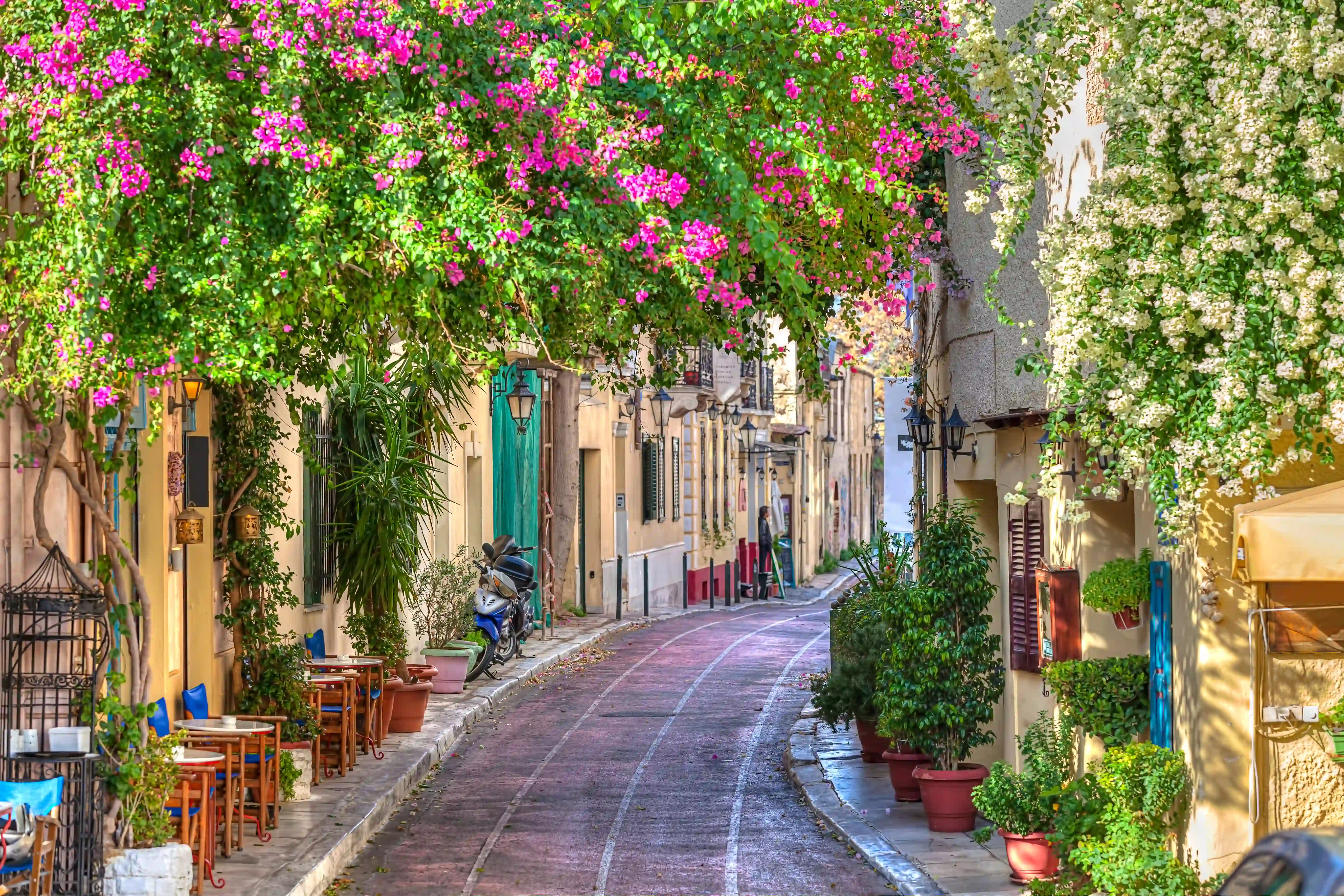 Plaka District - Athens.
Temple of Olympian Zeus and Arch of Hadrian: imperial grandeur
The Temple of Olympian Zeus, also known as the Olympieion, was one of the most ambitious constructions of Ancient Greece. Although construction began in the 6th century BC, it took more than 700 years to complete, finally finished under the Roman Emperor Hadrian in the 2nd century AD. In its prime, this colossal temple housed 104 Corinthian columns standing 17 meters high. Today only 15 remain, but they still convey the immense scale and magnificence of what once was.
Very close to the temple stands the Arch of Hadrian, an elegant triumphal arch erected in honor of the Roman emperor Hadrian in the 2nd century AD. This monument marked the symbolic boundary between the ancient city of Theseus (the mythical hero-king of Athens) and the new city of Hadrian. Interestingly, the arch bears inscriptions on both sides reflecting this duality: “This is Athens, the ancient city of Theseus” on one side, and “This is the city of Hadrian, not of Theseus” on the other, showing how the Roman emperor left his mark on the city’s history.
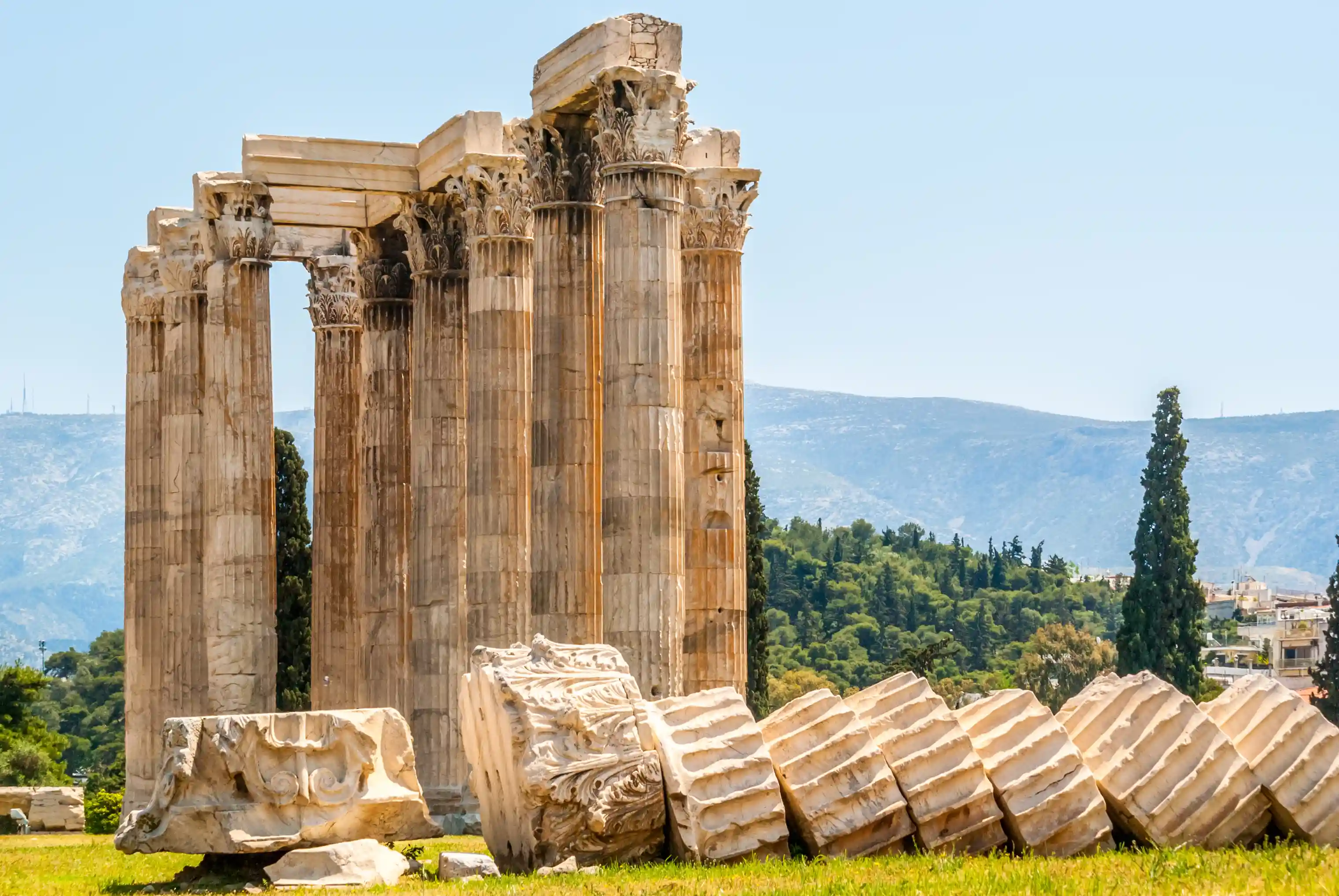 Temple of Zeus - Athens.
Lycabettus Hill: Athens’ ultimate viewpoint
Lycabettus Hill, at 277 meters high, is the highest point in Athens and offers the most spectacular panoramic views of the entire city. According to Greek mythology, the hill was formed when the goddess Athena accidentally dropped a massive rock she was carrying to fortify the Acropolis.
Climbing Lycabettus is an essential experience, especially at sunset, when golden tones bathe the city and the Acropolis gradually lights up. From the top, your view stretches from the majestic Acropolis to the Aegean Sea, and on especially clear days you can even spot the islands of the Saronic Gulf on the horizon.
You can reach the summit in two ways: on foot (a 30-minute climb worth it for the gradual views) or by funicular (perfect if you’re traveling with children or prefer to save energy). At the summit you will find the charming Chapel of St. George and several cafés and restaurants where you can enjoy one of the most memorable sunsets of your life.
Expert tip: arrive at least one hour before sunset to secure a good spot and enjoy the gradual transformation of light over the city. The moment the sun sets behind the Acropolis, painting the sky in red and orange, is unforgettable.
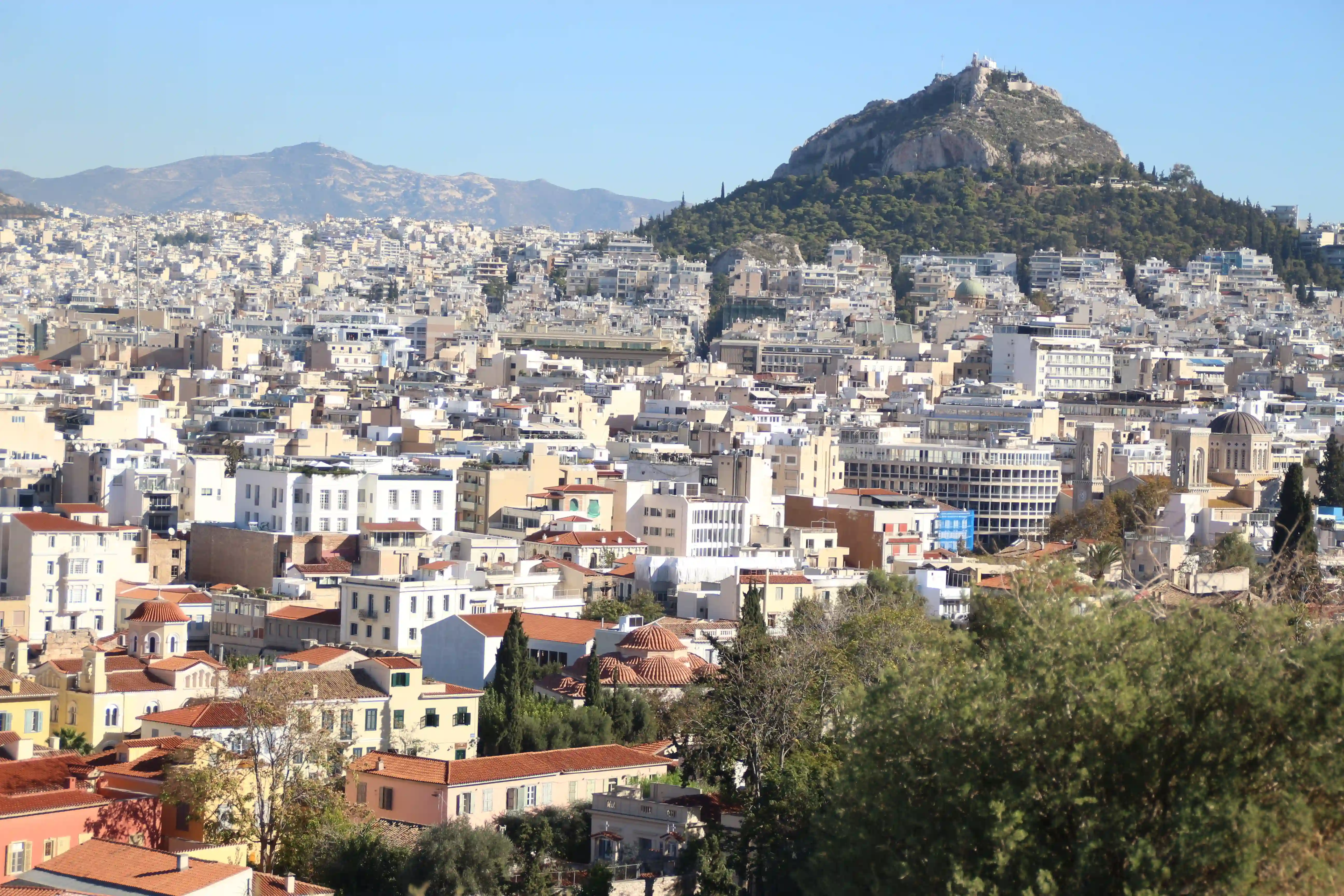 Mount Lycabettus - Athens.
Panathenaic Stadium: where the Olympic spirit was reborn
The Panathenaic Stadium, locally known as Kallimarmaro (“beautiful marble”), is a unique architectural wonder: the only stadium in the world built entirely from white marble from Mount Pentelicus. This remarkable venue has a history spanning more than 2,300 years.
Originally built in the 4th century BC for the Panathenaic Games (athletic competitions honoring goddess Athena), the stadium was magnificently rebuilt for the first modern Olympic Games in 1896. This is where the Olympic spirit was revived after nearly 1,500 years of silence, marking the rebirth of a tradition that now unites the world.
The stadium holds 50,000 spectators and is built on the ruins of the original ancient stadium. Interestingly, it also served as the start and finish line of the marathon during the 2004 Olympic Games, and it is where the Olympic flame begins its global journey every four years.
During your visit, you can walk on the track, sit in the historic stands, and even stand on the winners’ podium for a memorable photo. It is an experience that connects you directly with the history of sport and the Olympic spirit.
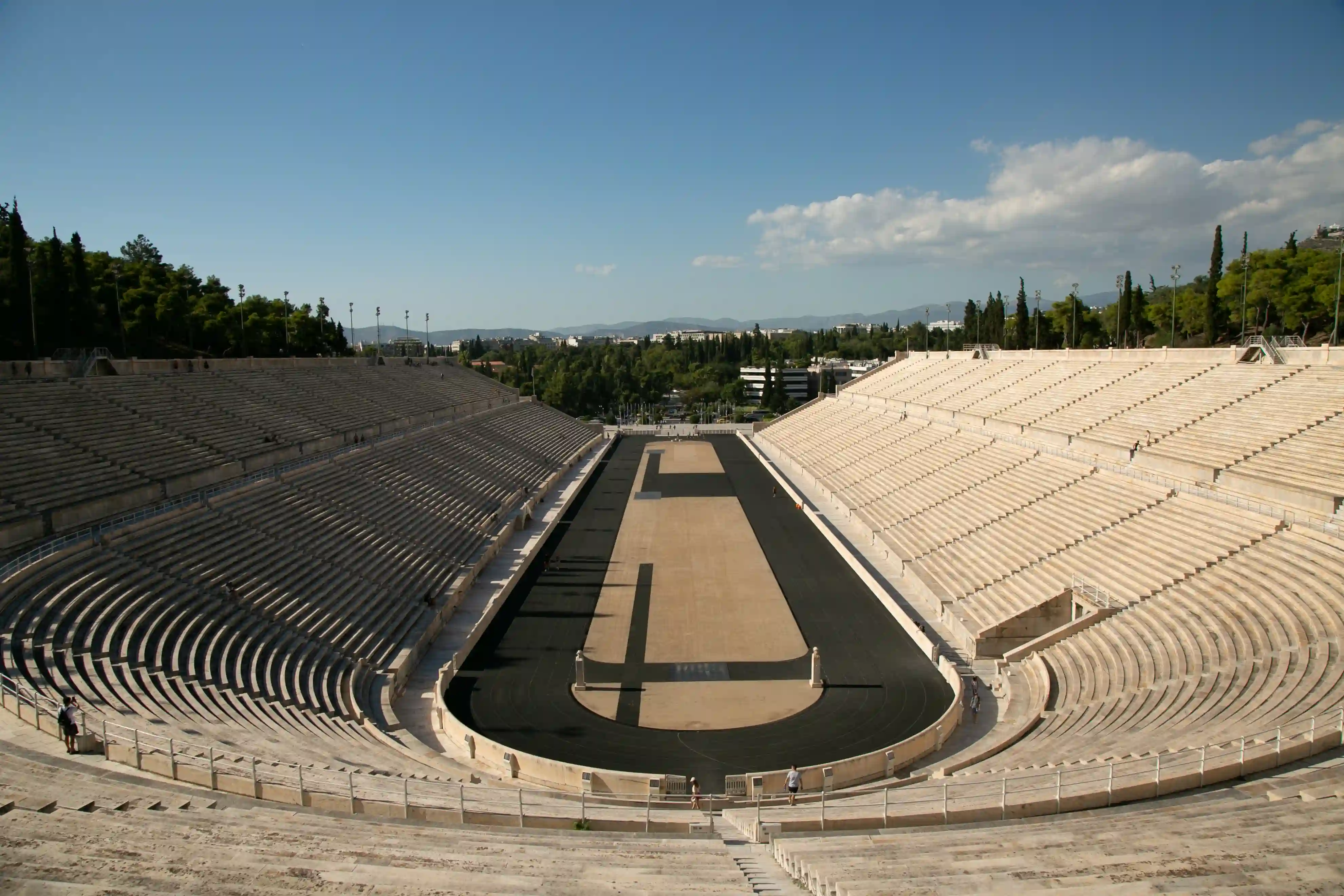 Panathenaic Stadium - Athens.
Athens Central Market: the local gastronomic heart
The Athens Central Market, known as Varvakeios Agora, is where Athenians have been shopping for fresh produce for more than 140 years. This traditional market, housed in a 19th-century neoclassical building, is an authentic reflection of daily life in Athens and a unique sensory experience that immerses you in the aromas, colors, and flavors of Greek cuisine.
The market is divided into two main covered sections: one dedicated to meat and the other to fish and seafood, each with its own atmosphere. Outside and in the surrounding streets you will find stalls overflowing with fresh fruit, seasonal vegetables, olives of every imaginable variety, aromatic spices, nuts, golden honey, artisanal cheeses, and herbs that perfume the air.
A fun fact: this is a real working market, not a tourist attraction. It is not a tourist market, but a place where locals do their daily shopping, vendors shout their offers, buyers haggle passionately, and the atmosphere is delightfully chaotic in a Mediterranean way.
If you visit around lunchtime, don’t miss the small traditional tavernas around the market where you can enjoy authentic Greek dishes made with fresh ingredients.
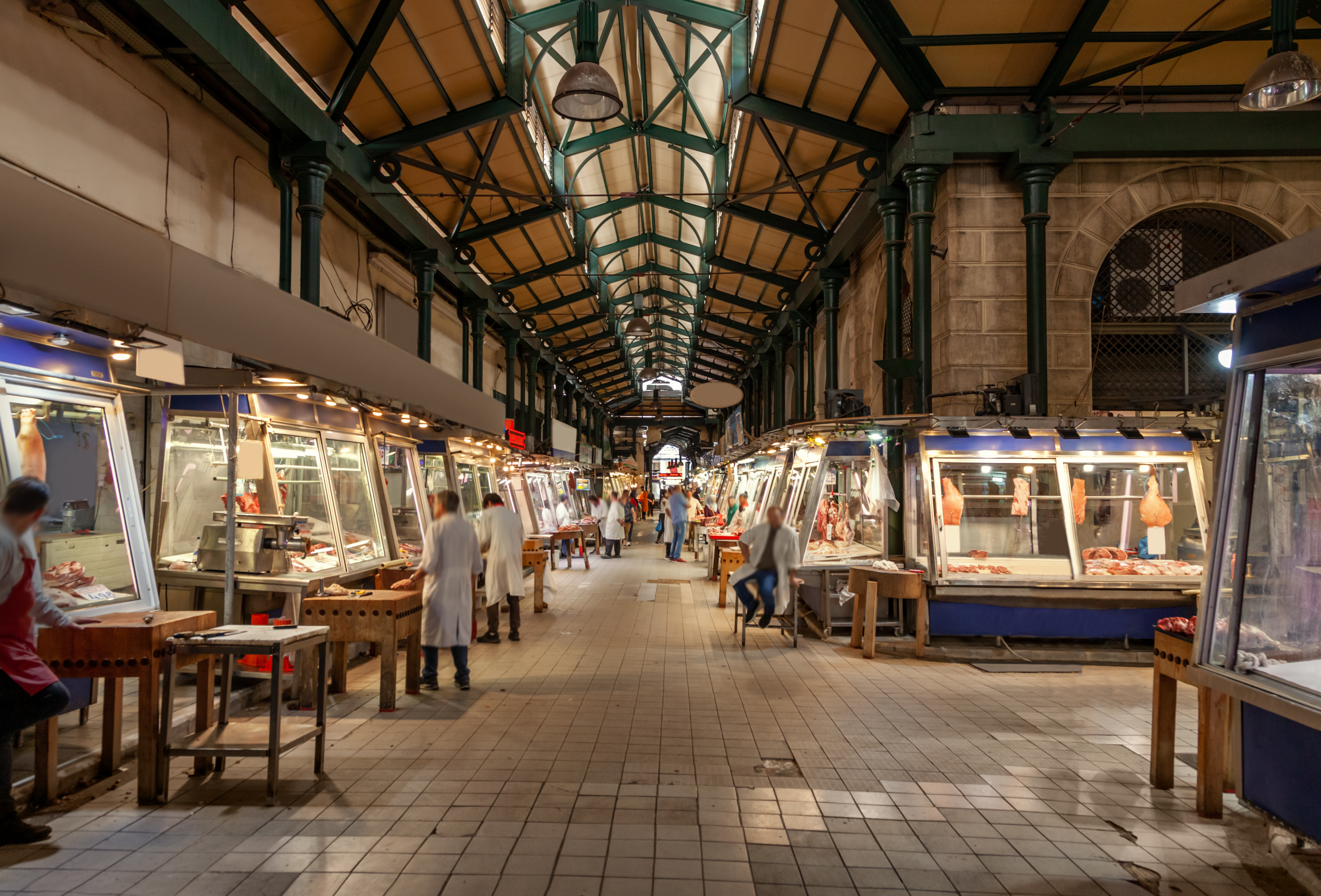 Athens Central Market.
Annunciation of Saint Mary: Athens Cathedral
The Metropolitan Cathedral of the Annunciation of Saint Mary, known as the Athens Cathedral or Mitropoli, is the main Orthodox temple of the Greek capital and the seat of the Archbishop of Athens. This imposing Neo-Byzantine building, constructed between 1842 and 1862 using marble from 72 demolished churches, is a symbol of Greek religious and cultural identity.
The cathedral stands out for its majestic three-nave architecture and impressive central dome. Inside, beautifully decorated with frescoes and mosaics, it hosts the most important religious ceremonies in the country, including royal weddings and funerals. The acoustics are exceptional, especially during Orthodox liturgical chants that fill the space with a mystical atmosphere.
Don’t miss right next to the cathedral the tiny church of Agios Eleftherios (also known as the “Small Metropolis”), a beautiful 12th-century Byzantine church that contrasts with its monumental neighbor. This architectural gem, decorated with ancient reliefs and reused pagan sculptures, is considered one of the most beautiful Byzantine churches in Athens.
Admission to the cathedral is free, but visitors are expected to respect service times and dress appropriately. If you are lucky enough to attend a ceremony, you will experience the depth of Greek Orthodox tradition.
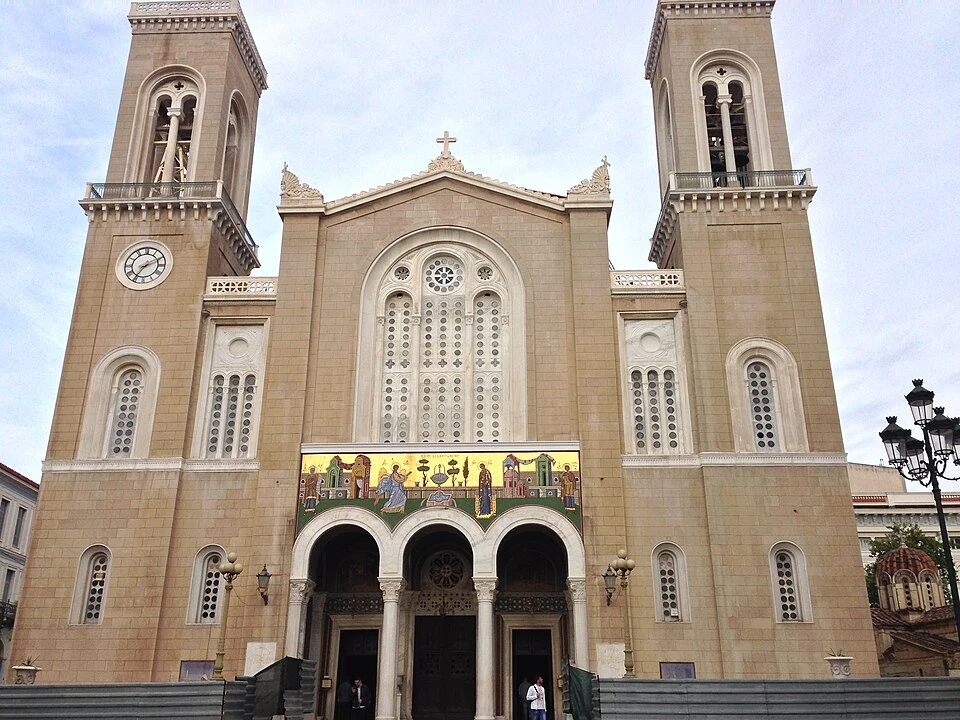 Annunciation Cathedral of Saint Mary - Photo by Dimitris Kamaras via Wikimedia Commons (CC BY 2.0).
National Garden: Athens’ green lung
This vast 15-hectare park, located just behind the Greek Parliament, was created in 1838 by Queen Amalia of Greece, who brought more than 500 plant species from around the world to design this botanical retreat.
Walking through its shaded paths feels like discovering a different, more peaceful Athens. The garden features small ponds with ducks and turtles, Roman ruins scattered among the vegetation, a small zoo with native animals, and benches under centuries-old trees where you can rest.
The gardens are especially popular with locals at sunset, when families gather and children play in the green spaces. It is the perfect place for a break between sightseeing stops.
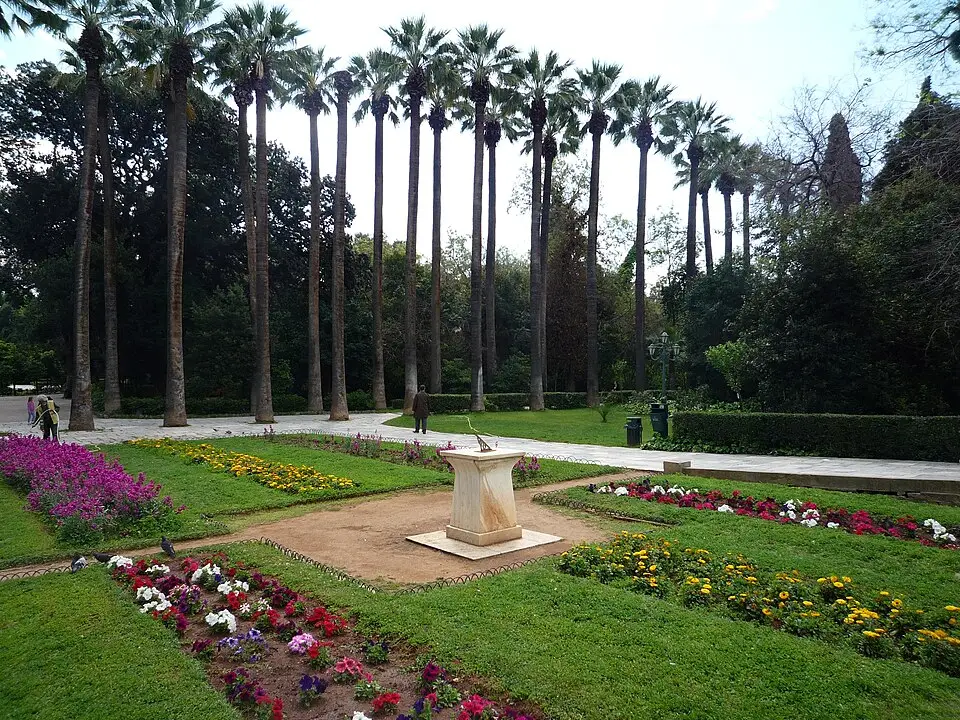 National Garden of Athens - Photo by Sjaak Kempe via Wikimedia Commons (CC BY 2.0).
Monastiraki and Psiri: where ancient meets modern
Monastiraki is one of Athens’ most eclectic neighborhoods, where ancient history blends with modern commerce. Its famous square, dominated by the 18th-century Tzistarakis Mosque (now a ceramics museum), is a meeting point for locals and visitors, especially on Sundays when the flea market spreads through the surrounding streets.
The streets of Monastiraki form a fascinating maze of antique shops, souvenir stalls, second-hand bookstores, artisan jewelry shops, and street food stands. The aroma of freshly made souvlaki fills the air, mixing with Greek coffee and spices. This is also one of the best places to find handmade leather sandals, a craft tradition dating back to antiquity.
Just west of Monastiraki lies Psiri, Athens’ bohemian and artistic district. Once a neglected industrial area, Psiri has undergone a remarkable transformation in recent decades, becoming the epicenter of alternative nightlife and contemporary urban culture.
Its streets are covered in striking street art murals, former warehouses have become galleries and design studios, and hidden squares host some of the city’s coolest bars and restaurants. It is the perfect place to feel the pulse of modern, creative Athens.
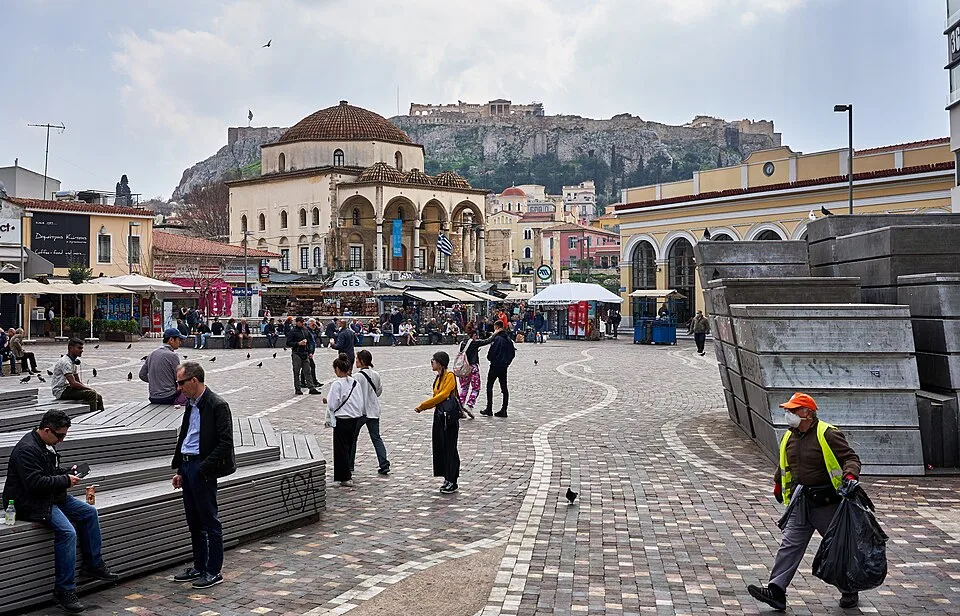 Monastiraki Athens Photo by George E. Koronaios via Wikimedia Commons (CC BY-SA 4.0).
The best viewpoints in Athens: unique perspectives of the Hellenic capital
Besides the famous Lycabettus Hill, Athens hides several lesser-known but equally spectacular viewpoints:
Filopappou Hill (147 meters high):
A less crowded alternative to Lycabettus. Located southwest of the Acropolis, this wooded hill offers spectacular views of the Parthenon without the crowds. At its summit stands the Monument of Philopappos, a 2nd-century AD mausoleum dedicated to Roman consul Gaius Julius Philopappos. The path is surrounded by pines and cypresses.The Areopagus:
A gray marble rock formation located northwest of the Acropolis. This small hill holds great historical importance: it was the seat of the Areopagus Council, the supreme court of ancient Athens. It is also where, according to the Acts of the Apostles, Saint Paul delivered his famous speech about the “Unknown God.” Today it is one of the best places to watch sunset over the Acropolis.
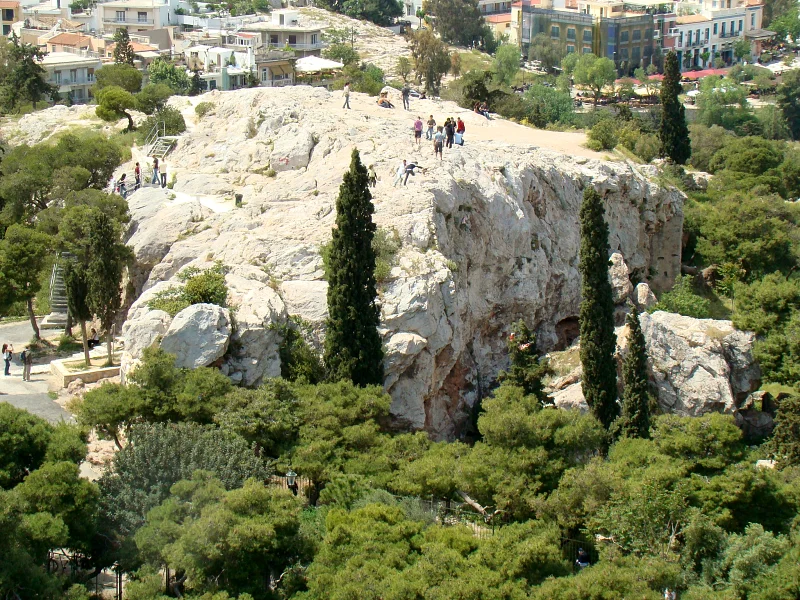 Areopagus in Athens - Photo by O.Mustafin via Wikimedia Commons (CC0).
Athenian gastronomy: a journey through Mediterranean flavors
Greek cuisine is a philosophy of life based on fresh products, extra virgin olive oil, aromatic herbs, and recipes passed down through generations. In Athens, you will discover Mediterranean cuisine at its finest.
Must-try dishes:
- Moussaka: the national dish, a Greek lasagna with layers of eggplant, spiced minced meat, tomato, and béchamel sauce baked in the oven.
- Souvlaki: skewered meat, usually pork or chicken, marinated with lemon and spices, served with pita bread, tzatziki, and salad.
- Horiatiki: traditional Greek salad with tomatoes, cucumber, red onion, Kalamata olives, green pepper, and feta cheese, dressed with olive oil and oregano.
- Saganaki: fried cheese, crispy outside and melted inside, often flambéed with brandy.
- Dolmades: vine leaves stuffed with rice, herbs, and sometimes minced meat.
- Baklava and Galaktoboureko: traditional desserts made with filo pastry, honey, nuts, and custard cream.
Gastronomy tip: in Athens, places that call it “souvlaki” are usually more authentic than those using the term “gyros”.
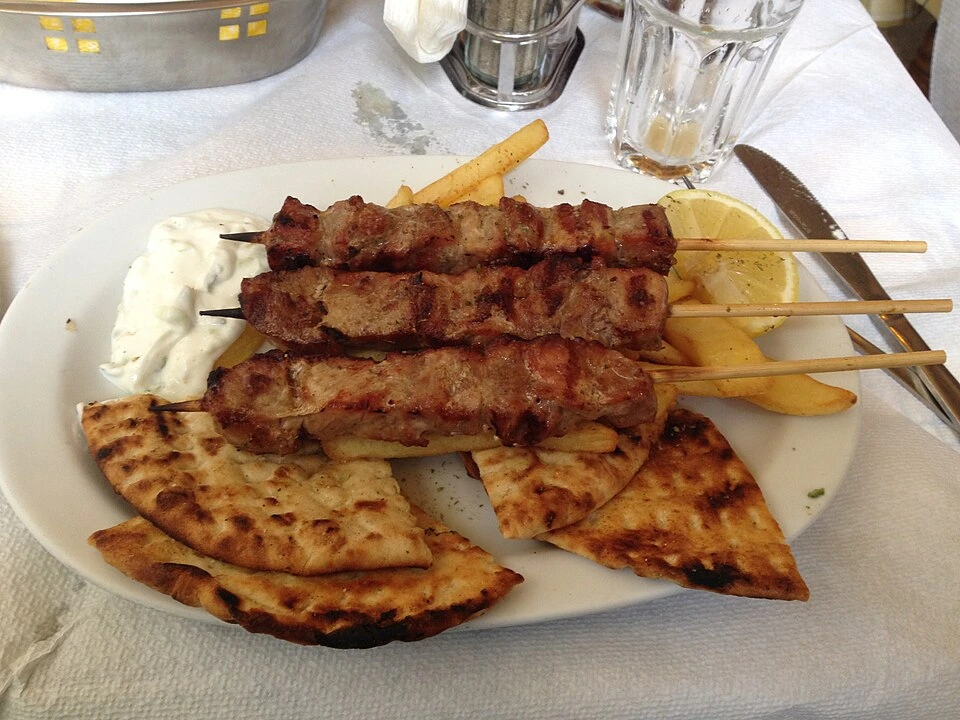 Souvlaki - Photo by Miyagawa via Wikimedia Commons (CC BY-SA 4.0).
Practical tips for visiting Athens
Best time to visit Athens
Spring (April–May) and autumn (September–October) are the best seasons to visit Athens. Temperatures are pleasant (20–28°C), ideal for walking around the city. You’ll also avoid the massive cruise-ship crowds of July and August. Winter (December–February) is mild but can be rainy, with the advantage of lower prices and fewer tourists.
Getting around the city
The Athens Metro is modern, efficient, and connects the airport with the city center. Line 3 (blue line) takes you from the airport to Monastiraki in about 40 minutes. Taxis are relatively affordable. For short distances, walking is always the best option.
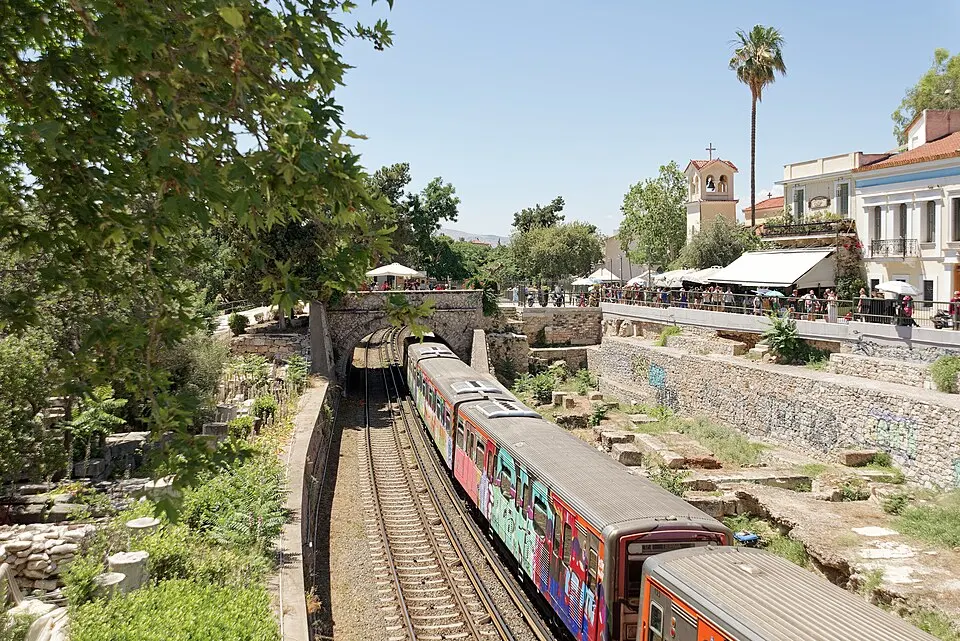 Athens urban train - Photo by Jakub Halun via Wikimedia Commons (CC BY-SA 4.0).
Local schedules and customs
Athenians follow a Mediterranean rhythm of life: shops usually close between 2:00 p.m. and 5:00 p.m. for siesta, especially in summer. Restaurants serve food late (many Greeks dine after 10 p.m.), and nightlife lasts until dawn. On Sundays most shops are closed, although restaurants and attractions remain open.
Vincci EverEden 4*: a luxury retreat on the Athens Riviera
On the Athens Riviera, about 40 kilometers from the city center, Vincci EverEden 4* is that place where the journey slows down. Here, the city’s hustle gives way to the sound of the sea, pine forests surrounding the hotel, and a sense of disconnection that invites you to extend your stay.
Set on a 45,000 m² estate in perfect harmony with nature, its location allows you to easily combine both sides of the destination: Athens’ cultural richness and a privileged natural environment. In less than an hour you can go from the Acropolis to the Aegean horizon, or visit Cape Sounion, where the Temple of Poseidon stands dramatically on the cliffs.
With 259 carefully designed rooms, the complex invites you to enjoy the Mediterranean lifestyle at a relaxed pace. Its multiple pools, its exclusive EverEden Beach Club on Eden Beach (recently fully renovated), and its relaxation spaces turn your stay into an experience defined by calm sea views and resort comfort.
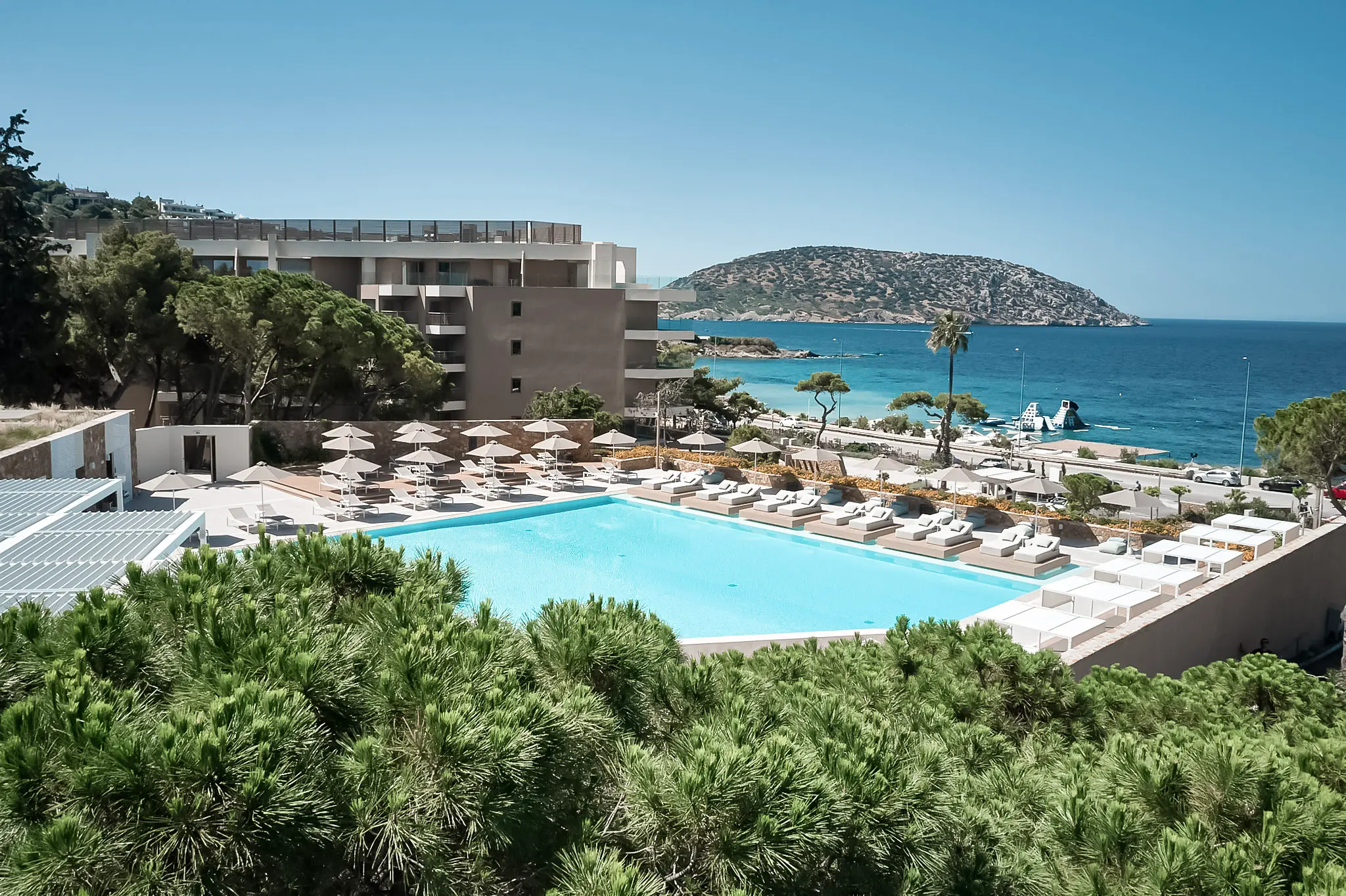 Exteriors of Vincci EverEden 4*.
Regarding its gastronomic offer, the resort caters to all tastes. Its Seasons restaurant focuses on local ingredients and seasonal produce, strengthening the link between cuisine, territory, and Mediterranean culture. It features a live show-cooking area where chefs prepare dishes in front of guests. Its Japanese restaurant Hokyo offers an authentic experience based on delicate flavors, premium ingredients, and careful presentation. Grove Bar provides a relaxed yet sophisticated atmosphere with a spacious terrace ideal for evening drinks. Il Centro Pool Snack invites guests to enjoy outdoor dinners overlooking the pool and the sunset over Aegina Island, with a menu combining local and international dishes. EverEden Beach Snack & Restaurant completes the offer with sea views, cocktails, coffees, fresh juices, salads, pokes, pizzas, meats, and fish during the day, and a more refined evening menu celebrating Greek and Mediterranean cuisine by candlelight.
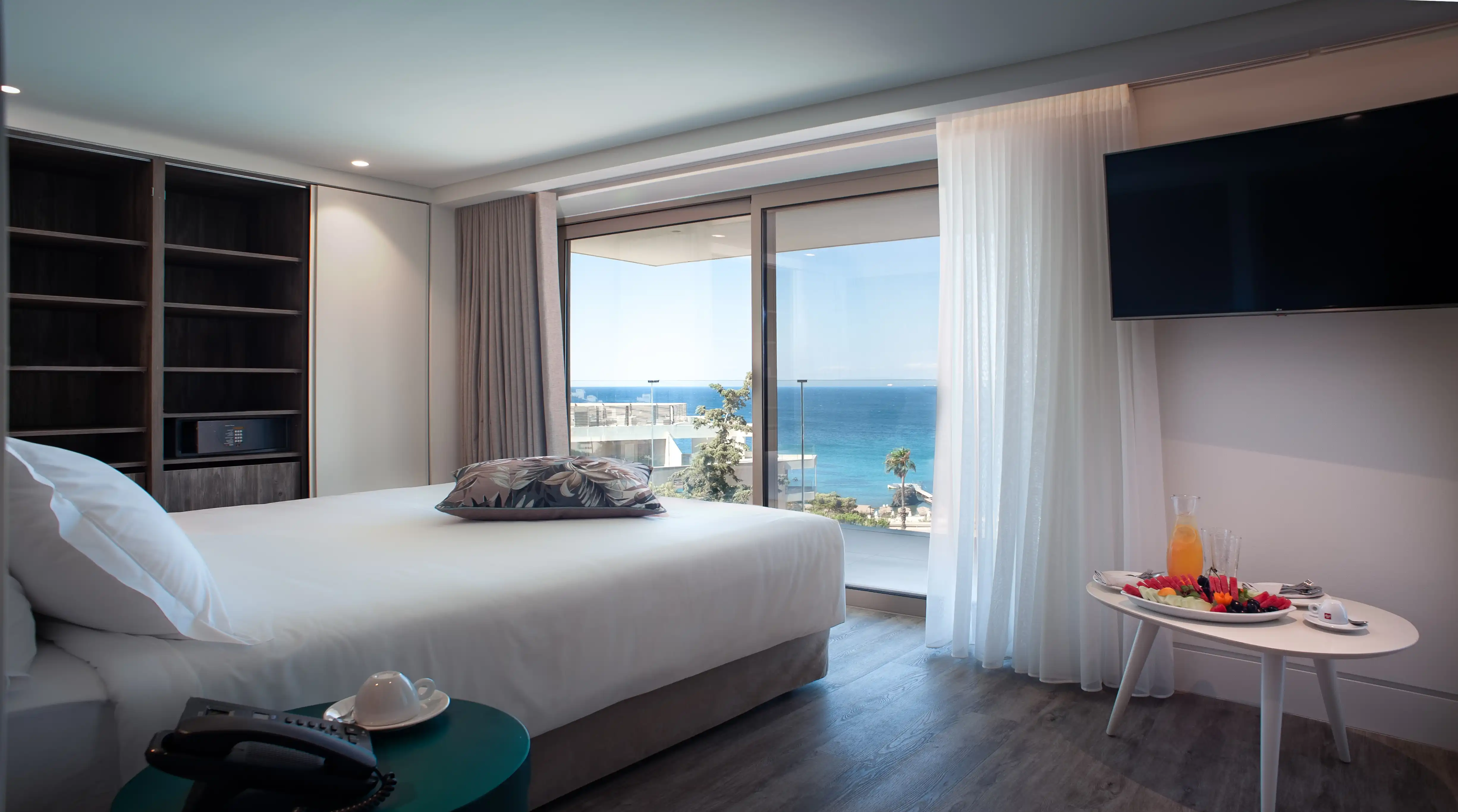 Vincci EverEden room.
All accompanied by attentive service rooted in Greek hospitality that you will already have begun to feel in the city.
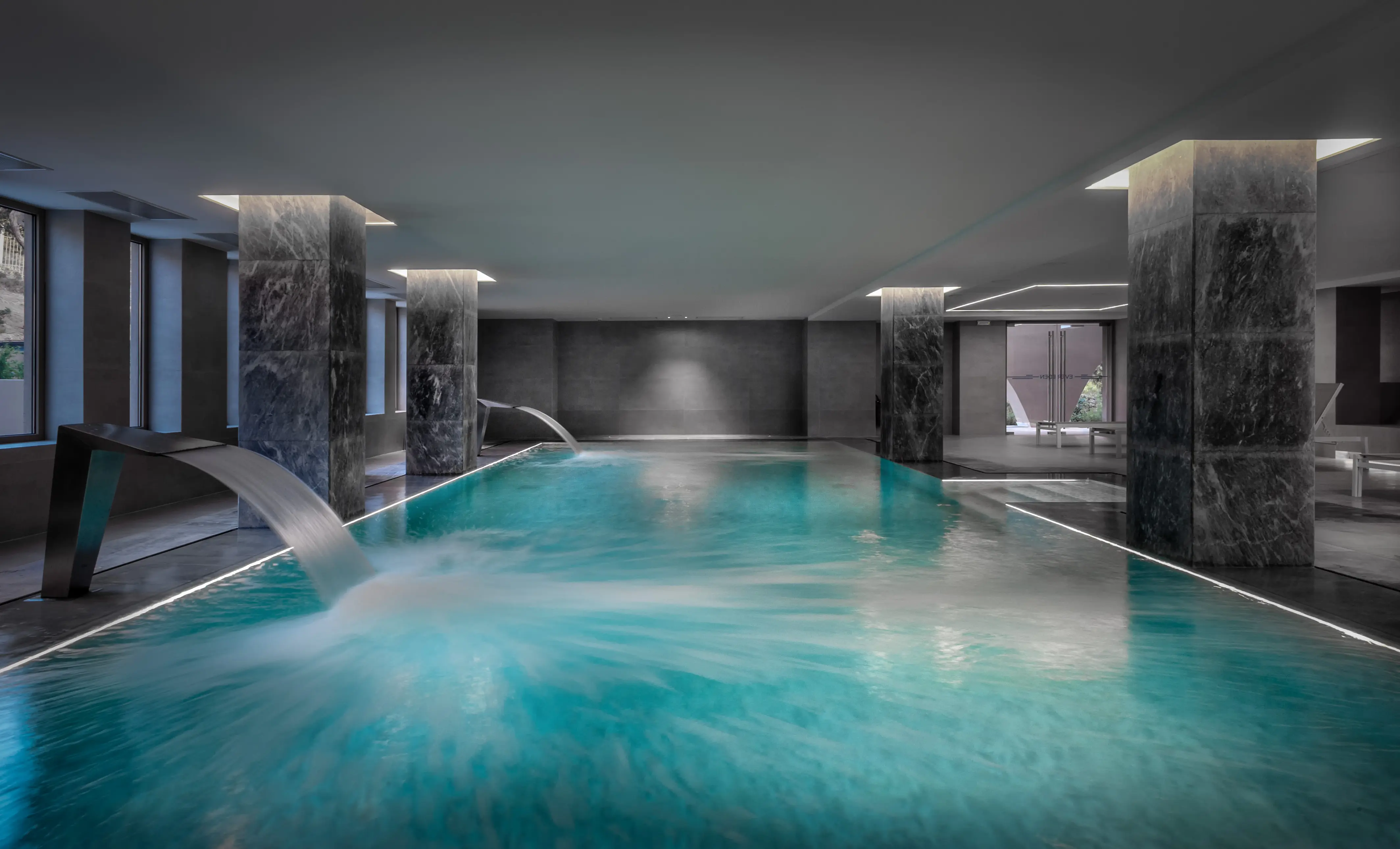 Vincci EverEden spa.
Athens: much more than ancient ruins
After exploring Athens’ treasures together—from the timeless columns of the Parthenon to the bohemian corners of Psiri, passing through bustling markets and breathtaking viewpoints—it becomes clear that Athens cannot be reduced to a single definition.
It is not just an open-air museum, although its archaeological monuments are unmatched. It is not only a gastronomic destination, although its Mediterranean cuisine is outstanding. It is not just a modern capital, although its urban energy is contagious. Athens is, in reality, the harmonious sum of all these facets: a living city that has integrated 3,000 years of history into its dynamic present.
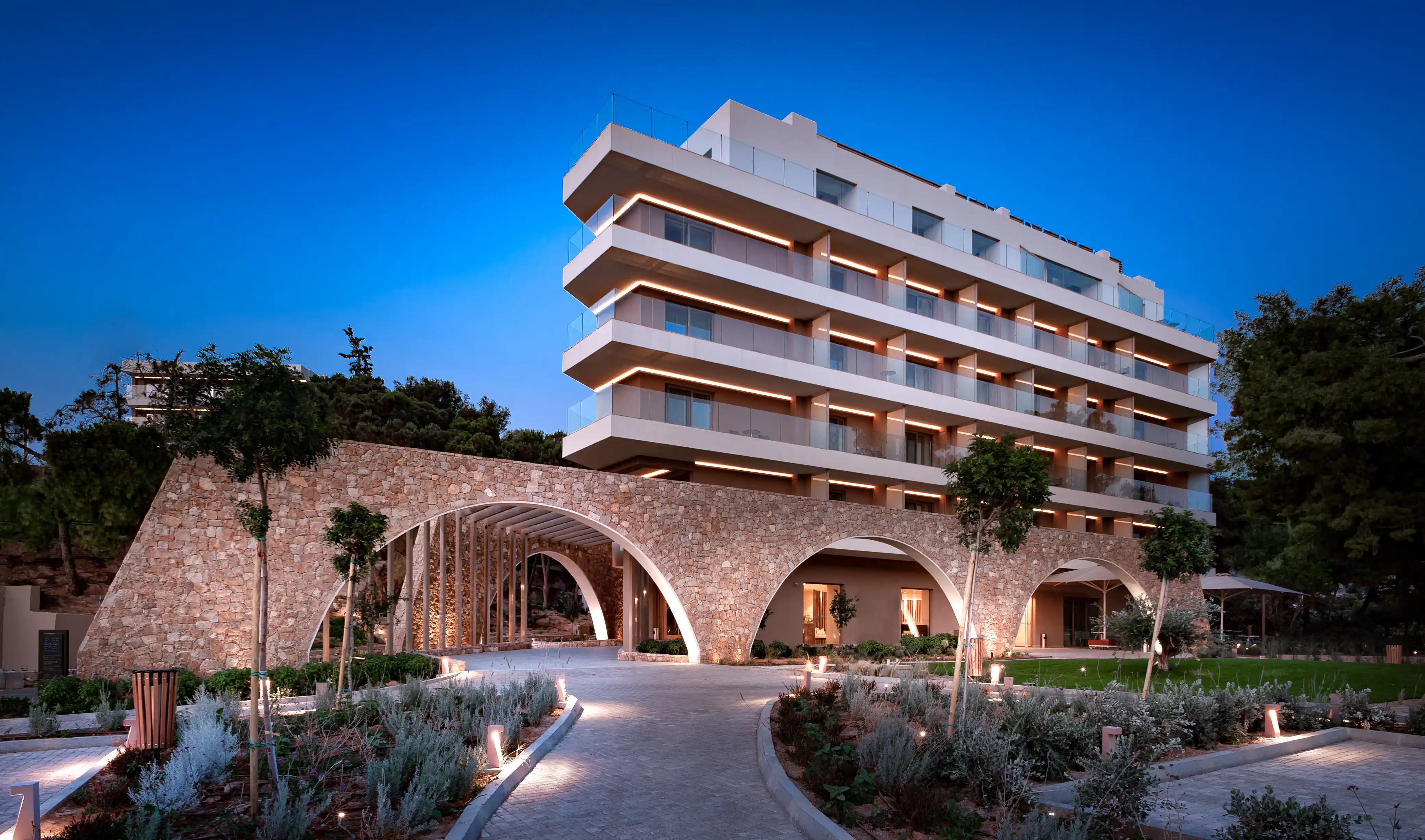 Facade of Vincci EverEden 4* in Athens.
What makes Athens special are not only its monuments—however impressive—but the way the city invites you to experience history as something tangible and present. Here you can have breakfast overlooking the Parthenon, walk streets once walked by Socrates, and at night share ouzo in tavernas where traditional moussaka recipes have remained unchanged for generations.
Every traveler finds their own Athens: some fall in love with its archaeological heritage and philosophical roots; others discover its soul in traditional neighborhoods; many are seduced by Greek hospitality and its relaxed lifestyle; and all, without exception, carry with them the golden image of sunset over the Acropolis.
Enjoy your travels more
subtitle_categories_andromeda
Vincci Talks
Our podcast, a series of close encounters where relaxed conversations are held on various topics of general interest, with special guests who bring their expert and unique insights.
View moreVincci Expert
Immerse yourself in Vincci Local Expert and explore the best of each destination where our hotels are located. From local events to exclusive activities at our establishments, here you will find everything you need to live a Vincci experience.
View moreVincci Experiences
Explore the space where we store all the unique experiences you can have with us.
View moreVincci Getaways and destinations
Discover in our blog all the information about getaways and holiday destinations you need.
View moreVincci Gastronomy
Explore our posts section about the exquisite gastronomy we offer.
View moreUnique Events
Explore our posts section, the place to discover detailed information about special events, both social and corporate.
View moreTravel tips and recommendations
Our selection of posts offering an indispensable guide to finding tips and recommendations that inspire every journey.
View moreVincci Sustainable and responsible
Discover in our posts section about our sustainable and responsible initiatives.
View moreVincci Corporate Hotels
Our section of highlighted news reflecting the excellence and trajectory of our hotel chain.
View more