Barcelona’s Diagonal 50 years ago: a different city, a different life Vincci Hoteles

Barcelona’s Diagonal 50 years ago: a different city, a different life
Barcelona’s Diagonal 50 years ago: a different city, a different life
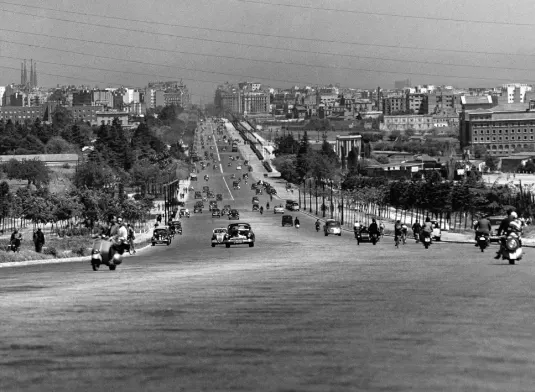
Imagining what Diagonal looked like in the 1970s is, in a way, like glimpsing a Barcelona in the midst of transformation: a city that had not yet experienced its Olympic boom, was far from the sophistication it enjoys today, and where cars dominated urban space.
An Unfinished Avenue in Constant Development
Although Diagonal now appears to be a perfectly defined artery, the reality is that its development was slow and rather uneven for decades. In fact, it was not completed until the beginning of the 21st century, something that may come as a surprise considering the importance it holds within the city today.
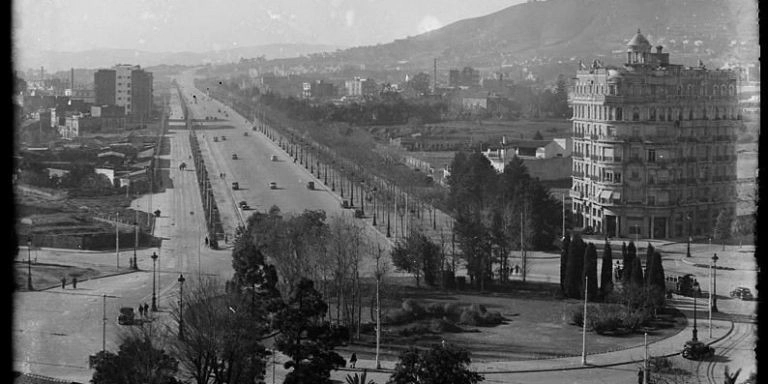
In the 1970s, many sections still reflected that gradual growth. Some areas were fully established, with commercial activity and recognisable buildings, while others felt very different, with vacant lots, more scattered construction, and an urban landscape that was still taking shape. This combination meant that travelling along Diagonal was not a uniform experience, but rather a journey through different “versions” of Barcelona, depending on the section you found yourself in.
The Reign of the Automobile
If there is one defining image of Diagonal 50 years ago, it is that of a major avenue designed almost exclusively for traffic. At that time, urban planning revolved around the car, and this was reflected in the way spaces were designed and used. Pedestrians played a much more secondary role, while cycling, as we know it today, was practically absent from daily life.
Some sections, particularly in more open areas such as Les Corts and the surroundings of Francesc Macià, already featured very wide roadways, with multiple lanes in each direction and widths that exceeded 80 metres in certain places. This scale reinforced the idea of a grand avenue, a major axis within the city, but at the same time made it feel less welcoming for those who simply wanted to walk.
Modern Architecture and Urban Contrast
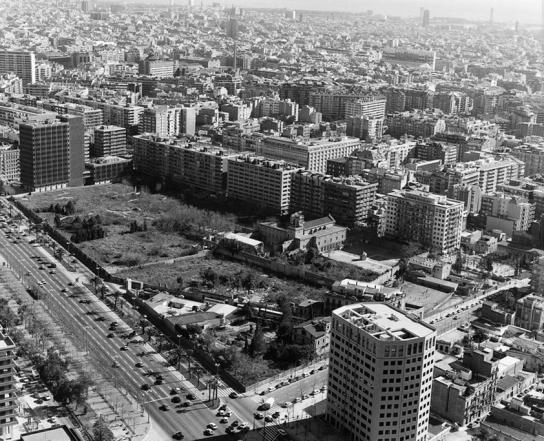
The 1960s and 1970s marked a turning point in the appearance of Diagonal. During this period, the city began embracing a more functional architecture, more closely aligned with the demands of economic growth and an aesthetic that moved away from the ornamental details of Modernisme. Along the avenue, office buildings, high-rise residential blocks, and corporate headquarters began to emerge, following a much more restrained architectural language: straight lines, repetitive façades, the use of concrete, glass, and steel, and a clear focus on functionality.
This transformation was neither immediate nor uniform. In many sections, these new constructions stood directly alongside buildings dating from the late 19th and early 20th centuries, creating a highly visible contrast. Bourgeois mansions, Modernist buildings with ornate balconies, and grand entrances remained part of the landscape, while next to them appeared larger, more austere structures with little ornamentation, representing a different vision of the city.
It was also during this period that Diagonal began to establish itself as a prestigious location for companies and institutions. Architecture ceased to be purely residential and started projecting an image of modernity and progress. The result was an avenue with an identity still in the making, where different layers of Barcelona’s history coexisted and where each building seemed to tell a different chapter of the city’s evolution.
Less Global Commerce, More Local Identity
Unlike today, when Diagonal is associated with luxury hotels and international corporate headquarters, half a century ago the landscape looked very different. Local neighbourhood businesses, workshops, and traditional offices predominated, while economic activity was more closely connected to the local community than to the global marketplace. The cafés and shops of the time reflected the lives of residents and the local middle classes, and the pace of the avenue was slower, although signs of modernisation were already beginning to emerge.
It was undoubtedly an important avenue, a key route connecting different parts of the city, but it had not yet achieved the global prominence that today makes it one of Barcelona’s most important showcases. Walking along it back then felt more like a journey through the city’s everyday life than through its international image, giving it a much warmer and more human character than the one we perceive today.
From Transit Route to Living Space
Over the decades, Diagonal has evolved at the same pace as Barcelona itself. What in the 1970s was a major thoroughfare designed almost exclusively for vehicle traffic has now been transformed through urban development projects that have created new public spaces, improved its connection with the sea, and introduced pedestrian and green areas. The commitment to more sustainable mobility, including cycle lanes and efficient public transport, has helped make the avenue more welcoming and accessible for everyone.
Today, Diagonal reflects how the city has learned to look beyond mere functionality and to value the experience of those who live in and visit it. It is an example of how an urban space can reinvent itself without losing its identity, combining history, modernity, and everyday life in every section, every corner, and every building that shapes it.
Stay on the Great Diagonal: Vincci Mae 4*
If you would like to discover this evolution of Diagonal for yourself, Vincci Mae 4* is the perfect choice. Located in a building dating back to 1945 and redesigned by Jaime Beriestain, it combines sophistication and modernity with a distinctive urban flair inspired by Mae West and the irreverent spirit of 1930s New York. Its interiors feature dark tones, wood, red accents, and geometric lines that create a minimalist and harmonious atmosphere throughout its 85 rooms, all designed to offer comfort and an elegant retreat after a day in the city.
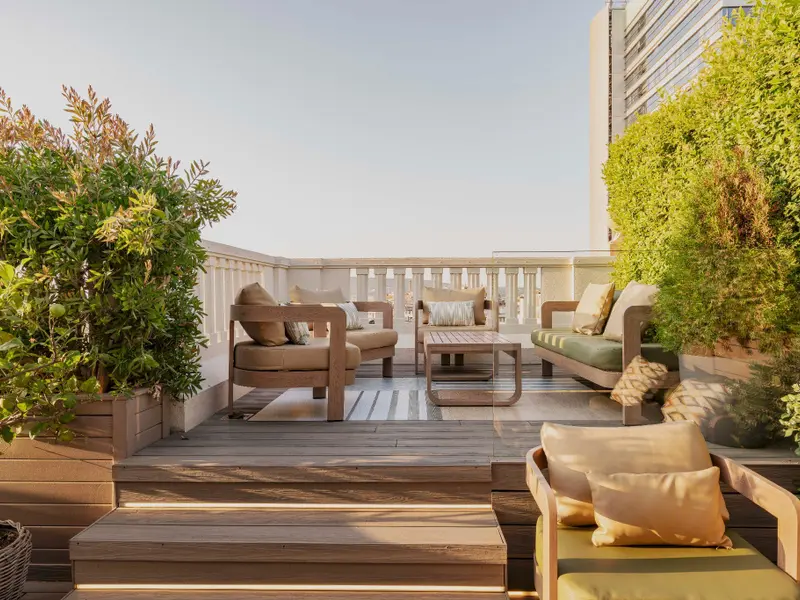
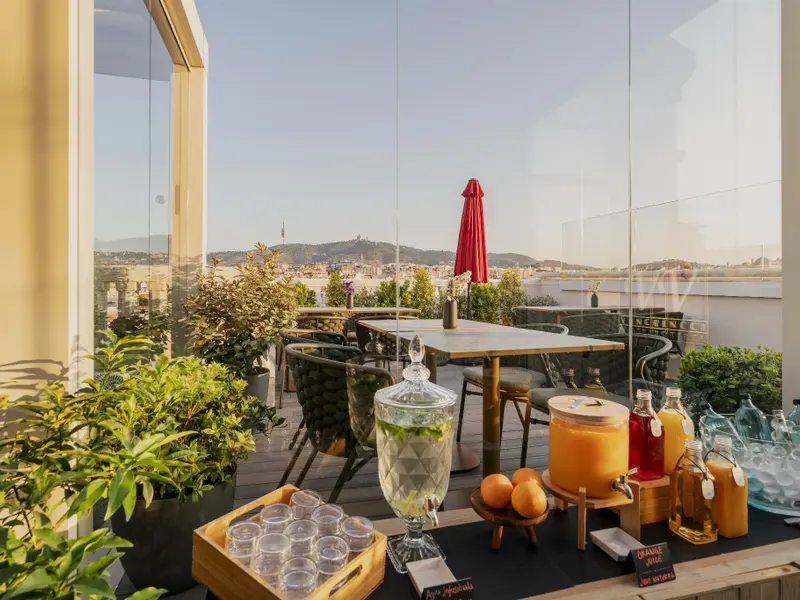
The hotel also stands out for its terrace on the ninth floor, home to the “West” bar and restaurant, with access to a rooftop featuring a plunge pool and views over Barcelona. Guests can enjoy a menu based on local ingredients with European and Asian influences, as well as a carefully curated cocktail selection. This space, together with the hotel’s rooms, provides the added value that makes the stay an essential part of the journey.
Conclusion
Looking back at Avinguda Diagonal 50 years ago is a reminder that cities are not static, but rather organisms in constant evolution. What was once a major avenue dominated by traffic, fragmented and still developing, is now a dynamic axis that combines history, architecture, commerce, and urban life.
This transformation has not happened by chance. It reflects a more human-centred, open, and connected way of thinking about the city and the people who live in and visit it. Diagonal has evolved from a place of transit into a destination that invites people to stay, explore, and experience Barcelona from multiple perspectives.
And that is precisely where its value lies today: in its ability to evolve without losing its essence. Because travelling along Diagonal today is not simply about moving from one place to another, but about becoming part of an urban story that continues to be written every day.
Enjoy your travels more
subtitle_categories_andromeda
Vincci Talks
Our podcast, a series of close encounters where relaxed conversations are held on various topics of general interest, with special guests who bring their expert and unique insights.
View moreVincci Expert
Immerse yourself in Vincci Local Expert and explore the best of each destination where our hotels are located. From local events to exclusive activities at our establishments, here you will find everything you need to live a Vincci experience.
View moreVincci Experiences
Explore the space where we store all the unique experiences you can have with us.
View moreVincci Getaways and destinations
Discover in our blog all the information about getaways and holiday destinations you need.
View moreVincci Gastronomy
Explore our posts section about the exquisite gastronomy we offer.
View moreUnique Events
Explore our posts section, the place to discover detailed information about special events, both social and corporate.
View moreTravel tips and recommendations
Our selection of posts offering an indispensable guide to finding tips and recommendations that inspire every journey.
View moreVincci Sustainable and responsible
Discover in our posts section about our sustainable and responsible initiatives.
View moreVincci Corporate Hotels
Our section of highlighted news reflecting the excellence and trajectory of our hotel chain.
View more