What to see in Barcelona’s Gothic Quarter: 13 must-see spots Vincci Hoteles

What to see in Barcelona’s Gothic Quarter: 13 must-see spots
What to see in Barcelona’s Gothic Quarter: 13 must-see spots
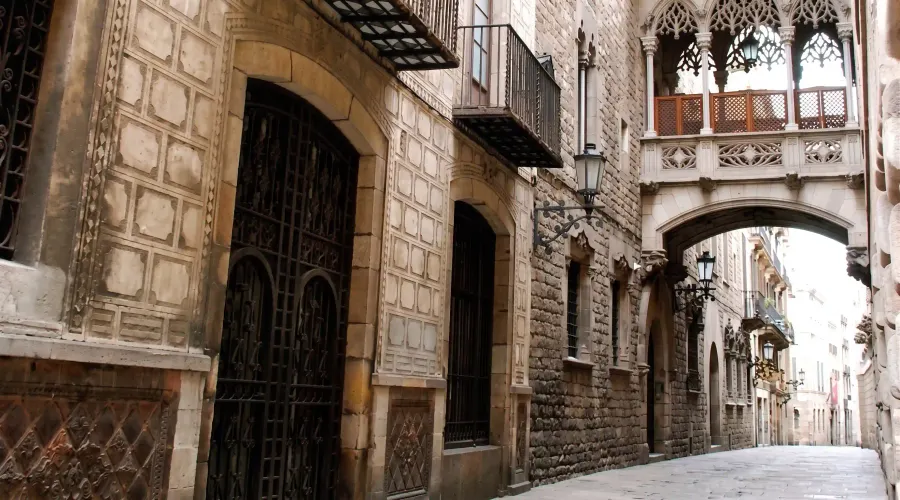
But there is something surprising when you start looking closely at the neighbourhood: not everything that appears medieval actually is. The current Barri Gòtic was built over the core of the ancient Roman Barcino, but much of its monumental appearance was transformed and consolidated during the 19th and 20th centuries. In fact, until the beginning of the 20th century, the area was known as the “Cathedral Quarter”.
That is why, to get to know it properly, you have to discover both the major monuments and some of its less obvious corners. In this article, we suggest a route to discover it on foot and tell you where you can stay to make the most of your visit.
Table of contents:
- What to visit in Barcelona’s Gothic Quarter: a step-by-step route
- 1. Plaça Catalunya and Portal de l’Àngel: the gateway
- 2. Santa Anna Parish Church
- 3. The Kiss Mural: a contemporary surprise
- 4. Barcelona Cathedral: the must-see in the Gòtic
- 5. Plaça Nova: the gateway to Roman Barcelona
- 6. Barcelona’s Bishop’s Bridge: the most famous postcard view
- 7. Plaça Sant Jaume
- 8. Temple d’August: hidden Roman Barcelona
- 9. Plaça del Rei and MUHBA
- 10. El Call: the streets of the former Jewish quarter
- 11. Plaça de Sant Felip Neri: one of the most special squares
- 12. Santa Maria del Pi: one of the neighbourhood’s great Gothic churches
- 13. Plaça Reial: the end of the route
- What to do in Barcelona’s Gothic Quarter besides visiting monuments
- Practical tips for visiting the Gothic Quarter
- Conclusion: why Barcelona’s Gothic Quarter is magical
What to visit in Barcelona’s Gothic Quarter: a step-by-step route
1. Plaça Catalunya and Portal de l’Àngel: the gateway
If you start your route from Plaça Catalunya, the most natural way into the Gòtic is along Portal de l’Àngel avenue, a commercial thoroughfare today that in the Middle Ages marked one of the main gates in the city walls.
Just a few steps away from the main bustle, you can turn towards Plaça de la Vila de Madrid to see an authentic Roman funerary road in the open air, or look for the alleyway of Montsió, where Els Quatre Gats preserves the bohemian spirit of the young Picasso.
The neighbourhood is surrounded by different metro stations, including Plaça Catalunya, Urquinaona, Liceu, Drassanes and Jaume I, so you can easily reach the starting point of the route.
From here, the most interesting part begins: you will leave the large avenues behind and gradually enter the network of historic streets of the Gothic Quarter. We recommend starting this route early in the morning, when the shops have not yet opened.
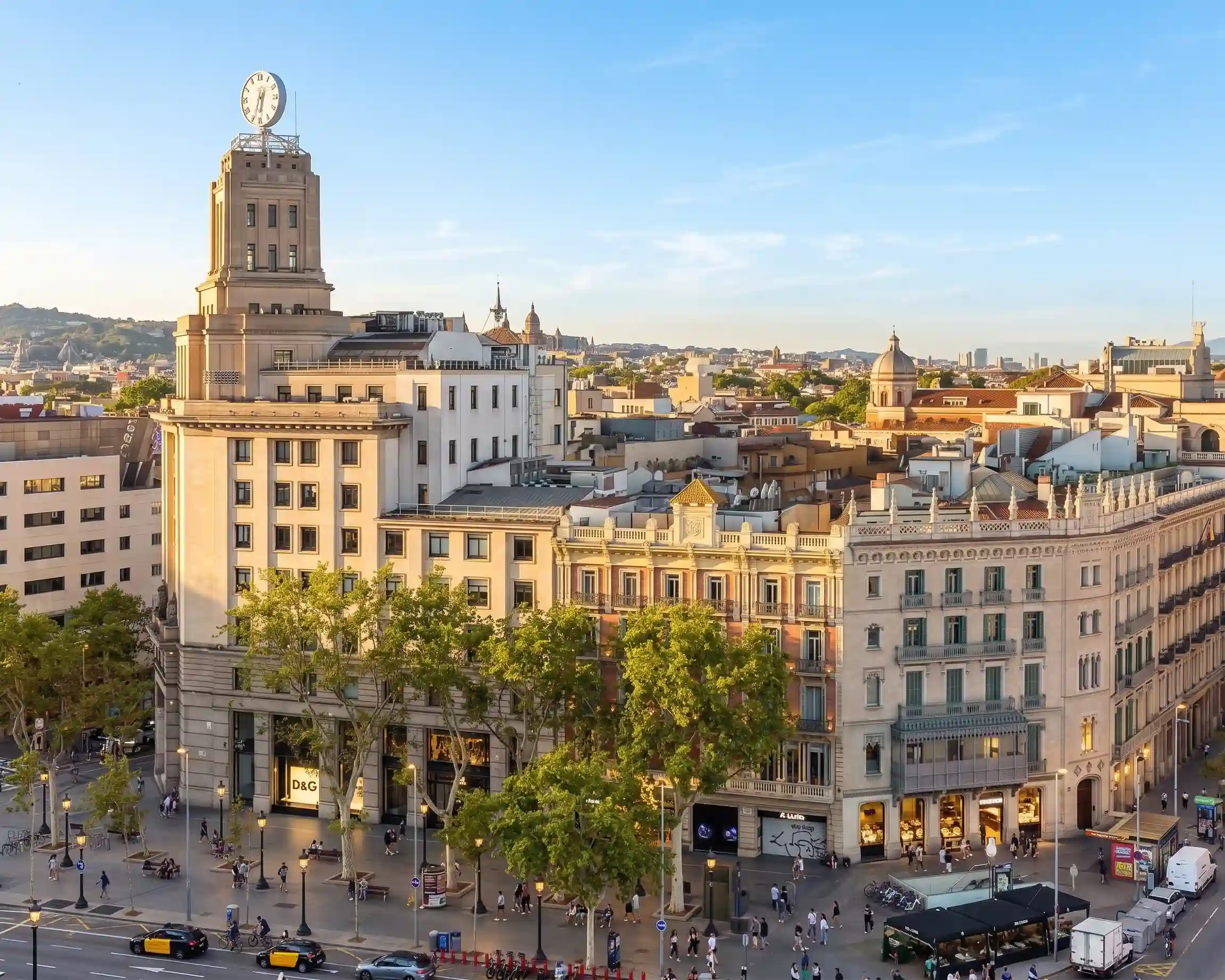 Plaça Catalunya.
2. Santa Anna Parish Church
Continue through the Santa Anna area until you reach the parish church that gives this part of the neighbourhood its name.
Its history dates back to the 12th century. Although Gothic elements were added later, it preserves a mixture of styles that helps us understand the extent to which the Gòtic brings together buildings from different periods. The cloister belongs to the former Santa Anna monastery.
In this area, the streets become narrower, small squares appear and the heritage stops feeling like a succession of isolated monuments and instead becomes a whole.
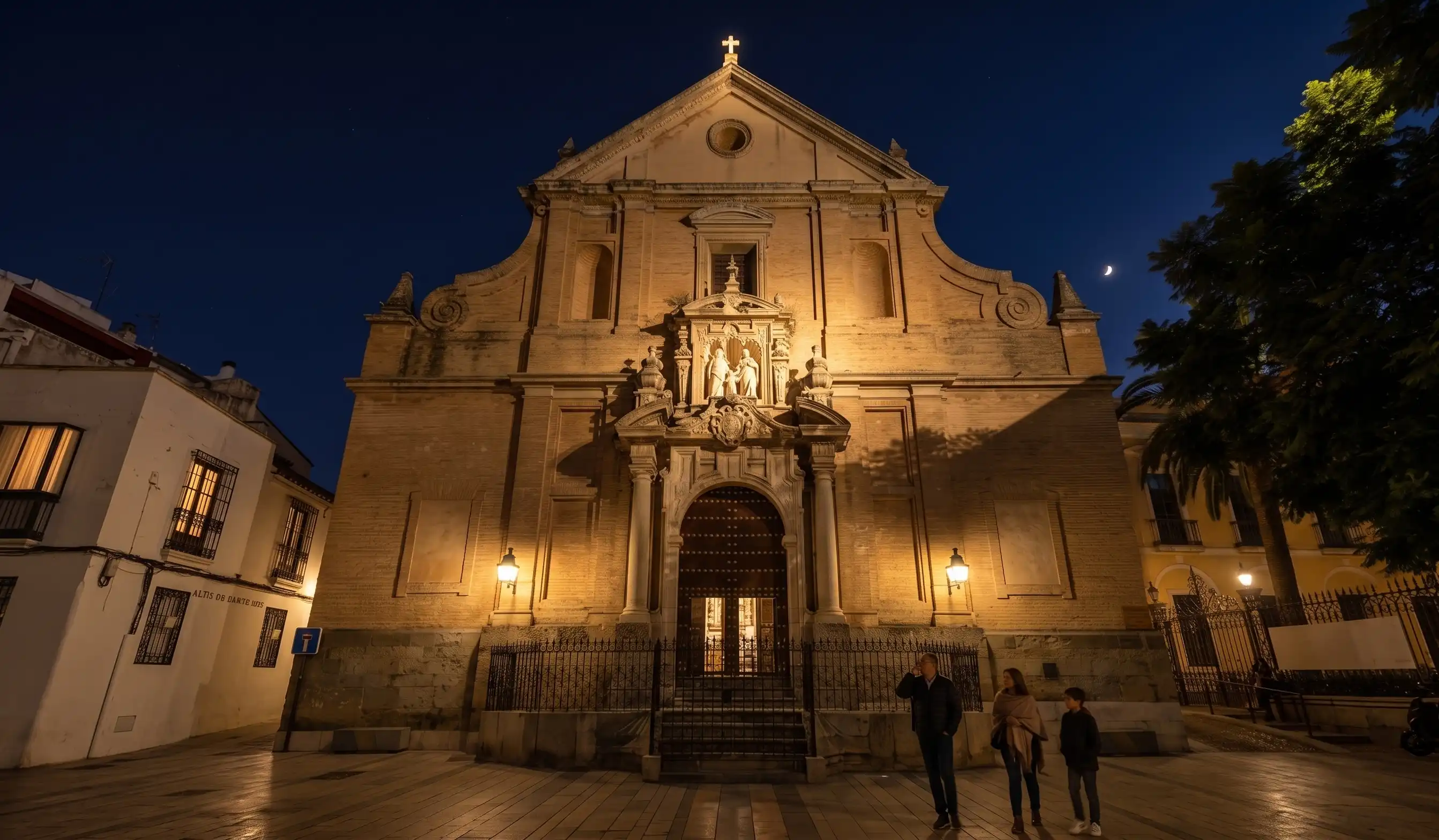 Santa Anna Parish Church.
3. The Kiss Mural: a contemporary surprise
A few steps from Portal de l’Àngel Avenue, you will find Isidre Nonell Square and one of the most curious contrasts along the route: the El mundo nace en cada beso mural, popularly known as the Kiss Mural.
The work was created in 2014 by photographer Joan Fontcuberta and ceramicist Antoni Cumella, and consists of thousands of images contributed by citizens which, when viewed together, create the image of a kiss.
It is a brief stop, but it is worth it precisely for that reason: it reminds us that the Gothic Quarter is also a space where very different historical layers coexist.
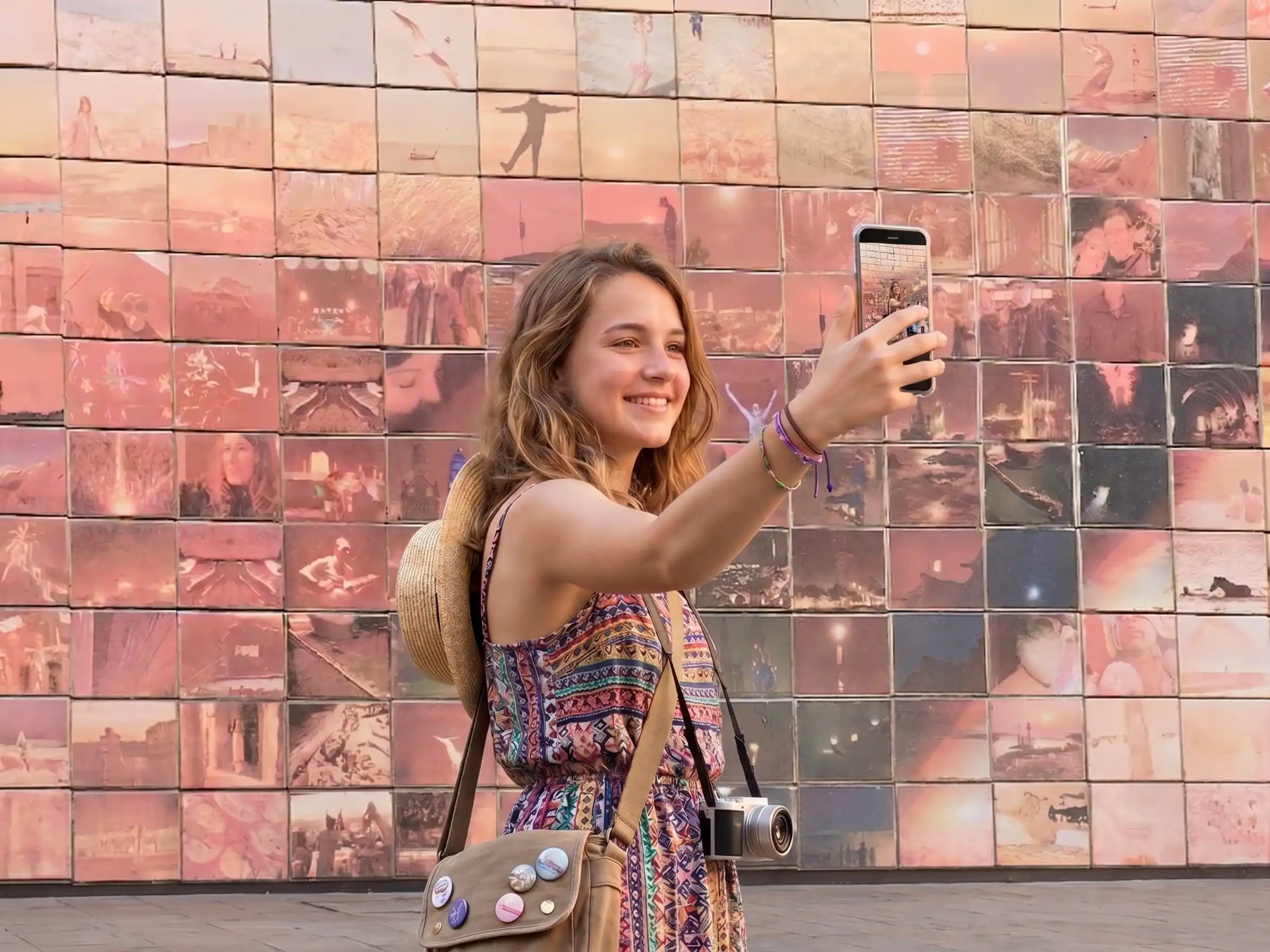 Kiss Mural.
4. Barcelona Cathedral: the must-see in the Gòtic
We reach the monumental heart of the route: the Catedral de la Santa Creu i Santa Eulàlia, located in Pla de la Seu.
Construction of the current cathedral began at the end of the 13th century and the works continued for more than a century. The church preserves a strong Gothic presence inside, with elements such as the chapels, choir, stained-glass windows, crypt and vaults.
However, there is one detail that deserves special attention. The exterior appearance that we immediately associate with Barcelona Cathedral today does not entirely date from the Middle Ages: its façade was created later, with an intervention that was completed at the beginning of the 20th century. It is one of the best examples for understanding that the history of the Gòtic also includes later reconstructions and reinterpretations.
Before continuing, also take a look at the area around the cathedral. The ancient Roman city still appears in its surroundings and several remains of the city walls remain integrated into the urban landscape.
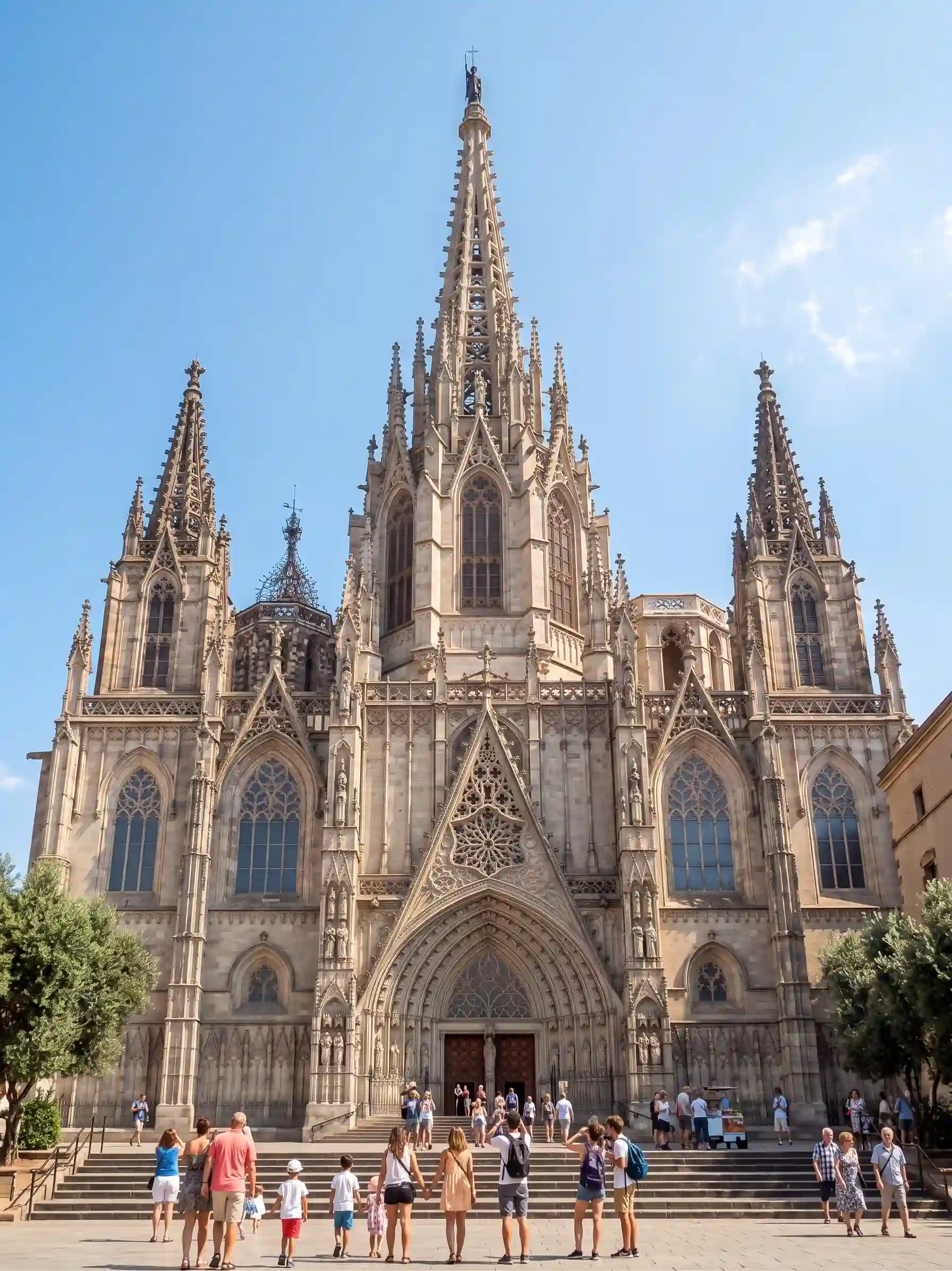 Barcelona Cathedral.
5. Plaça Nova: the gateway to Roman Barcelona
Walking around the cathedral, you will reach Plaça Nova, where you will find one of the most interesting places to begin imagining what ancient Barcino was like.
Here stood one of the monumental gates of the Roman city, the former Portal del Bisbe or Porta Praetoria, integrated into the city walls. The square also preserves the large letters that spell the name Barcino and the frieze created by Picasso for the Col·legi d’Arquitectes.
It is a good example of what makes the Gothic Quarter special: you can be looking at remains of Roman Barcelona and, just a few metres away, come across a 20th-century work.
6. Barcelona’s Bishop’s Bridge: the most famous postcard view
From Plaça Nova, take Carrer del Bisbe. It is one of the most recognisable sections of the neighbourhood and leads to the famous Barcelona Bishop’s Bridge, officially known as Pont del Bisbe.
Here comes one of the most curious facts of the entire visit: although its appearance seems medieval, the bridge was built in 1928 by architect Joan Rubió i Bellver, a disciple of Antoni Gaudí. Its design was inspired by elements of the Palau de la Generalitat itself and the Capella de Sant Jordi.
Under the arch, you will also find one of its most photographed details: a skull pierced by a sword. The piece has generated different interpretations and popular legends, but the most important historical fact is that it forms part of the symbolic programme designed for the bridge.
And here we find one of the great paradoxes of the Gòtic: one of its most recognisable icons is not even a century old.
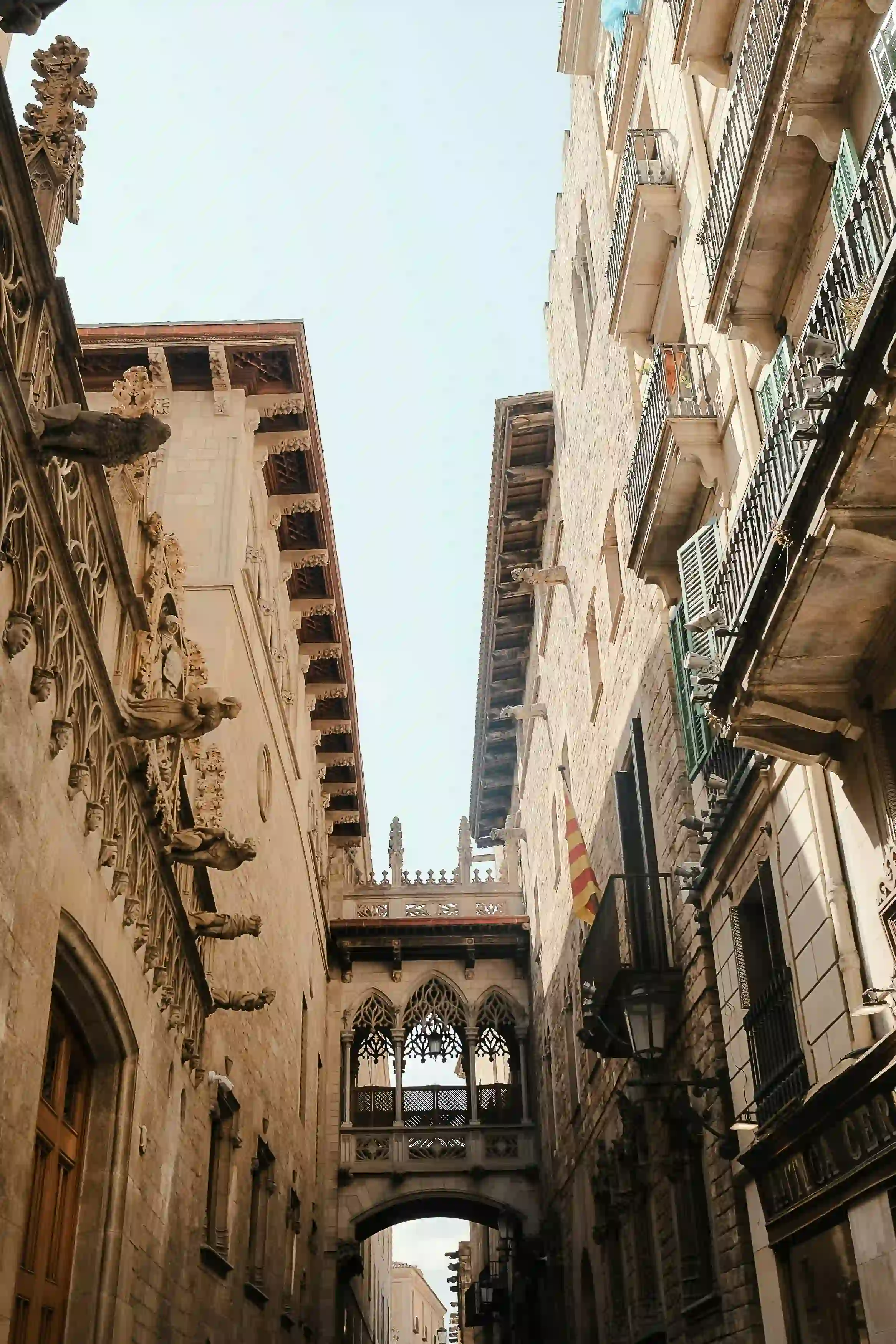 Barcelona’s Bishop’s Bridge - Photo: NuKi Chikhladze / Unsplash.
7. Plaça Sant Jaume
Continue to Plaça Sant Jaume, one of the city’s most important institutional spaces.
Facing each other are Barcelona City Hall, the Casa de la Ciutat and the Palau de la Generalitat de Catalunya. This square is recognised as one of the fundamental centres of the neighbourhood and of Barcelona’s institutional life.
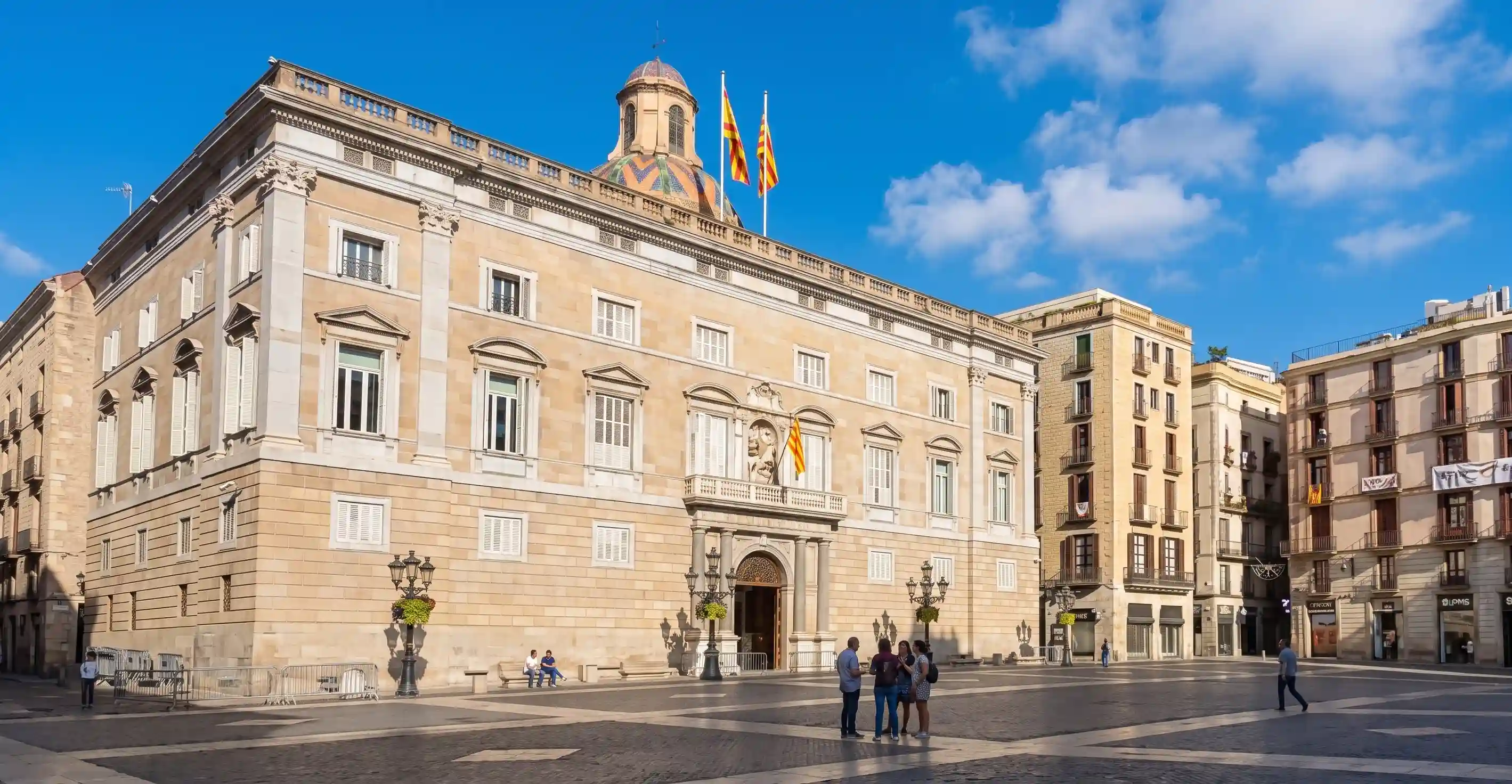 Plaça Sant Jaume.
It is also a good place to stop for a moment before entering the network of narrow streets again.
View the route from Plaça Catalunya to Plaça de Sant Jaume here
8. Temple d’August: hidden Roman Barcelona
Take Paradís Street and look for number 10. There, hidden inside a medieval courtyard, you will find four columns from the ancient Temple of Augustus.
They are remains more than two thousand years old. The temple was built during the Roman period and formed part of the forum of Barcino; the preserved columns belonged to one of the rear corners of the building.
What is interesting is precisely the way they appear: you are not looking at ruins separated from the urban fabric, but at Roman remains integrated into a medieval building.
In addition, Paradís Street is located on the former Mount Tàber, the highest point of Roman Barcelona.
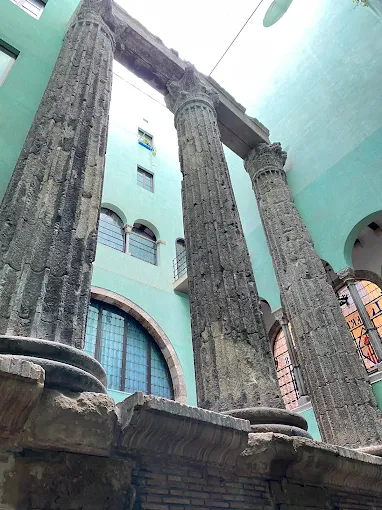 Temple d’August.
9. Plaça del Rei and MUHBA
From here, continue towards Plaça del Rei, one of the monumental complexes that best explain medieval Barcelona.
The square is dominated by the Palau Reial Major and brings together buildings such as the Saló del Tinell, the Santa Àgata Chapel, the Palau del Lloctinent and the Casa Padellàs, home to the Museu d’Història de Barcelona. Beneath the square and its buildings, an important archaeological site of ancient Barcino is also preserved.
The MUHBA archaeological site allows you to discover part of the Roman city that was active between the 1st and 6th centuries. The remains include spaces related to production and everyday life, such as industrial facilities, a laundry, a fish-salting factory and different urban buildings.
This is one of the places where it is most worthwhile to go inside if you are looking for more than a photographic route, as the history of the neighbourhood literally appears beneath your feet.
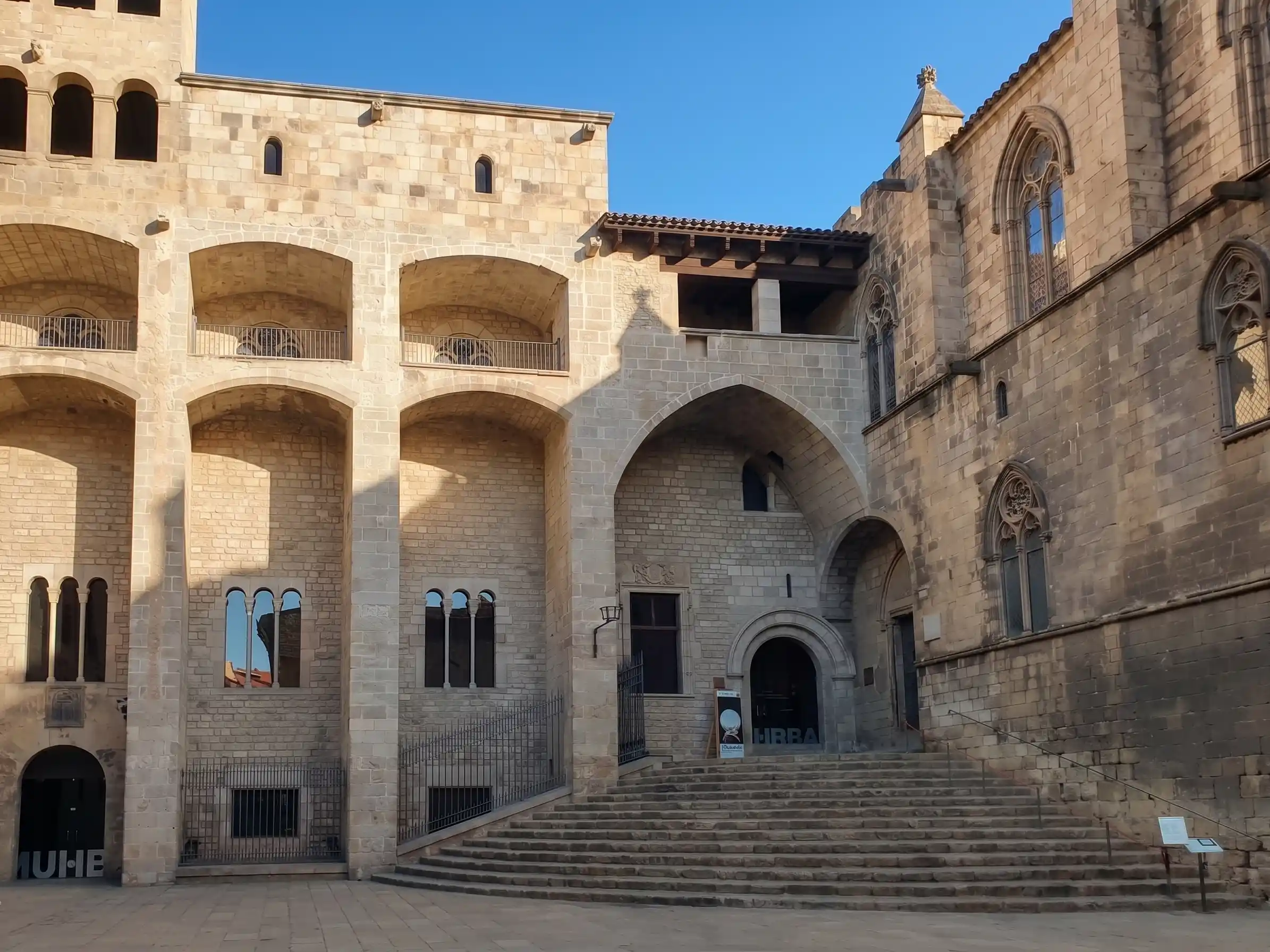 Plaça del Rei.
10. El Call: the streets of the former Jewish quarter
From the Plaça del Rei area, continue towards El Call, Barcelona’s former Jewish quarter.
Do not expect a large monumental square. Its appeal lies precisely in its narrow streets and in the layout that preserves part of the memory of the medieval Jewish community. You can also find remains of the former synagogue within this network of narrow streets.
In this part of the route, rather than looking for a specific photograph, it is worth paying attention to doors, façades, small passageways and the way the urban layout preserves another of the layers that make up the history of the Gòtic.
11. Plaça de Sant Felip Neri: one of the most special squares
From El Call, continue towards Plaça de Sant Felip Neri, hidden among narrow streets.
It is a small and peaceful square, dominated by the Baroque church of Sant Felip Neri. But its current appearance also bears a very painful mark of 20th-century history: the marks caused by the bombings of the Civil War can still be seen on its façade. On 30 January 1938, a bomb fell on the square and caused 42 casualties, most of them children.
It is one of those places where the visit changes tone. There is no need to add much: the walls themselves explain why this corner has a different atmosphere.
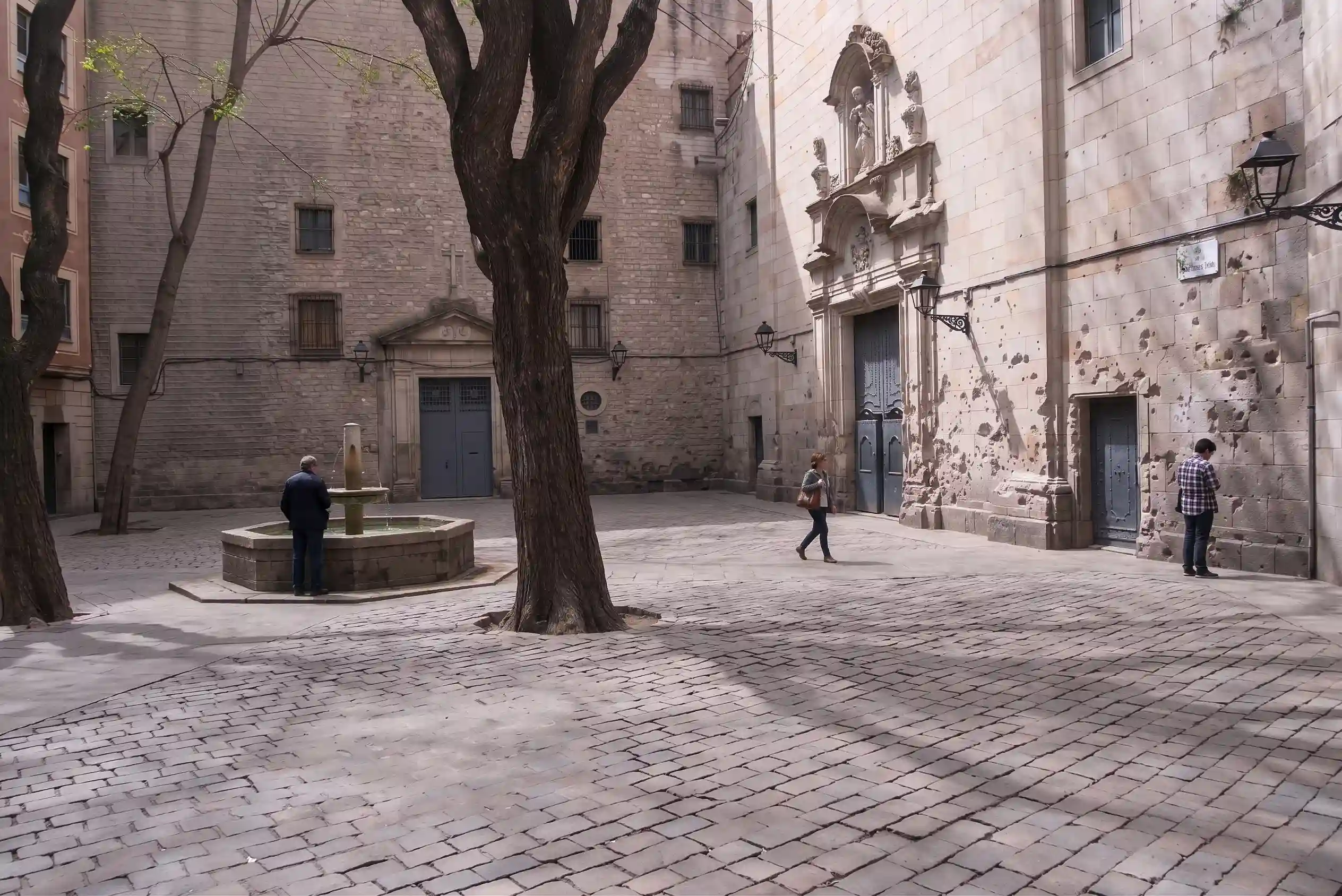 Plaça de Sant Felip Neri.
12. Santa Maria del Pi: one of the neighbourhood’s great Gothic churches
After Sant Felip Neri, continue towards the Basílica de Santa Maria del Pi.
The church was built in the 14th century and clearly follows Catalan Gothic architecture: a single nave, side chapels and a large façade dominated by the rose window. Its stained-glass windows and the light inside are among its main attractions.
Plaça del Pi and nearby Plaça de Sant Josep Oriol are also part of this collection of open spaces where you can rest after walking through the narrowest streets of the Gòtic.
13. Plaça Reial: the end of the route
Finish the route at Plaça Reial, one of the best-known spaces in the southern part of the Gothic Quarter.
Its character is very different from that of Plaça del Rei or Sant Felip Neri. It is an arcaded square closely associated with restaurants and the atmosphere of the area. In the centre, the street lamps designed by Antoni Gaudí stand out, a Modernist presence that once again reminds us that the Gothic Quarter does not belong to a single period.
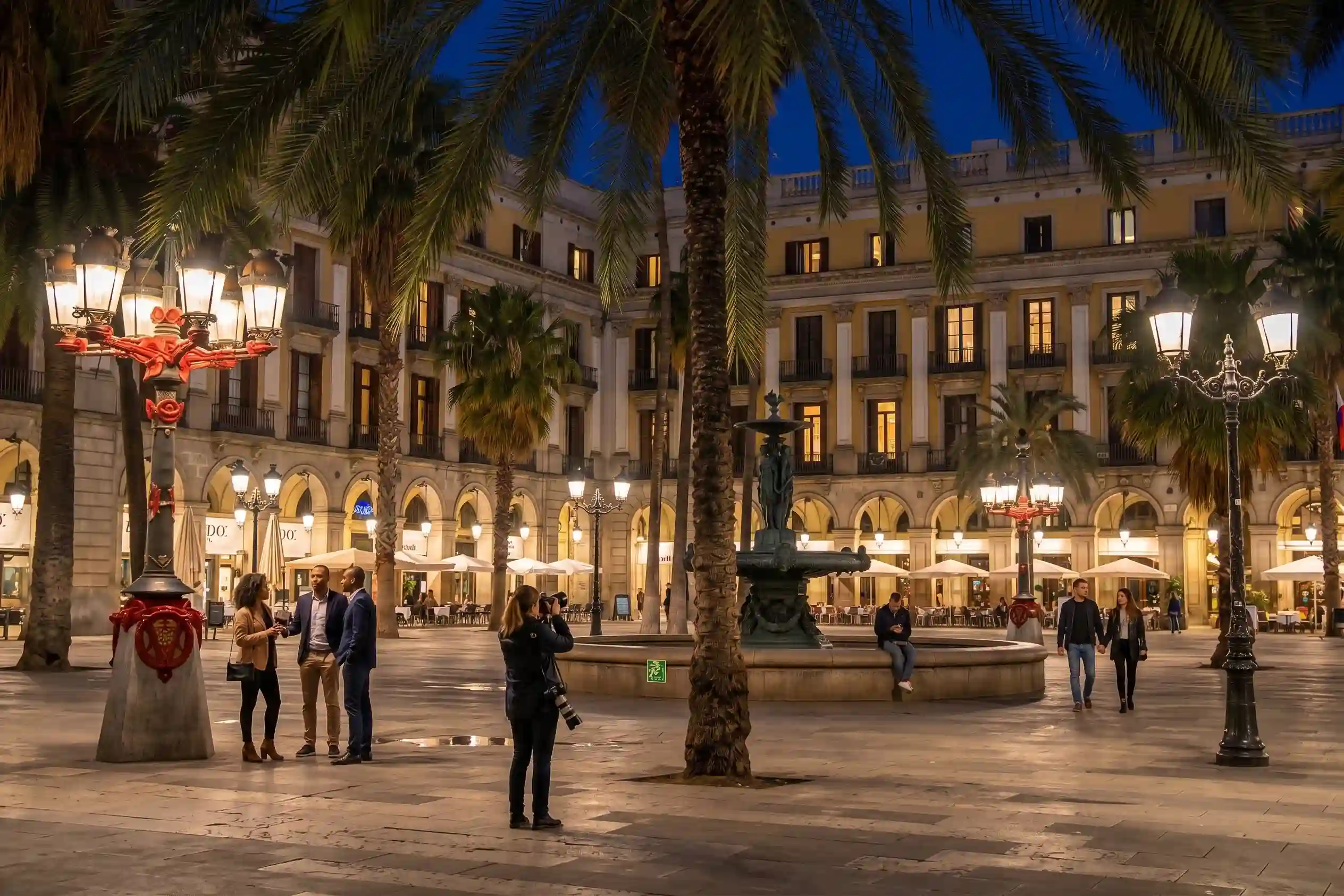 Plaça Reial.
From here, you can easily continue towards La Rambla, ending the route on one of Barcelona’s best-known thoroughfares.
View the route from Temple d’August to Plaça Reial here.
What to do in Barcelona’s Gothic Quarter besides visiting monuments
Explore the neighbourhood through its historical layers
One of the best ways to discover it is not to limit yourself to going from monument to monument. Look at the ground, the walls and the changes in architecture. Within just a few metres, you can move from the Roman city to the medieval city and from there to modern interventions.
Enter a museum and go down to ancient Barcino
MUHBA in Plaça del Rei offers something that an exterior visit cannot: it allows you to walk through archaeological remains of the Roman city and understand what urban life was like at that time.
Look for the details that often go unnoticed
The Gòtic is particularly well suited to a leisurely visit. Picasso’s frieze in Plaça Nova, the columns of the Temple d’August, the skull on Pont del Bisbe or the marks in Plaça Sant Felip Neri are small details that help create a much more complete experience.
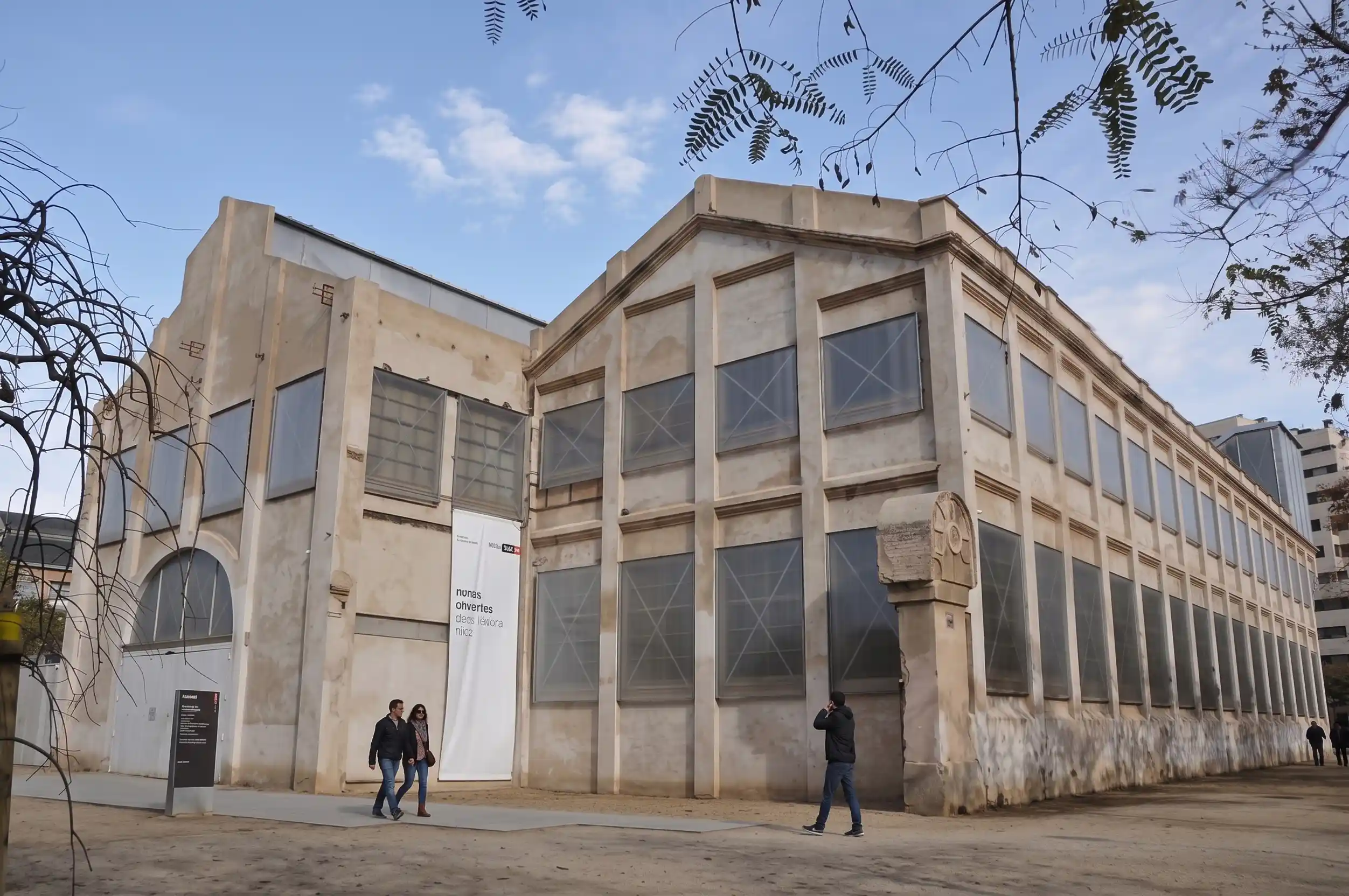 MUHBA.
Practical tips for visiting the Gothic Quarter
- Explore it on foot. It is the way that best suits its own structure: the streets, squares and passageways are an essential part of the visit.
- Do not try to see everything at once. The neighbourhood contains so many points of interest that specialist guides themselves recommend selecting the most important places according to the time available.
- Allow time to go inside. The Cathedral, MUHBA and other heritage sites offer a different experience from simply viewing them from outside. Always check their opening hours and access conditions before setting off, as these may vary.
- Use the map as a route and not just as a collection of points. The advantage of the proposed route is that each stop leads you to the next without having to cross the entire neighbourhood several times.
- Look beyond the “Gothic” label. This is probably the best advice. In this neighbourhood you will find Rome, the Middle Ages, Baroque, Modernism, restorations and contemporary architecture. It is precisely this mixture that makes every walk reveal something different.
 Use the map as a route - Photo/Magnific.
Where to stay when visiting Barcelona’s Gothic Quarter
To discover the Gothic Quarter comfortably, the best option is to stay at Vincci Gala 4*. Located at Ronda de Sant Pere, 32, the hotel is in the heart of Barcelona, just a few minutes’ walk from Plaça Catalunya. From the hotel, you can start your route towards the Gòtic by walking towards Portal de l’Àngel and continue through some of the corners we have explored in this article.
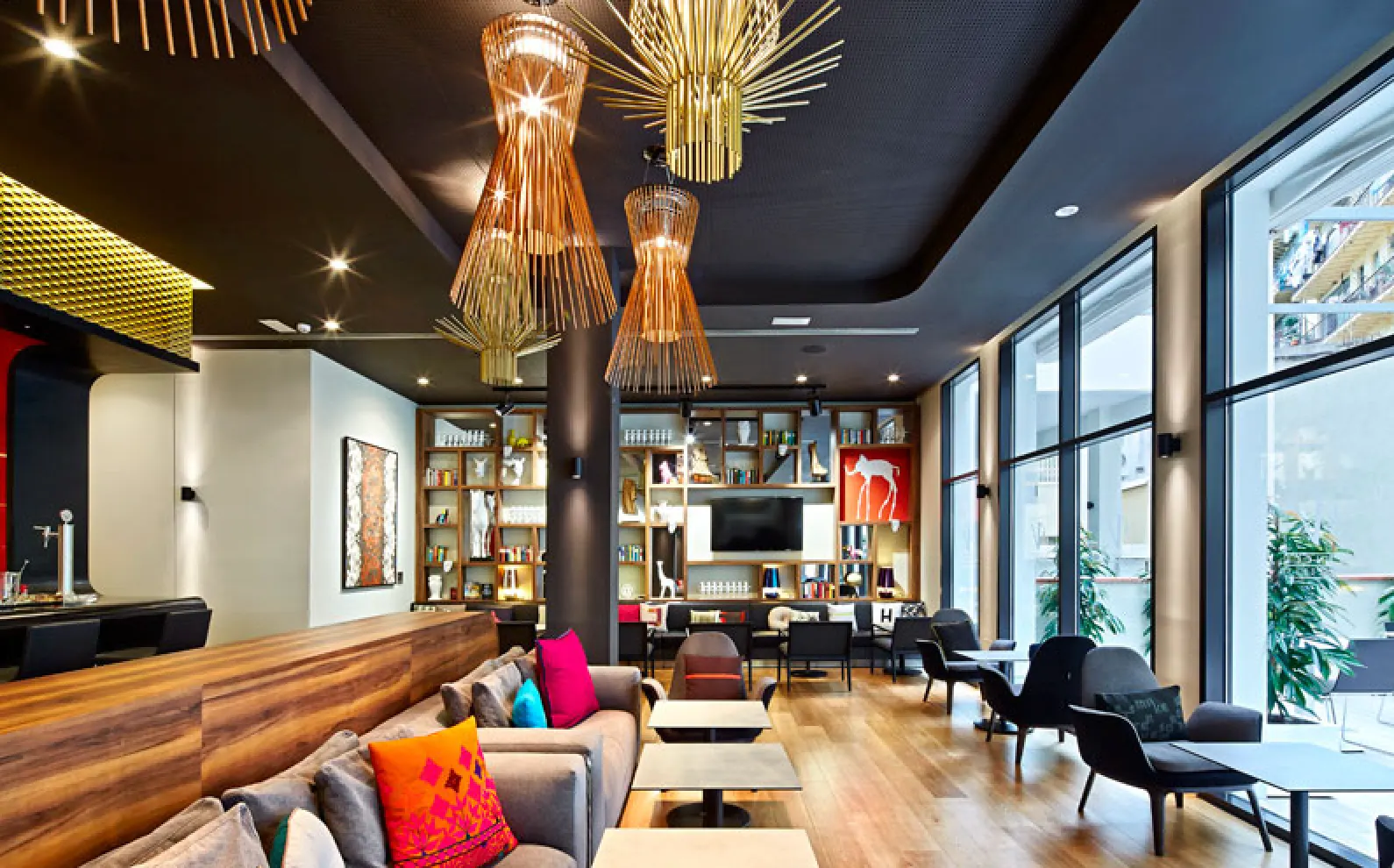 Bar at the Vincci Gala 4* Hotel.
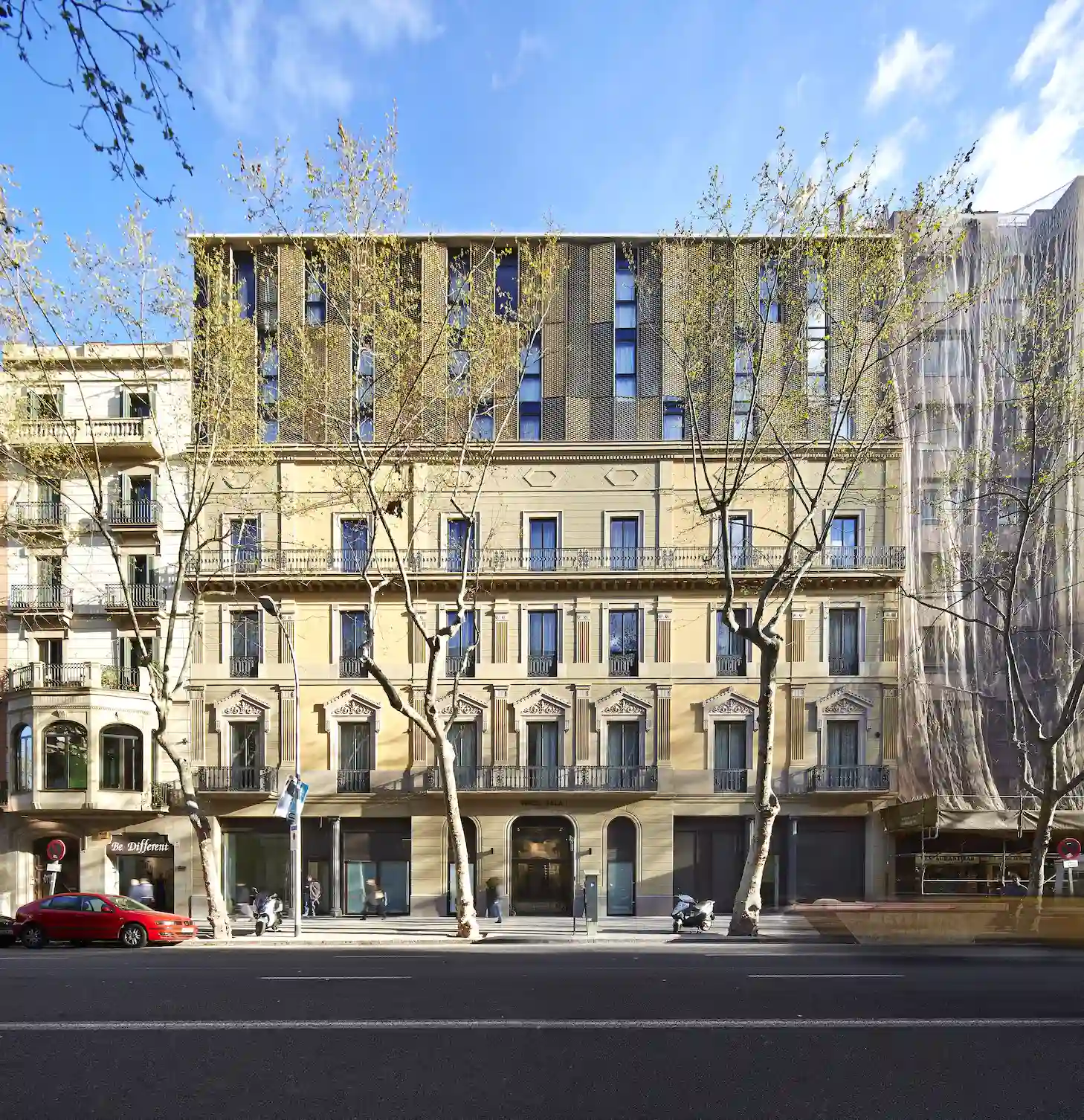 Vincci Gala 4* Hotel building.
The building itself makes the stay an experience in keeping with Barcelona’s personality: Vincci Gala 4* occupies a former stately building from 1900 in which elements such as the main façade, central staircase and hydraulic tiles have been preserved, combined with contemporary design. The hotel also has 78 rooms, a terrace, lounge bar, restaurant, breakfast and a rooftop pool with solarium, extras that will enhance your rest after walking through the streets of the Gòtic.
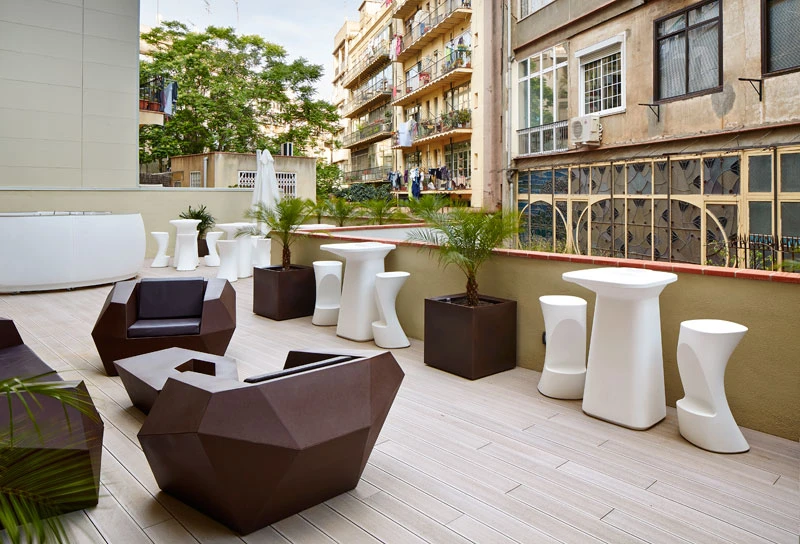 Terrace at the Vincci Gala 4* Hotel.
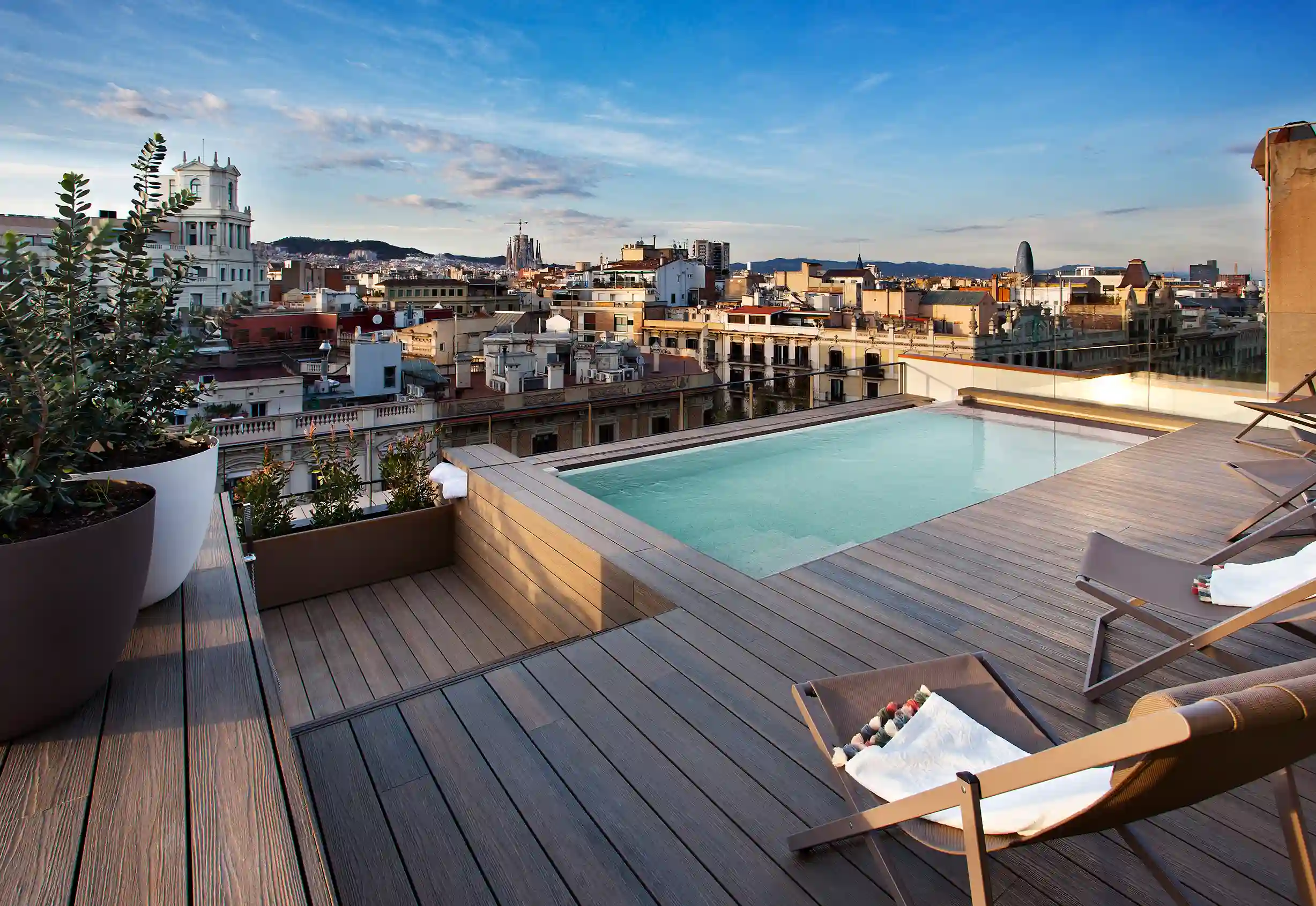 Pool terrace at the Vincci Gala 4* Hotel.
Its design concept has also been highlighted in specialist architecture and interior design publications, particularly for the combination of original elements with contemporary details and the building’s large central atrium. In terms of location, character and services, Vincci Gala 4* is a particularly recommended option if you want to discover the Gothic Quarter while also having accommodation from which to continue exploring Barcelona.
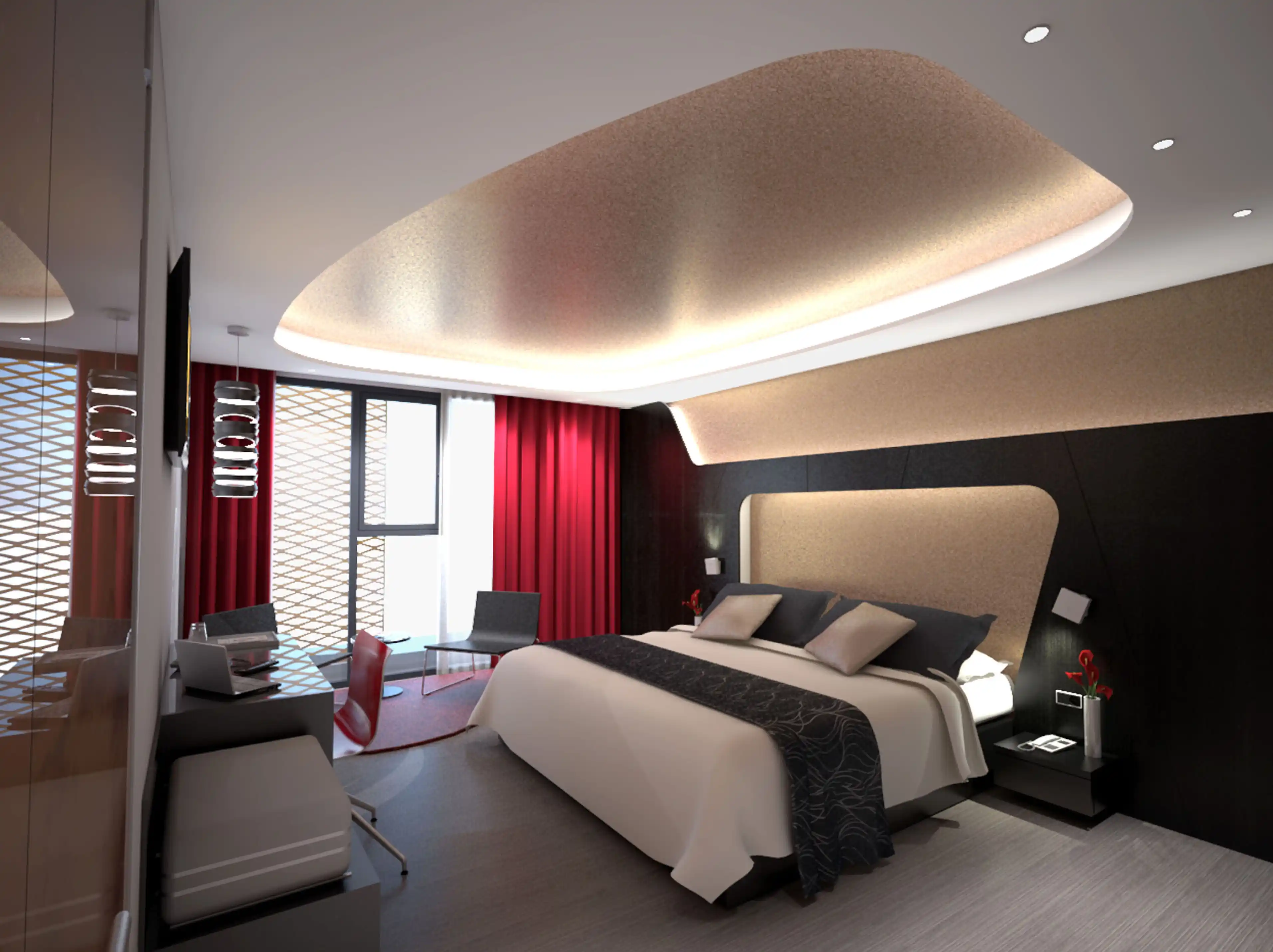 Room at the Vincci Gala 4* Hotel.
Beyond the Gothic Quarter, Vincci’s offering in Barcelona extends to other parts of the city. Vincci Bit 4*, Vincci Marítimo 4* and Vincci Mae 4* offer different ways to stay in Barcelona, from locations close to areas of interest and shopping districts to spaces designed for enjoying the city. If you want to explore all the alternatives, you can consult our Vincci hotels in Barcelona and choose the one that best suits your trip.
Conclusion: why Barcelona’s Gothic Quarter is magical
Walking through Barcelona’s Gothic Quarter means moving through a reconstructed city, recognising the traces of ancient Barcino among medieval streets, stopping before a cathedral whose current appearance also speaks of later periods and discovering how a medieval-looking bridge, a hidden Roman temple or the marks on a square can tell completely different stories.
Because that is perhaps the best way to understand the Gòtic: without rushing and with an attentive eye. The neighbourhood does not preserve a single Barcelona, but many. There is Roman Barcino, the medieval city, the memory of the Jewish community, the Baroque churches, the Modernist interventions and the transformations of the 19th and 20th centuries that ultimately shaped much of the image we recognise today.
Even its most photographed corners hide a less obvious history than it seems. And when you finish the walk in Plaça Reial, after having crossed centuries of history in just a few streets, you understand that the greatest attraction of the Gothic Quarter lies not only in what can be pointed out on a map, but in everything that appears when you decide to walk a little more slowly.
Enjoy your travels more
subtitle_categories_andromeda
Vincci Talks
Our podcast, a series of close encounters where relaxed conversations are held on various topics of general interest, with special guests who bring their expert and unique insights.
View moreVincci Expert
Immerse yourself in Vincci Local Expert and explore the best of each destination where our hotels are located. From local events to exclusive activities at our establishments, here you will find everything you need to live a Vincci experience.
View moreVincci Experiences
Explore the space where we store all the unique experiences you can have with us.
View moreVincci Getaways and destinations
Discover in our blog all the information about getaways and holiday destinations you need.
View moreVincci Gastronomy
Explore our posts section about the exquisite gastronomy we offer.
View moreUnique Events
Explore our posts section, the place to discover detailed information about special events, both social and corporate.
View moreTravel tips and recommendations
Our selection of posts offering an indispensable guide to finding tips and recommendations that inspire every journey.
View moreVincci Sustainable and responsible
Discover in our posts section about our sustainable and responsible initiatives.
View moreVincci Corporate Hotels
Our section of highlighted news reflecting the excellence and trajectory of our hotel chain.
View more