Traditional Tunisian cuisine: flavours you wouldn’t expect to find in the Mediterranean Vincci Hoteles

Traditional Tunisian cuisine: flavours you wouldn’t expect to find in the Mediterranean
Traditional Tunisian cuisine: flavours you wouldn’t expect to find in the Mediterranean
Contents:
- What to eat in Tunisia: traditional flavours and soulful desserts
- Traditional Tunisian dishes you must try
- Harissa
- Couscous
- Tunisian tajine
- Brik
- Kefteji
- Lablabi
- Ojja with merguez
- Mechouia salad
- Traditional desserts
- Baklava
- Makroud
- Assidat Zgougou
- Traditional Tunisian drinks
- Where to stay in Tunisia for the full experience
Tunisian cuisine tells stories that go beyond recipes. It is a cuisine where spices play a leading role and where olive oil becomes the thread that ties everything together.
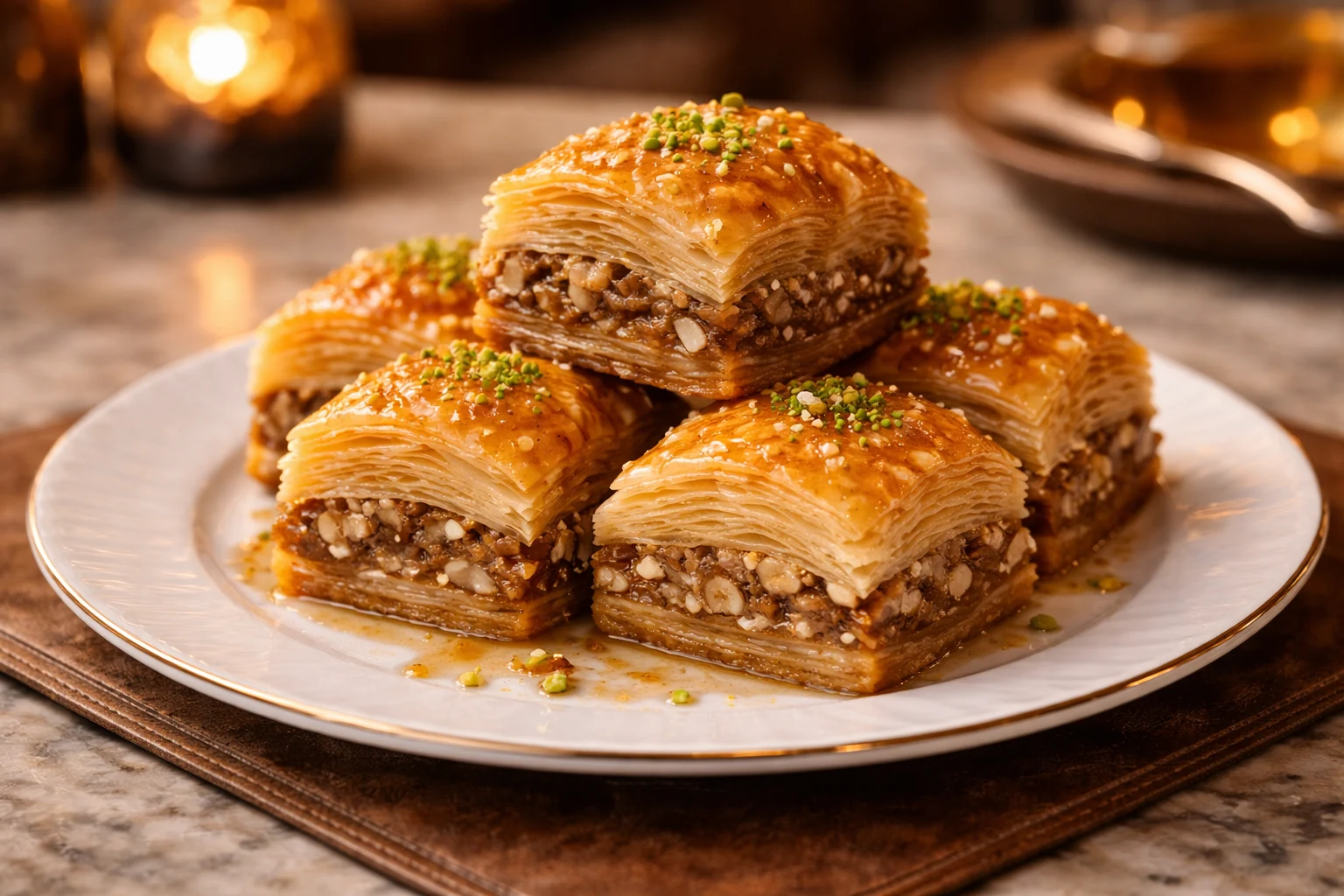 Baklava – traditional Tunisian dessert.
What to eat in Tunisia: a cuisine of traditional flavours and soulful desserts
Tunisian cuisine is built on the simplicity of its ingredients and the character of its flavours. Olive oil is the base of many preparations, while spices add aromatic nuances.
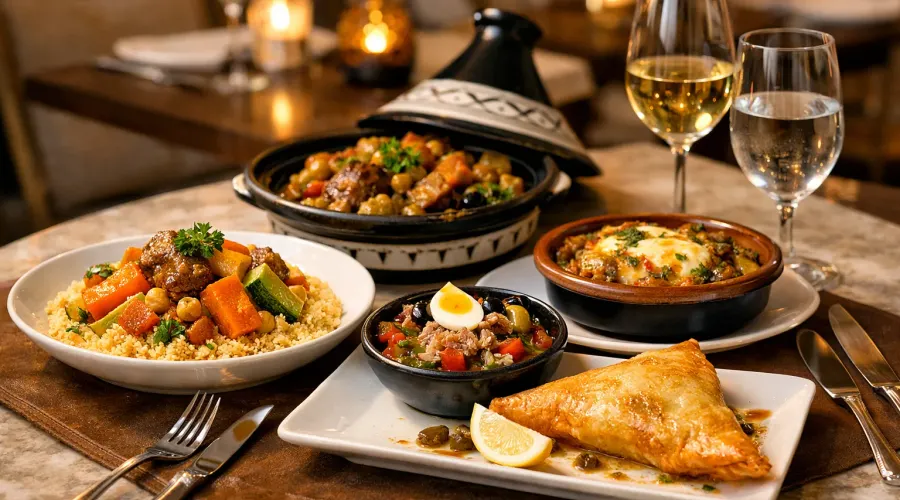
The main ingredient in inland areas is lamb, although chicken and beef are also common. In coastal regions, however, fish and seafood take centre stage, much like in other Mediterranean countries. Vegetables, meanwhile, are not simply side dishes but an essential part of the culinary identity, appearing in both fresh salads and traditional stews.
Typical Tunisian dishes you should try
Getting closer to the local culture inevitably involves tasting its most representative recipes.
Harissa
Harissa is the symbol of Tunisian cuisine and one of the ingredients that best defines its gastronomic personality. Made with dried peppers, garlic and spices, it is commonly used in soups, stews and sandwiches, setting the level of spiciness in many dishes. Alongside it, cumin, coriander and caraway are also widely used.
Couscous
Couscous is one of the most representative dishes of Tunisian gastronomy. It is made from steamed wheat semolina and served with meat —usually lamb or chicken— along with vegetables and a spiced broth. Each region has its own interpretation, making couscous a dish with many variations.
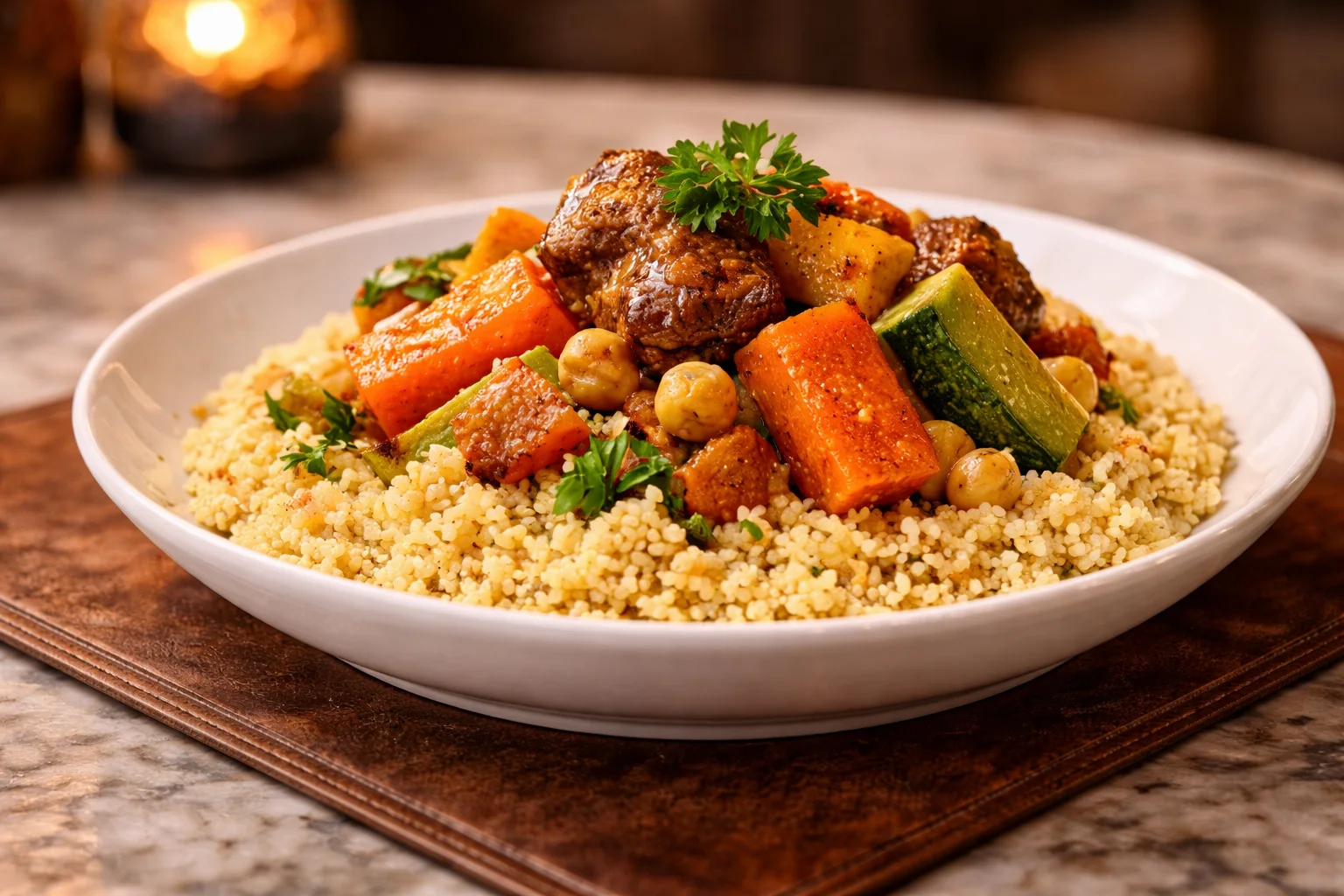 Couscous – traditional Tunisian dish.
Tunisian tajine
Tunisian tajine is quite hearty and differs from the Moroccan version in that it is not a stew but rather a baked dish that combines egg, meat or fish with vegetables and cheese.
Brik
Brik is a very popular starter known for its contrast of textures: crispy on the outside and juicy inside. It is prepared with a thin pastry filled with egg, tuna or meat and is often eaten using the hands.
Kefteji
More street-style and informal in character, kefteji combines chopped fried vegetables —such as potato, pepper or courgette— with egg and sometimes liver or merguez sausage. It is an intense dish without complex preparation.
Lablabi
Lablabi is a hot chickpea soup served with pieces of bread, olive oil and harissa. It is a hearty dish, especially appreciated during the winter months.
Ojja with merguez
This dish consists of scrambled tomato, pepper and egg with spiced lamb sausage, served directly in the pan. It is usually shared at the table.
Mechouia salad
Mechouia salad is made with roasted peppers and tomatoes, mashed and seasoned with olive oil. It is a fresh starter that, during the summer months, is often served with tuna and hard-boiled egg.
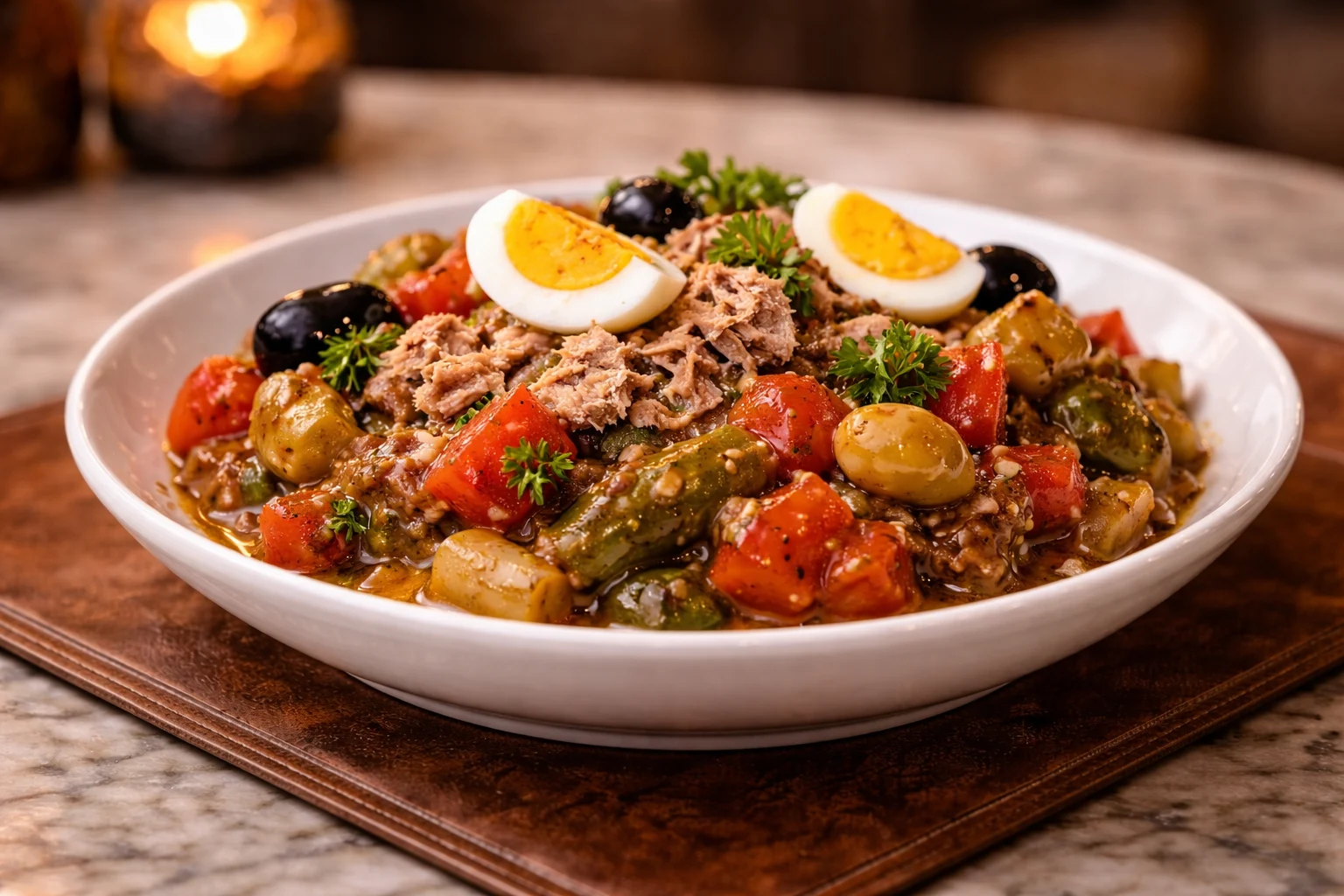 Mechouia salad – traditional Tunisian dish.
Traditional desserts and drinks
Traditional Tunisian pastry holds a special place in the country’s culture. Its sweets are characterised by the generous use of ingredients such as honey, semolina and nuts.
Baklava
A pastry made with layers of filo dough filled with pistachios or walnuts and soaked in syrup. It is known for its crunchy texture.
Makroud
Makroud is one of the most emblematic sweets in the country. It is made from semolina dough filled with date paste —although in some regions nuts are also used— and fried before being soaked in honey, giving it a rich and intense flavour.
Assidat Zgougou
Another highly appreciated dessert is assidat zgougou, a cream made from Aleppo pine seeds that is especially consumed during religious and family celebrations. It is usually served decorated with nuts.
Typical Tunisian drinks
When it comes to drinks, mint tea with pine nuts is the most representative gesture of hospitality in the country and is often offered as a symbol of welcome. Traditional spirits also include boukha, distilled from figs, and thibarine, a liqueur flavoured with dates and herbs.
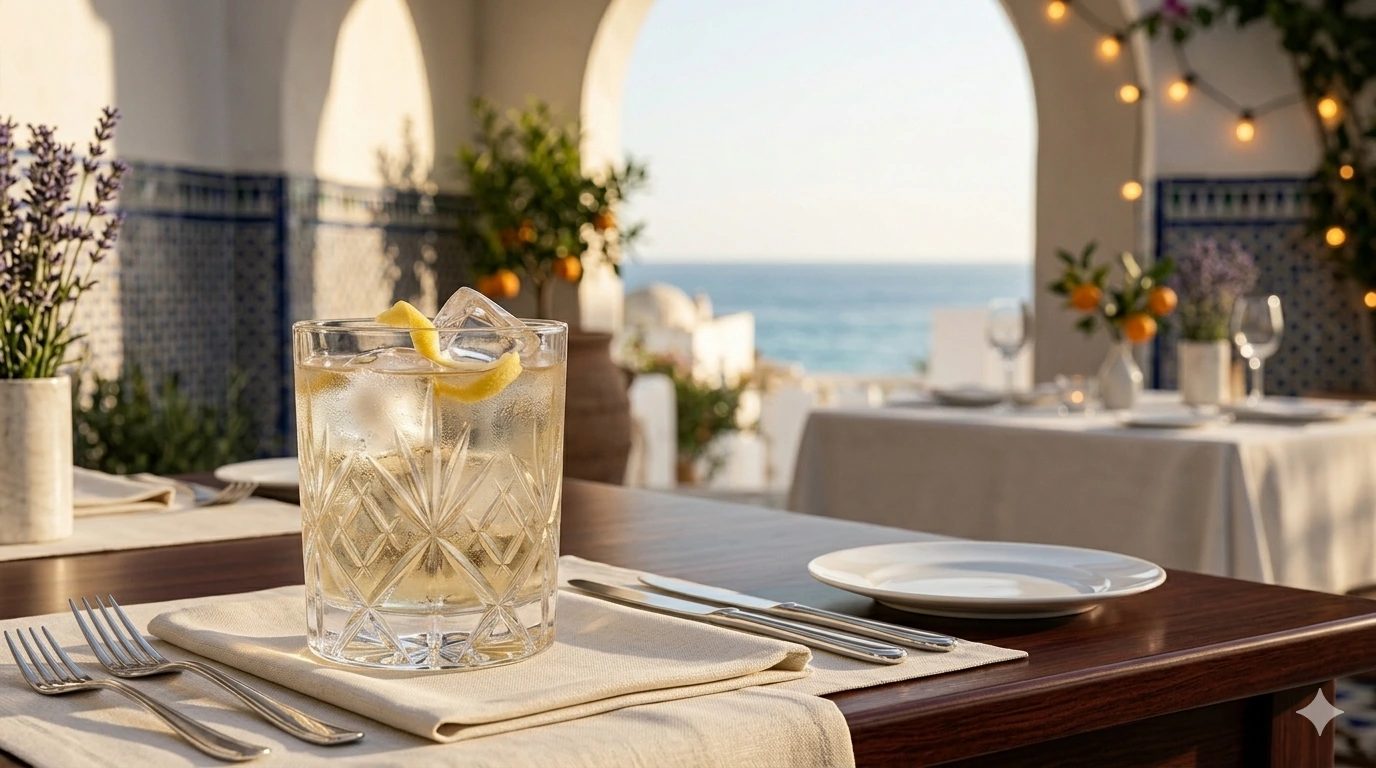 Boukha – traditional Tunisian drink.
Where to stay in Tunisia to experience it fully
Gastronomy cannot be understood in isolation. The surroundings, the pace of the journey and the place where you stay all shape how you discover it.
Island of Djerba
Located in Midoun, the Vincci Dar Midoun 4* is close to a sandy beach ideal for enjoying the Mediterranean. The hotel has more than 280 rooms, three swimming pools, a spa and a kids’ club, as well as four restaurants offering both local and international cuisine. Its location allows guests to reach Houmt Souk in around 20 minutes and it is less than 30 minutes from the airport, very close to Djerba Explore Park and Djerba Golf Club.
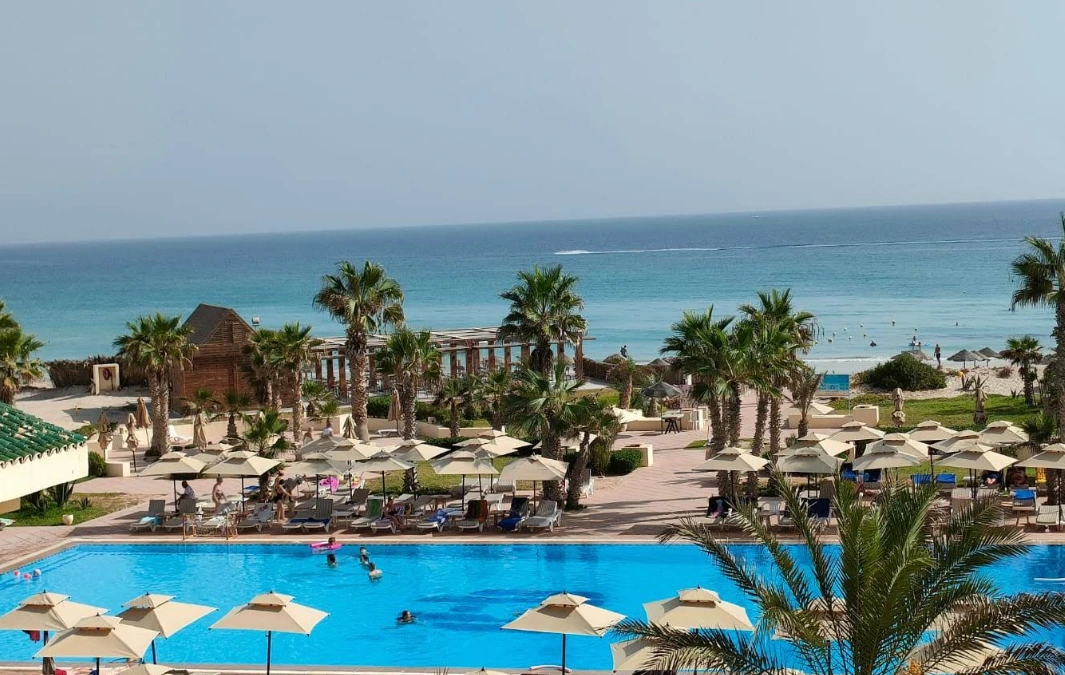 Swimming pool at Vincci Dar Midoun 4* Hotel.
The Vincci Helios Beach 4*, also located in Djerba, sits on the beachfront within an area of around nine hectares where the Mediterranean meets the landscape close to the Sahara. The hotel combines Arabic-inspired decoration with a contemporary style.
Vincci Saphir Palace 5*, in Hammamet
The Vincci Helya Beach 4* is located in Monastir and stands out for combining Arabic-inspired design with contemporary European style, creating a welcoming and functional atmosphere. The hotel has 320 rooms and is located in front of Habib Bourguiba International Airport, making it a convenient option for both leisure and business trips. Its location provides easy access to attractions such as the Ribat of Monastir, the city of Sousse and the marina of Port El Kantaoui.
 Room at Vincci Helya Beach 4* Hotel.
Vincci Safira Palms 4*, in Zarzis
In Zarzis, the oasis of southeastern Tunisia, the Vincci Safira Palms 4* is surrounded by white-sand beaches and turquoise waters that blend with the sunsets of the desert. The hotel offers direct beach access and allows guests to enjoy various seaside activities, as well as moments of relaxation in its three swimming pools or spa. Its gastronomic proposal blends with the surroundings, taking care of every detail to create a memorable experience.
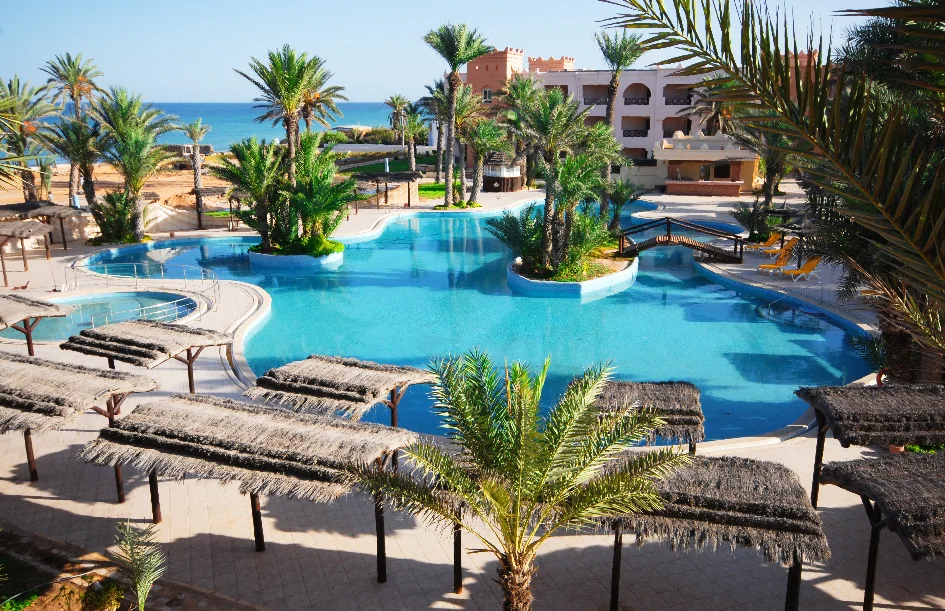 Swimming pool at Vincci Safira Palms 4* Hotel.
A way to understand the destination
Travelling to Tunisia means understanding that the experience of the destination is not built solely through its landscapes or monuments, but also through the table and the moments shared around food. Its gastronomy reflects the history of a territory that has long been a bridge between cultures, where the simplicity of ingredients coexists with the intensity of spices and where hospitality is expressed through offering a warm tea or a traditional dish.
Discovering Tunisian cuisine means travelling with open senses, letting yourself be surprised by flavours that blend Mediterranean tradition with North African heritage, and understanding that every recipe forms part of a collective memory.
Because Tunisia is not only visited; it is lived. And in many cases, it is remembered for what was tasted slowly while the Mediterranean kept you company.
Enjoy your travels more
subtitle_categories_andromeda
Vincci Talks
Our podcast, a series of close encounters where relaxed conversations are held on various topics of general interest, with special guests who bring their expert and unique insights.
View moreVincci Expert
Immerse yourself in Vincci Local Expert and explore the best of each destination where our hotels are located. From local events to exclusive activities at our establishments, here you will find everything you need to live a Vincci experience.
View moreVincci Experiences
Explore the space where we store all the unique experiences you can have with us.
View moreVincci Getaways and destinations
Discover in our blog all the information about getaways and holiday destinations you need.
View moreVincci Gastronomy
Explore our posts section about the exquisite gastronomy we offer.
View moreUnique Events
Explore our posts section, the place to discover detailed information about special events, both social and corporate.
View moreTravel tips and recommendations
Our selection of posts offering an indispensable guide to finding tips and recommendations that inspire every journey.
View moreVincci Sustainable and responsible
Discover in our posts section about our sustainable and responsible initiatives.
View moreVincci Corporate Hotels
Our section of highlighted news reflecting the excellence and trajectory of our hotel chain.
View more