How events have developed over the last 25 years Vincci Hoteles

How events have developed over the last 25 years
How events have developed over the last 25 years
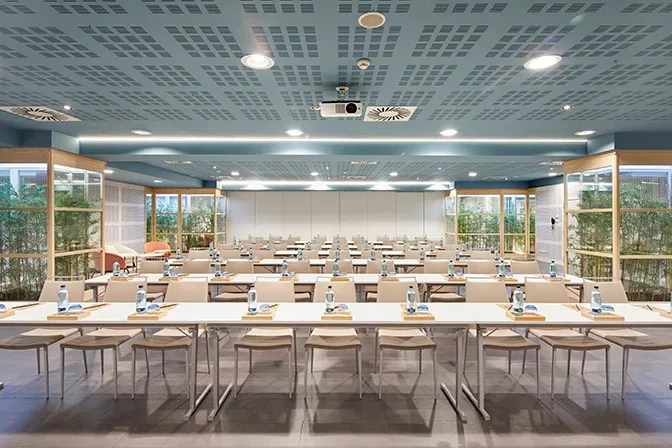
Contents:
- When an event's success was measured differently
- Breaks were also part of the event
- Technology began by changing organisation... and ended up changing the experience
- Attendees stopped being spectators
- The moment when events started being experienced twice
- The pandemic reminded us of something that seemed forgotten
- No screen replaced face-to-face interaction
- Today we don't remember a programme, we remember how it made us feel
- Looking to the future without losing the essence
- About Vincci Hotels | 25th Anniversary
It's hard to believe that only twenty-five years have passed.
Because although the objective of events remains the same, the way we experience them has changed profoundly. Technology has transformed organisation, attendees' expectations are very different, and the very concept of the experience has taken centre stage.
What is most remarkable is that this evolution has not been the result of one major change, but of many small transformations that, almost without us realising it, have redefined the way we come together.
When an Event's Success Was Measured Differently
In the late 1990s, organising a conference or convention involved dealing with logistics that were very different from today's. Much of the work was done over the phone, confirmations arrived by email —or even by fax— and any change to the programme meant reprinting documents that had already been prepared.
Attendees did not expect much more than good organisation. An event's prestige depended above all on its speakers and the content being shared. Nobody was yet talking about user experience or personalised journeys.
And yet those gatherings fulfilled their purpose perfectly. They were the setting where deals were closed, collaborations began and conversations took place that, in many cases, ended up being more valuable than the official agenda itself.
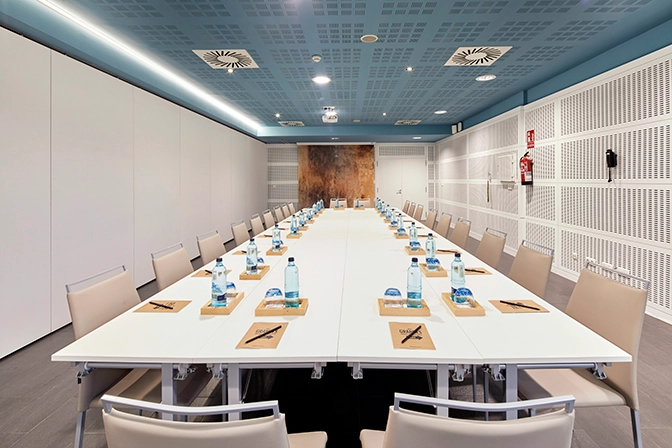
Event room at Vincci Marítimo 4* Hotel.
Breaks Were Also Part of the Event
Curiously, many of the things we still consider essential today were already present back then, although nobody described them with words such as networking.
The coffee break was often the real reason why attending was worthwhile. What has changed is not so much the importance of moments like these, but the fact that events are now designed to encourage them to happen.
Technology Began by Changing Organisation... and Ended Up Changing the Experience
The arrival of the internet marked an obvious turning point, although at first the changes seemed purely practical.
Registrations were no longer made by telephone, the first online registration platforms appeared, and managing hundreds of attendees became much easier. What had previously required hours of phone calls and paperwork could now be done in just a few clicks.
But the real transformation came when technology stopped remaining behind the scenes.
Screens replaced much of the printed material, while hotels and event venues began incorporating infrastructure capable of meeting new demands. Internet access, which two decades ago was almost a luxury, became an essential service. Mobile apps, QR codes, digital badges and tools capable of facilitating everything from attendee arrivals to collecting feedback after the event would soon follow.
Without making much noise, technology naturally became part of the experience.
Attendees Stopped Being Spectators
The way people participated also changed.
Long days of one-way presentations gradually gave way to much more dynamic formats. Panel discussions, interactive sessions, live questions and practical workshops became increasingly important because they responded to an obvious reality: people no longer wanted to simply listen.
They wanted to participate, share ideas and feel part of the conversation.
The Moment When Events Started Being Experienced Twice
The rise of social media changed many things, but perhaps one of the most significant was the relationship between the event and time.
Previously, a conference ended when attendees left the venue. Photographs were shared days later and the memories remained mainly with those who had been there.
Today, the opposite is true.
While a presentation is taking place, dozens of people are commenting on it through their social media profiles. A photograph can travel thousands of kilometres in a matter of seconds, and a keynote can continue generating conversation long after it has ended.
Organisers quickly understood that the venue itself also had to communicate. It was no longer enough for a room to function well; it had to invite people to stay, encourage conversations and convey a recognisable identity.
Every detail took on a new dimension because any corner could become the image that summed up an entire experience.
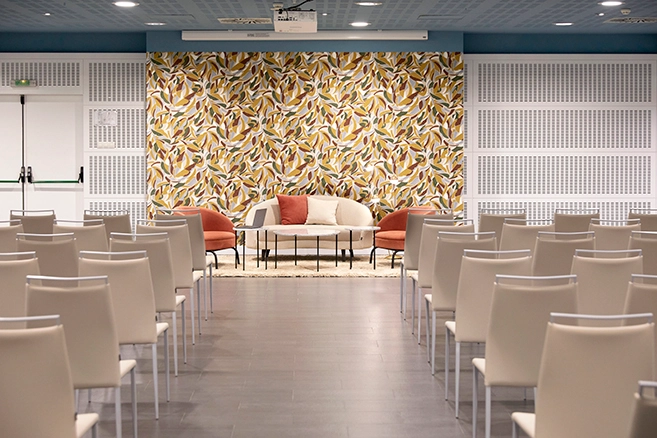
Event room at Vincci Marítimo 4* Hotel.
The Pandemic Reminded Us of Something That Seemed Forgotten
If there was one event capable of accelerating the sector's evolution, it was undoubtedly the pandemic.
In just a few weeks, in-person events virtually disappeared, and video conferencing platforms became the only possible meeting point.
That adaptation demonstrated the enormous capacity for response shown by organisers and specialised venues. International conferences, business meetings and even celebrations found ways to continue in a completely unfamiliar context.
But it also left behind an unexpected lesson.
No Screen Could Replace Face-to-Face Meetings
During those months, we discovered that technology could meet many needs, but we also realised everything it could not offer.
It was possible to attend a conference from anywhere in the world, but it was far more difficult to have a spontaneous conversation or meet someone during a break.
That is why, when in-person events returned, they were valued in a completely different way.
It was no longer simply about meeting again.
It was about recovering a way of connecting with one another that we had learned to miss.
Today We Don’t Remember the Programme, We Remember How It Made Us Feel
Perhaps that is the greatest difference between events twenty-five years ago and those of today.
Back then, it was enough for everything to go according to plan.
Today, we expect much more.
We expect the venue to feel welcoming from the very first moment, technology to enhance the experience without becoming the main focus, the gastronomy to complement the day, and every detail to help create a coherent atmosphere.
It is not about impressing for the sake of impressing.
It is about making people remember how they felt while they were there.
That is why event hotels have taken on an increasingly important role within the industry. They are no longer simply the place where an event takes place, but an active part of the experience. The versatility of the spaces, the integration of services, the comfort of attendees and the ability to take care of every detail from a single location make it possible to create much more seamless and personalised events.
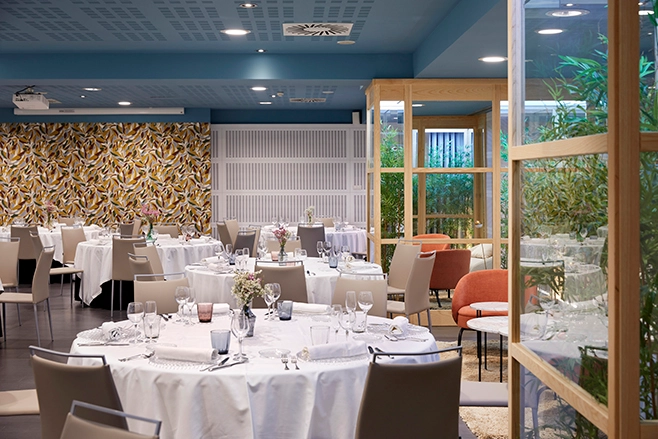
Event room at Vincci Marítimo 4* Hotel.
Looking to the Future Without Losing the Essence
It is easy to imagine how events will continue to evolve. Artificial intelligence will help personalise experiences, immersive tools will open up new possibilities, and technology will continue simplifying processes that still require time and coordination today.
However, the most important change has probably already happened.
After twenty-five years of innovation, we have come to understand that the true value of an event has never depended solely on technology or the resources available.
It depends on people.
On the conversation that unexpectedly begins during a break, the idea that emerges while listening to another professional, reconnecting with a former colleague, or that feeling of having shared something that could only have been experienced there, at that precise moment.
Because events have evolved enormously over the last quarter of a century. Their tools, formats and settings have changed. But they still pursue exactly the same goal they did twenty-five years ago: bringing people together to create professional connections that last far beyond the day the event takes place.
About Vincci Hotels | 25th Anniversary
In 2026, Vincci Hotels celebrates its 25th anniversary, consolidating its own unique way of understanding hospitality: "The Vincci Perspective". An approach that highlights every destination through design, architecture, gastronomy and a genuine connection with the local surroundings, creating unique experiences in each of its hotels.
Throughout these 25 years, the company has built a distinctive model based not on standardising its spaces, but on adapting them to the identity of each location, integrating heritage, local culture and contemporary design. This way of operating is now reflected in a portfolio of 41 hotels across Spain, Portugal, Tunisia and Greece.
The anniversary is not only a celebration, but also a declaration of continuity: a way of seeing, selecting and developing every hotel project that has defined Vincci since its beginnings and continues to guide its evolution.
"Come. Be amazed. Discover more than 40 four- and five-star hotels where every experience is unique. Open your eyes. Take it all in. Enjoy the most privileged locations. Look. Touch. Feel a design and style that can be appreciated in every detail. Rest. Relax. Let yourself be looked after by a service where you are at the centre. Dream. Smile. Live. You're at Vincci."
TRAVEL.LIVE.VINCCI
Enjoy your travels more
subtitle_categories_andromeda
Vincci Talks
Our podcast, a series of close encounters where relaxed conversations are held on various topics of general interest, with special guests who bring their expert and unique insights.
View moreVincci Expert
Immerse yourself in Vincci Local Expert and explore the best of each destination where our hotels are located. From local events to exclusive activities at our establishments, here you will find everything you need to live a Vincci experience.
View moreVincci Experiences
Explore the space where we store all the unique experiences you can have with us.
View moreVincci Getaways and destinations
Discover in our blog all the information about getaways and holiday destinations you need.
View moreVincci Gastronomy
Explore our posts section about the exquisite gastronomy we offer.
View moreUnique Events
Explore our posts section, the place to discover detailed information about special events, both social and corporate.
View moreTravel tips and recommendations
Our selection of posts offering an indispensable guide to finding tips and recommendations that inspire every journey.
View moreVincci Sustainable and responsible
Discover in our posts section about our sustainable and responsible initiatives.
View moreVincci Corporate Hotels
Our section of highlighted news reflecting the excellence and trajectory of our hotel chain.
View more