What to see in the Barrio de las Letras: a comprehensive guide to discovering its key spots Vincci Hoteles

What to see in the Barrio de las Letras: a comprehensive guide to discovering its key spots
What to see in the Barrio de las Letras: a comprehensive guide to discovering its key spots
- 1. Why Is It Called Barrio de las Letras?
- 2. Where Is the Parnassus Quarter and How Do You Get There?
- 3. What to See in Madrid’s Barrio de las Letras
- 3.1 Plaza de Santa Ana
- 3.2 Ateneo de Madrid
- 3.3 Callejón del Gato
- 3.4 Church of San Sebastián
- 3.5 Juan de la Cuesta Printing Press (Cervantine Society)
- 3.6 Lope de Vega House Museum
- 3.7 Plaza de Jacinto Benavente
- 3.8 Calle Huertas
- 3.9 Mercado de las Ranas
- 4. Where to Eat in the Quarter of the Muses
- 5. Practical Tips for Visiting the Literary Quarter
Why Is It Called Barrio de las Letras?
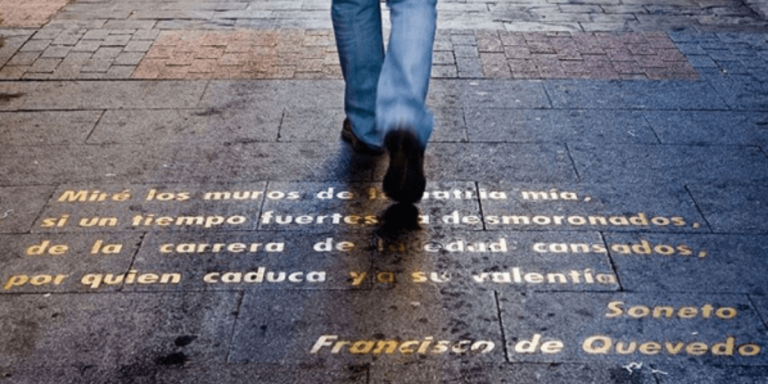
Before setting off, it is worth understanding why this corner of Madrid bears such an evocative name. During the Spanish Golden Age —between the 16th and 17th centuries— the streets between Calle Atocha, Paseo del Prado, Carrera de San Jerónimo and Calle Cruz became the home of some of the most brilliant writers in the Spanish language. Cervantes, Lope de Vega, Quevedo, Góngora, Tirso de Molina and Calderón de la Barca, among many others, all walked these streets.For this reason, it is also known as the Quarter of the Muses, the Parnassus Quarter and the Literary Quarter. As a tribute to this literary legacy, you can still see fragments of their most celebrated works engraved in gold lettering on the pavements. A detail that turns every stroll into a journey through time.
Where Is the Parnassus Quarter and How Do You Get There?
Barrio de las Letras is located in the very centre of Madrid, making it an almost unavoidable stop during any visit to the city. It is framed by two of the world's most important museums —the Prado and the Thyssen— and lies just a few minutes’ walk from Puerta del Sol.
The easiest way to get there is by metro (Line 1), with stops at Sol, Antón Martín and Atocha, all located on the edges of the neighbourhood. You can also walk from Paseo del Prado or Puerta del Sol in less than ten minutes.
As it is a highly pedestrian-friendly and compact area, the best —and most recommended— way to explore it is on foot. We suggest allowing at least two to three hours to visit the main attractions. If you also plan to visit museums or stop for a meal, it is worth setting aside an entire morning or afternoon.
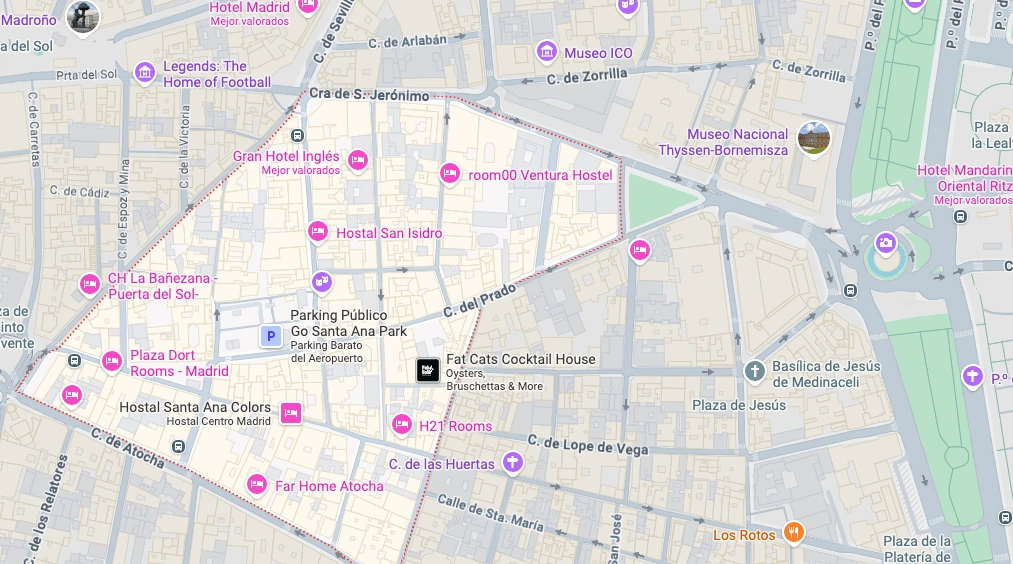 Location of Madrid's Barrio de las Letras - Google Maps.
What to See in Madrid’s Barrio de las Letras
1. Plaza de Santa Ana
Plaza de Santa Ana is undoubtedly the heart of Barrio de las Letras. Lively at any time of day, it is the perfect place to begin your route and take a moment to soak up the atmosphere around you.Some of Madrid’s most important historic open-air theatres once stood here, including Corral del Príncipe (1582) and Corral de la Pacheca (1568). The former eventually evolved into the Teatro Español, which remains active today. The square is also home to the statue of Federico García Lorca, alongside that of Pedro Calderón de la Barca.
Among the historic establishments surrounding the square, the Cervecería Alemana (founded in 1904) stands out, having once been frequented by Hemingway, Ava Gardner and Lola Flores. There is also the iconic Café Central, an Art Deco venue and one of the city's most legendary cafés. Both are ideal places to pause during your visit.
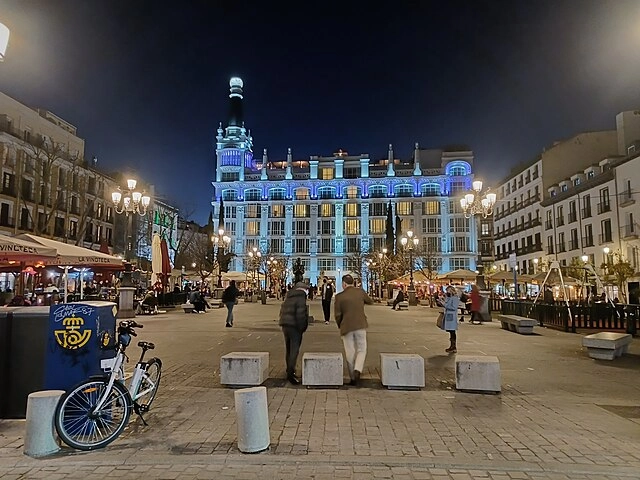 Plaza de Santa Ana. Photo by Luis García (Zaqarbal) via Wikimedia Commons (CC BY-SA 4.0)
2. Ateneo de Madrid
Located at 21 Calle del Prado, one of the neighbourhood’s most emblematic buildings is the Ateneo de Madrid, founded in 1835. Its halls once hosted intellectuals and academics who gathered to debate and exchange ideas. Among its members have been six Spanish Prime Ministers and almost every Spanish Nobel Prize winner.
Its façade is adorned with the figures of Velázquez, Alfonso X and Cervantes. Inside, you will find a library containing more than 200,000 volumes —known as “La Pecera”— as well as a Neo-Greek auditorium. Guided tours are occasionally available, and non-members can enter for a symbolic fee.
The building is listed as a Cultural Heritage Site and classified as a Monument within the Historical Heritage of the Community of Madrid.
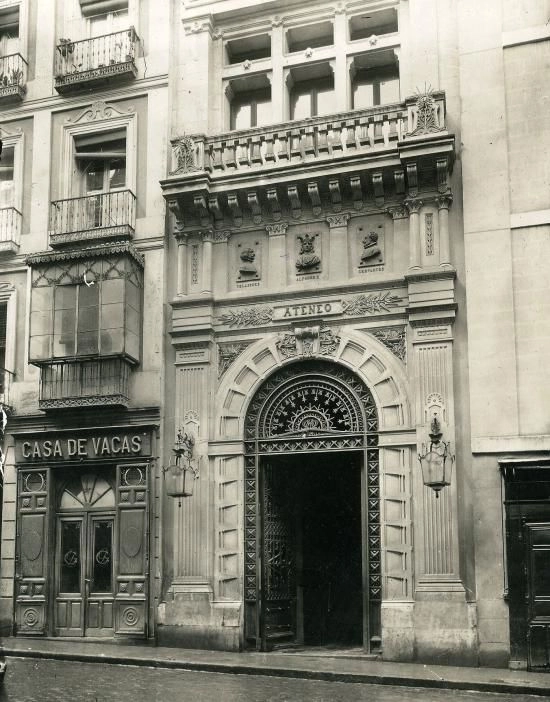 Facade of the Ateneo de Madrid, via www.pinterest.com
3. Callejón del Gato
Have you ever seen the distorting mirrors found at funfairs? Callejón de Álvarez Gato, popularly known as Callejón del Gato, brings them right into the centre of Madrid. Valle-Inclán used these concave mirrors as a metaphor for the grotesque style known as esperpento in his work Luces de Bohemia, and strolling through this alley allows you to relive that literary image in a very special way.
If you pass by the Las Bravas bar, you will notice several mirrors displayed on the façade as a tribute to the work. The original mirrors, however, are preserved inside. A brief stop, but one that is highly photogenic and rich in symbolism.
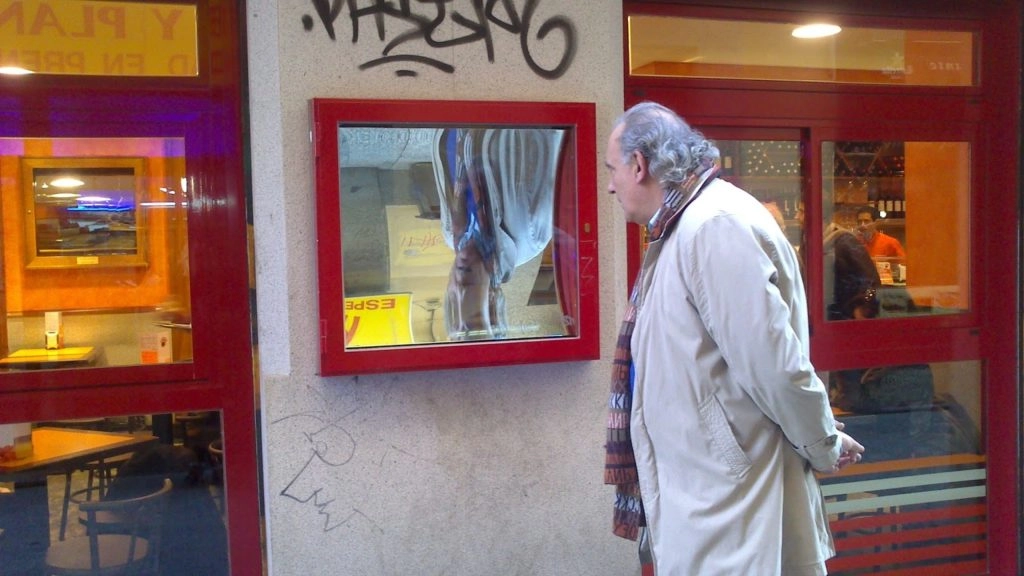 Mirrors of Callejón del Gato in Barrio de las Letras, via laisladeali.blogspot.com
4. Church of San Sebastián
Nestled between Calle Huertas and Calle Atocha, the Church of San Sebastián is one of Spain’s most historically significant literary landmarks. Built in the mid-16th century, its parish archives contain baptism, marriage and death records belonging to some of the most important figures in Spanish cultural history.
It houses the remains of Lope de Vega and the death certificate of Miguel de Cervantes. It is also linked to Tirso de Molina, Bécquer, Valle-Inclán and Espronceda, among others. The church was almost completely destroyed during the Spanish Civil War and later rebuilt, although its original tower remains intact and is one of the tallest in the neighbourhood. It has been declared a Site of Cultural Interest.
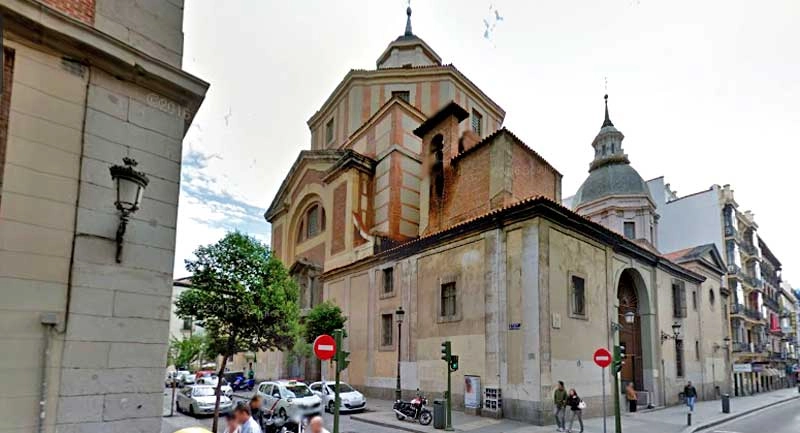 Church of San Sebastián in Madrid's Barrio de las Letras, via vivirenmadrid.info
5. Juan de la Cuesta Printing Press (Cervantine Society)
This is one of the most important landmarks for lovers of Spanish literature. The former Juan de la Cuesta printing press, currently located on Calle San Eugenio, is where the first edition of Don Quixote was printed in 1605, along with works by Calderón de la Barca, Tirso de Molina and Lope de Vega.
The space has been fully restored and is set up as a period printing workshop. One-hour guided tours are available and must be booked in advance. A highly recommended experience for anyone wishing to understand literary Madrid during the Spanish Golden Age.
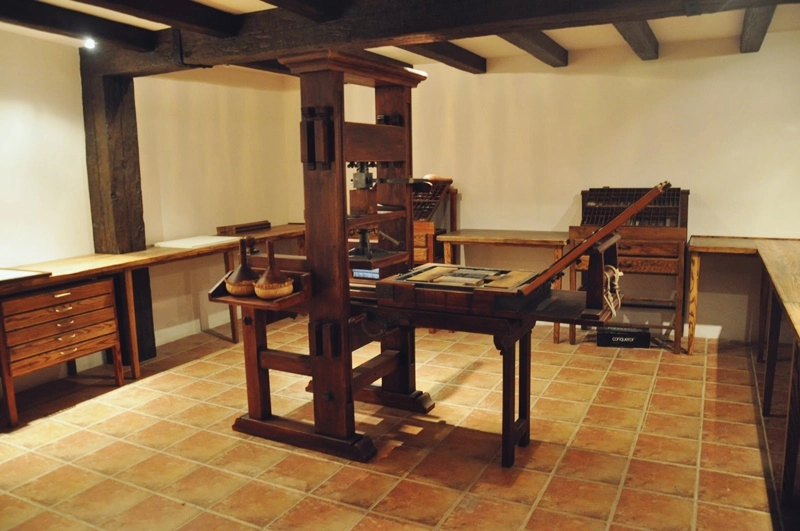 Juan de la Cuesta Printing Press, via madridesteatro.com.
6. Lope de Vega House Museum
Running parallel to Calle Huertas, Calle Lope de Vega is home to some of the neighbourhood’s most interesting corners. At number 11 stands the Lope de Vega House Museum, where the writer lived from 1610 until his death in 1635.
The house has been carefully reconstructed to show what life was like during the Spanish Golden Age. It includes personal belongings, the bedrooms of the writer and his daughters, the dining room, his study and a small rear garden that remains one of the most peaceful spots in the area. The bed on display is the very one in which Lope de Vega died in 1635.
Admission is free, although advance booking is essential, as visits are guided and begin every hour. Opening hours: Tuesday to Sunday, from 10:00 am to 6:00 pm.
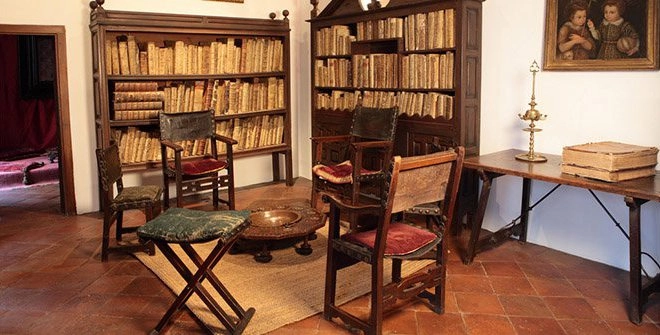 Lope de Vega House Museum, via esmadrid.com
7. Plaza de Jacinto Benavente
Just 200 meters from Plaza de Santa Ana is the Plaza de Jacinto Benavente, which pays tribute to the playwright awarded the Nobel Prize in Literature in 1922. It is one of the most lively pedestrian and meeting spaces in the neighborhood.
It is worth taking a closer look at the buildings that surround it: the Cine Ideal (opened in 1916, featuring spectacular Art Nouveau stained glass windows by the Casa Maumejean), the Teatro Calderón, and, as a curiosity, the bronze sculpture of a Madrid street cleaner from the 1960s, created by sculptor Félix Hernando García.
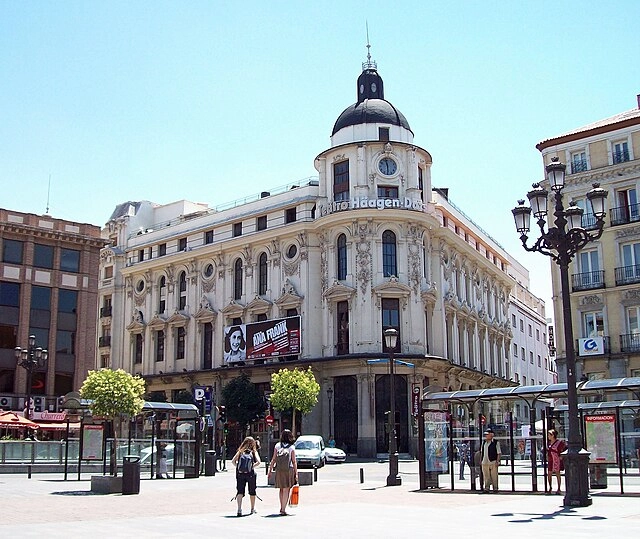 Teatro Calderón de Madrid (Spain), in Plaza de Jacinto Benavente Photo by Luis García (Zaqarbal) via Wikimedia Commons (CC BY-SA 3.0)
8. Calle Huertas
Calle Huertas is the main artery of the Barrio de las Letras and one of Madrid’s most characteristic streets. It runs diagonally through the neighborhood and brings together charming boutiques, a wide range of restaurants, and traditional bars full of local character.
What makes it truly special is its pavement: along its entire length you will find fragments of literary works engraved in gold on the ground, along with panels featuring excerpts from the biographies of writers such as Emilia Pardo Bazán and Francisco de Quevedo.
There are also architectural highlights that should not be missed, such as the Palacio de Santoña (headquarters of the Chamber of Commerce) and the Royal Academy of History, founded in 1735 as a literary gathering among friends and now home to one of the country’s most important bibliographic collections.
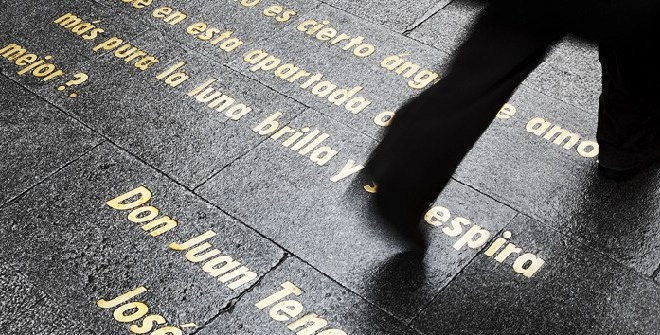 Calle Huertas with fragments of literary works. photo by esmadrid.com
9. Mercado de las Ranas
If your visit coincides with the first Saturday of the month, you have one more reason to visit the Barrio de las Letras: the Mercado de las Ranas. Organized by the neighborhood merchants’ association, it brings together more than 260 businesses that take their products out onto the street for a festive day featuring live music and small theatrical performances.
The name is a nod to the old Cantarranas Street (today’s Calle Lope de Vega), so called in the 17th century due to the frogs that inhabited the ponds of the nearby Convent of San Jerónimo. A very special way to support local commerce with a lively atmosphere.
Where to eat in the Barrio de las Musas
One of the great attractions of the Barrio de las Letras is its gastronomic scene, which blends centuries-old taverns with more contemporary culinary offerings. Some essential recommendations include:
- Nomad Food & Bar: a more contemporary option in the neighborhood, with a menu that combines international dishes with local touches. An excellent choice for a relaxed meal.
- - Casa Alberto (Calle Huertas, 18): open since 1827, it is one of Madrid’s oldest restaurants and is known for its traditional tripe stew and draft vermouth.
- - La Venencia: a 1930s sherry tavern where time seems to have stood still, specializing in fino and manzanilla wines.
- - Mercado de Antón Martín: located between the Barrio de las Letras and Lavapiés, it combines traditional stalls with Japanese, Mexican, and fusion cuisine in a charming setting.
- - Salmón Guru: a cocktail bar ranked among the 50 best bars in the world, perfect for ending the night with a unique experience.
- - Yugo The Bunker: a Michelin-starred high-end Japanese restaurant, ideal for a special dinner and requiring advance reservation.
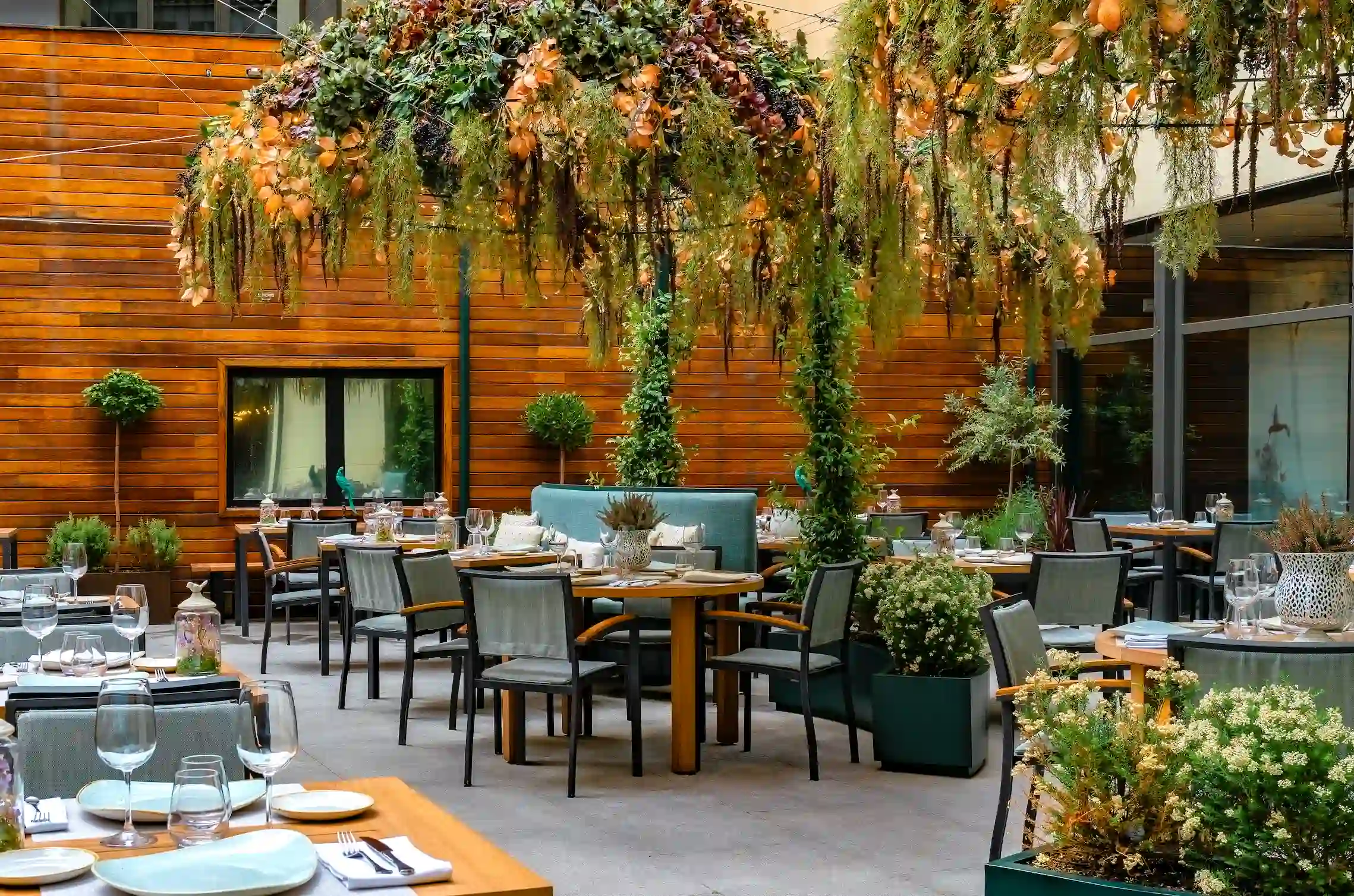 Nomad Restaurant at Hotel Vincci Soho 4*.
Where to stay in the Barrio de las Letras: Vincci Soho 4*
The hotel Vincci Soho 4* is located in the heart of the Parnassus district, just a few meters from the Ateneo de Madrid—literally door to door—and a short walk from Plaza de Santa Ana, Calle Huertas, and all the landmarks we have covered.
The building is part of this historic-artistic complex listed as a Property of Cultural Interest, although inside you will find a fully renovated hotel with all the amenities to ensure your stay in Madrid is an exceptional experience.
A perfect starting point for this literary journey, and one more reason to make your getaway to Madrid truly special.
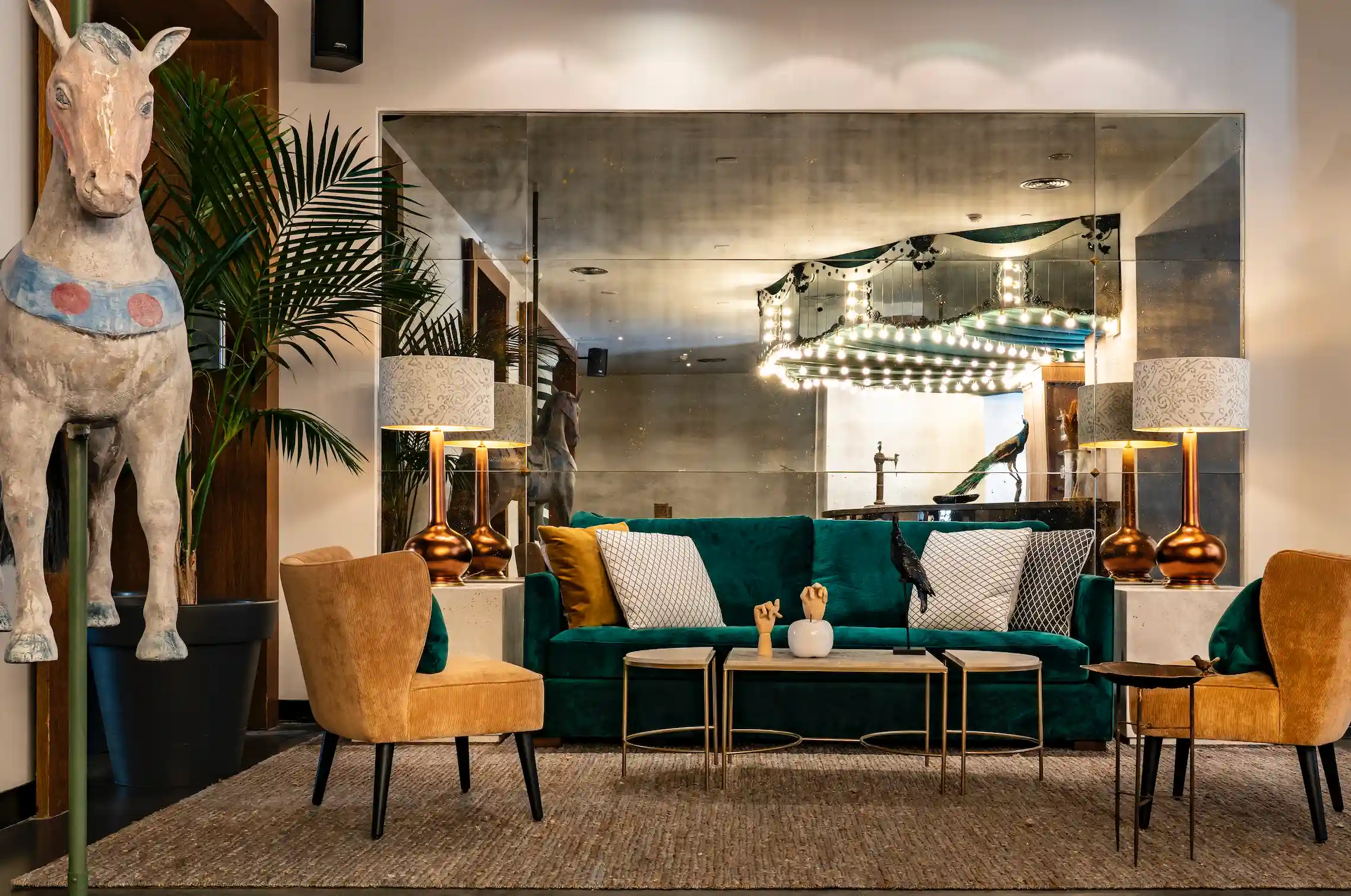 Lobby of Hotel Vincci Soho 4*.
Practical tips for visiting the Barrio de los Literatos
- - Recommended time: at least 2–3 hours; a full morning or afternoon if you plan to visit museums and make gastronomic stops.
- - How to get there: Metro Line 1 (Sol, Antón Martín, or Atocha stations) or on foot from Paseo del Prado or Puerta del Sol.
- - Best way to explore it: on foot, as it is a compact and pedestrian-friendly neighborhood.
- - When to visit: any time of year, although in spring and autumn the atmosphere on the terraces of Plaza de Santa Ana is especially pleasant.
- - Mercado de las Ranas: held on the first Saturday of every month on Calle Huertas, from around 10 a.m. to 7 p.m.
- - Casa Museo Lope de Vega: free entry with mandatory reservation, open Tuesday to Sunday from 10 a.m. to 6 p.m.
Enjoy your travels more
subtitle_categories_andromeda
Vincci Talks
Our podcast, a series of close encounters where relaxed conversations are held on various topics of general interest, with special guests who bring their expert and unique insights.
View moreVincci Expert
Immerse yourself in Vincci Local Expert and explore the best of each destination where our hotels are located. From local events to exclusive activities at our establishments, here you will find everything you need to live a Vincci experience.
View moreVincci Experiences
Explore the space where we store all the unique experiences you can have with us.
View moreVincci Getaways and destinations
Discover in our blog all the information about getaways and holiday destinations you need.
View moreVincci Gastronomy
Explore our posts section about the exquisite gastronomy we offer.
View moreUnique Events
Explore our posts section, the place to discover detailed information about special events, both social and corporate.
View moreTravel tips and recommendations
Our selection of posts offering an indispensable guide to finding tips and recommendations that inspire every journey.
View moreVincci Sustainable and responsible
Discover in our posts section about our sustainable and responsible initiatives.
View moreVincci Corporate Hotels
Our section of highlighted news reflecting the excellence and trajectory of our hotel chain.
View more