Villages of Cádiz: the most beautiful spots in the province Vincci Hoteles

Villages of Cádiz: the most beautiful spots in the province
Villages of Cádiz: the most beautiful spots in the province

- 1. The Most Beautiful Villages in Cádiz: Our Selection
- 1.1 Conil de la Frontera
- 1.2 Grazalema
- 1.3 Vejer de la Frontera
- 1.4 Medina Sidonia
- 1.5 Olvera
- 1.6 Setenil de las Bodegas
- 1.7 Chipiona
- 1.8 Zahara de la Sierra
- 1.9 Arcos de la Frontera
- 1.10 Sanlúcar de Barrameda
- 1.11 Tarifa
- 1.12 El Puerto de Santa María
- 1.13 Castellar de la Frontera
- 2. Conclusion
The province of Cádiz uniquely combines the serenity of the Atlantic Ocean and the Mediterranean Sea with the rugged tones of its mountains and Natural Parks. A charming destination chosen every year by thousands of families and travellers looking to escape the routine of city life. These are the villages in Cádiz you should visit at least once in your lifetime—although chances are you'll want to return again and again.
The Most Beautiful Villages in Cádiz: Our Selection
1. Conil de la Frontera
If we had to choose just one village to represent the coastal essence of Cádiz, Conil de la Frontera would be the perfect candidate. Its blend of the blue hues of the sky and sea, the golden colour of its beaches, and the skyline of whitewashed houses creates a picture-postcard setting that rarely disappoints.But Conil is much more than its beaches—although the beaches alone would justify the trip. La Fontanilla Beach, the Roche coves, and the wild Playa del Roqueo are among the most beautiful stretches of coastline on the Costa de la Luz. In the town centre, it’s worth wandering through its white streets, visiting the Parish Church of Santa Catalina, the Town Hall, or the remains of the medieval watchtowers that once guarded the coastline.
And the cherry on top: almadraba bluefin tuna. Conil is one of the great temples of bluefin tuna fishing, a centuries-old tradition that turns May and June into a true gastronomic celebration. If you visit during this period, don’t leave without trying it.
Must-do: Watch the sunset from the Roche coves and enjoy a delicious bluefin tuna belly dish in one of the bars in the old town.
 Conil de la Frontera, Cádiz, via www.trip.com
2. Grazalema
Nestled at the foot of the Sierra de Grazalema Natural Park—declared a Biosphere Reserve by UNESCO—this small mountain village appears in every ranking of the best villages in Cádiz, and for good reason. Its historic centre, declared a Historic-Artistic Site, showcases understated yet striking beauty, with stone houses and traditional clay-tiled roofs contrasting against the surrounding peaks.
Grazalema holds two fascinating surprises for visitors: it is one of the rainiest places in all of Andalusia—thanks to moist Atlantic winds trapped by the mountains—and, for the same reason, snowfall is not uncommon in winter. Seeing the village covered in snow, with silent streets and white peaks in the background, is an unforgettable sight.
For hiking enthusiasts, the Natural Park offers spectacular routes such as the climb to the Pinsapar Forest—one of the world's most important Spanish fir forests—or the Torreón Trail, which leads to the province’s highest peak at 1,654 metres.
Must-do: The Pinsapar trail and the village square at sunset.
 Grazalema, Cádiz, via www.europapress.es
3. Vejer de la Frontera
For many travellers, Vejer de la Frontera is, without question, the most beautiful village in Cádiz—and there are plenty of reasons to support that claim. Perched on a hilltop on the banks of the Barbate River, just 8 kilometres from the coast, this village appears as a white canvas surrounded by lush greenery. When the sun begins to set, everything is bathed in warm orange tones, turning every corner into a perfect photograph.
The reaction of first-time visitors is usually unanimous: wander aimlessly through its narrow alleyways, discover hidden squares, marvel at the medieval castle, the ancient walls, the Jewish Quarter, or the Church of the Divine Saviour. Plaza de España, with its beautiful fountain and ceramic tiles, is another must-see spot.
Just 9 kilometres away, El Palmar Beach completes the experience: a long, windswept Atlantic beach with one of the best surfing atmospheres in the province. Vejer is also renowned for its outstanding gastronomic scene, where restaurants showcase produce from both land and sea—with almadraba tuna once again taking centre stage—through creative cuisine that goes far beyond tradition.
Must-do: The viewpoint from the town walls at sunset and a taste of traditional lomo en manteca in a local tavern.
 Vejer de la Frontera, Cádiz, via www.pinterest.com
4. Medina Sidonia
Medina Sidonia is one of those villages in Cádiz that has yet to become widely known, and that is precisely part of its charm. Considered one of the oldest cities in Europe, with more than three thousand years of documented history, it sits atop a privileged hill overlooking the entire Cádiz countryside.
Its past is extraordinary: Phoenicians, Romans, Visigoths, Moors and Castilians have all left their mark on its streets. From the Roman period, remarkable arches and underground sewers remain—open to visitors and unique in Andalusia—while the Arco de la Pastora, the Almohad walls, and the impressive Church of Santa María la Coronada bear witness to the historical importance of this town.
Medina Sidonia also has a gastronomic ace up its sleeve: its famous alfajores. This ancient sweet of Arab origin, made with flour, honey and spices, is one of the province’s most beloved delicacies. Don’t leave without trying them.
Must-do: The Roman sewers (an exceptional archaeological site) and artisan alfajores from the local bakeries.
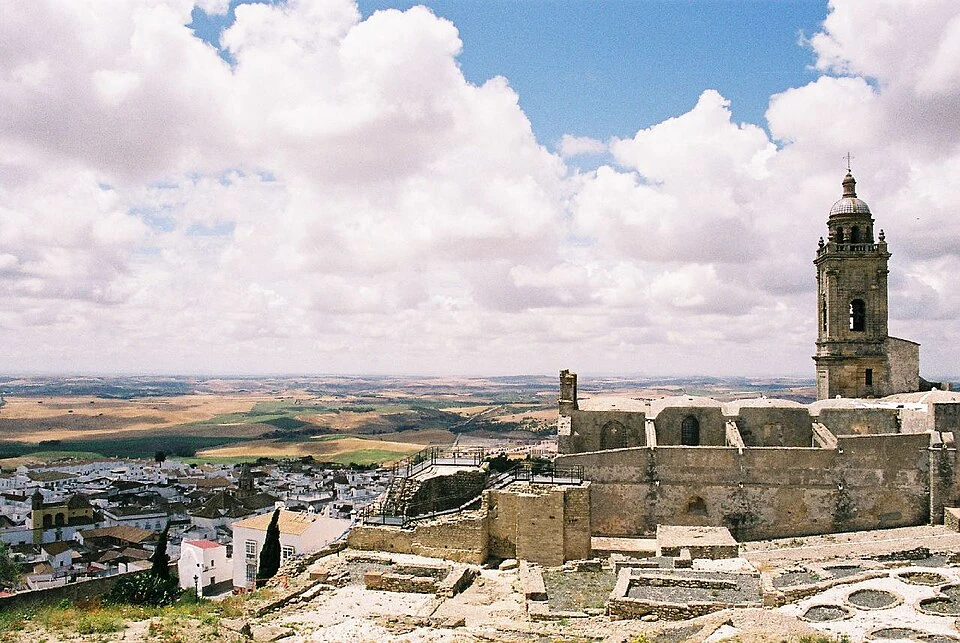 Medina Sidonia village in Cádiz – Photo by Veronique Debord via Wikimedia Commons (CC BY-SA 2.0).
5. Olvera
The image of Olvera as you approach by road says it all: the Arab castle crowning the village, the neoclassical Church of Nuestra Señora de la Encarnación dominating the skyline, and a sea of white houses cascading down the mountainside. It’s hard to find a more Andalusian scene.
Olvera is part of the famous White Villages Route and is also the starting—or ending—point of the Vía Verde de la Sierra, a former railway line transformed into a 36-kilometre cycling and hiking trail that stretches to Puerto Serrano through spectacular mountain landscapes. One of the most impressive routes in Andalusia, yet still relatively undiscovered.
Its 12th-century Arab Castle, the Church of the Encarnación, the Sanctuary of Nuestra Señora de los Remedios, and the Frontier and Castles Museum form a historic centre declared a Historic-Artistic Site, well worth a leisurely morning stroll.
Must-do: The first section of the Greenway and the views of the village from the Pruna road at sunrise.
 Olvera, Cádiz, via www.andalucia.org
6. Setenil de las Bodegas
There are beautiful villages, and then there are truly unique villages. Setenil de las Bodegas undoubtedly belongs to the latter category. Rock is the absolute protagonist here: the village was literally built beneath a massive rock overhang, making use of the formations carved by the Guadalporcún River to create houses, bars and streets that coexist naturally with the stone. And it has been this way for centuries.
Its two most famous streets—Cuevas del Sol and Cuevas de la Sombra—capture the essence of the village: one faces south and is bathed in sunlight, while the other lies permanently shaded beneath the rock. Walking through them feels like passing between two different worlds separated only by the riverbed.
Setenil is not only one of the most unique villages to visit in Cádiz, but it has also gained international recognition by topping the European Best Destinations list of Europe’s Best Hidden Gems. Its gastronomy, deeply rooted in mountain produce such as cured meats, cheeses and honey, is yet another compelling reason to visit.
Must-do: Enjoy breakfast or a glass of wine in one of the bars nestled beneath the rock on Cuevas de la Sombra Street.
 Setenil de las Bodegas, Cádiz, via www.pxhere.com
7. Chipiona
Located on the northwestern coast of Cádiz, where the Atlantic Ocean meets the mouth of the Guadalquivir River, Chipiona is a cheerful and sun-filled fishing town with a well-preserved historic center, golden sandy beaches, and above all, Spain’s tallest lighthouse: standing 62 meters high and offering breathtaking panoramic views of the Cádiz coastline and the Guadalquivir estuary.
Chipiona also has a spiritual side that many visitors are unaware of: its Sanctuary of Our Lady of Regla, built on the site of an ancient Roman temple, is one of the most important centers of devotion in southern Spain. The Roman Aqueduct, the Castle of San Marcos, and the town’s renowned manzanilla wineries —Chipiona is truly a land of wine— complete a visit that surprises with its richness and diversity.
Must-do: climb the lighthouse at sunset and enjoy a glass of local muscatel wine, Chipiona’s famous sweet wine, at any of the town’s bars.
 Chipiona, Cádiz, via [www.pxhere.com](http://www.pxhere.com)
8. Zahara de la Sierra
If there is one town in Cádiz that looks as though it has stepped straight out of a fairy tale, it is Zahara de la Sierra. Perched on a rocky hilltop overlooking the Zahara-El Gastor Reservoir, and surrounded by the peaks of the Sierra de Grazalema Natural Park, this small village combines almost unreal beauty with a remarkable historical heritage.
At its highest point, the medieval castle —of Almohad origin— watches over the village and offers some of the most spectacular views of the reservoir and surrounding mountains in the entire province. Below, steep whitewashed streets adorned with flower-filled pots create the quintessential atmosphere of a traditional Andalusian white village.
Zahara is also an excellent starting point for hiking routes through the Natural Park, including trails leading to Grazalema and towards Garganta Verde and Garganta Seca, two of the most spectacular natural landscapes in southern Spain.
Must-do: climb up to the castle first thing in the morning.
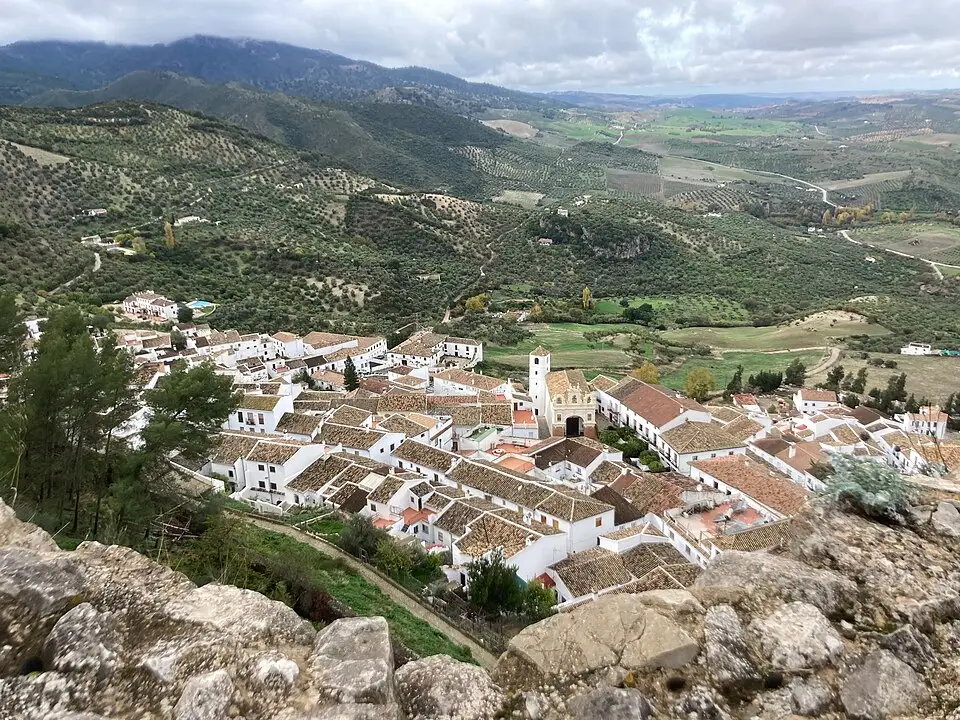 Zahara de la Sierra, Cádiz – Photo by JakobHosp via Wikimedia Commons (CC0).
9. Arcos de la Frontera
Arcos de la Frontera is the gateway to the Route of the White Villages of Cádiz and one of those places that alone justifies a trip to the province. Perched atop a 96-meter cliff overlooking the Guadalete River, the town boasts one of the most dramatic and photographed landscapes in Andalusia.
Plaza del Cabildo is its monumental heart: the Basilica of Santa María de la Asunción —with its magnificent Plateresque façade—, the Ducal Castle, the Town Hall, and the National Parador all stand together in a setting that offers stunning views over the countryside and river valley. Yet Arcos also invites visitors to lose themselves in its maze-like Moorish streets, discover unexpected viewpoints, and explore its churches, convents, and palaces scattered throughout the old town.
The gastronomy of Arcos is another of its highlights: local produce from the fertile plains —vegetables and olive oil—, Payoyo goat cheese, and wines from the Jerez Wine Region all feature prominently on tables that deserve far more recognition than they usually receive.
Must-do: visit the Peña de la Berlanga viewpoint at sunset and stop by the Parador to enjoy its spectacular views.
 Arcos de la Frontera, Cádiz, via [www.pixabay.com](http://www.pixabay.com)
10. Sanlúcar de Barrameda
Sanlúcar de Barrameda is one of those towns with a soul all its own. Located at the mouth of the Guadalquivir River, opposite the Doñana National Park, this town boasts a rich history that stretches from the great voyages of discovery —Magellan departed from here on his circumnavigation of the globe in 1519— to a winemaking tradition that has placed it firmly on the world gastronomic map.
Sanlúcar’s manzanilla wine is unique: this fortified wine develops unmatched organoleptic characteristics thanks to the area's microclimate, shaped by the humidity of both river and sea. The wineries of renowned producers such as Barbadillo, Hidalgo, and Pedro Romero welcome visitors and offer fascinating insights into the winemaking process.
Paseo Bajo de Guía, along the riverfront, is the perfect place to sample the famous Sanlúcar prawns —considered among the finest in Spain— accompanied by a chilled glass of manzanilla. The Upper Town, with its Palace of Medina Sidonia and Santiago Castle, and the Lower Town, home to wineries and a lively maritime atmosphere, complete a visit that can also be combined with a boat trip to Doñana National Park.
Must-do: enjoy a plate of prawns in Bajo de Guía by the riverside and visit one of the historic wineries.
 Horse races in Sanlúcar de Barrameda, Cádiz, via [www.pinterest.com](http://www.pinterest.com)
11. Tarifa
At the southernmost point of Europe, where the Atlantic Ocean and the Mediterranean Sea meet and Africa lies just 14 kilometers away, Tarifa is much more than a trendy destination. Its historic center, enclosed by medieval walls, hides a network of narrow streets and charming squares with a unique character: part Andalusian, part cosmopolitan, infused with the bohemian and carefree spirit that only towns that truly know how to enjoy life possess.
Tarifa is the world capital of windsurfing and kitesurfing, thanks to the powerful Levante wind that sweeps across the coastline. What may seem like a challenging force of nature has transformed the area into a paradise for wind sports enthusiasts. Its 35 kilometers of beaches —including Valdevaqueros, Punta Paloma, and Los Lances— are among the wildest and most spectacular in Spain.
Yet Tarifa is also steeped in history: the Puerta de Jerez, the Church of San Mateo, Guzmán el Bueno Castle, and the Roman ruins of Baelo Claudia —located a few kilometers away on Bolonia Beach— are essential stops for anyone wishing to understand the historical depth of this remarkable corner of Spain.
Must-do: visit the ruins of Baelo Claudia in Bolonia and watch the sunset from the town walls with the African coastline on the horizon.
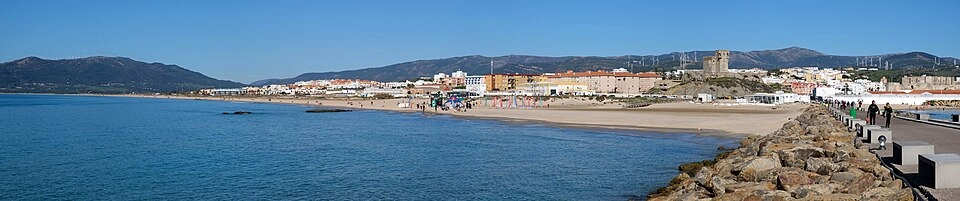 Tarifa, Cádiz – Photo by Kallerna via Wikimedia Commons (CC BY-SA 4.0).
12. El Puerto de Santa María
El Puerto de Santa María is one of those towns in Cádiz that is sometimes overlooked due to its proximity to the provincial capital, yet it has more than enough personality and attractions to justify a lengthy visit. Its historic center, filled with stately mansions, centuries-old wineries, and Baroque churches, reflects the prosperity accumulated over centuries as an important commercial port.
The city is one of the key hubs of the Jerez Wine Region. Legendary wineries such as Osborne, Terry, and Caballero are based here, and a visit to one of them —including a tasting session— is among the most rewarding experiences in the province. Gastronomically, El Puerto is also home to Aponiente, the restaurant of Chef Ángel León, holder of three Michelin stars and a global reference in seafood cuisine.
Just minutes from the town center, La Puntilla Beach and Valdelagrana Beach offer kilometers of fine sand along the Bay of Cádiz, with beautiful views towards the city of Cádiz that make a morning stroll especially memorable.
Must-do: visit the wineries and explore the historic center to discover its palaces and Plaza de España.
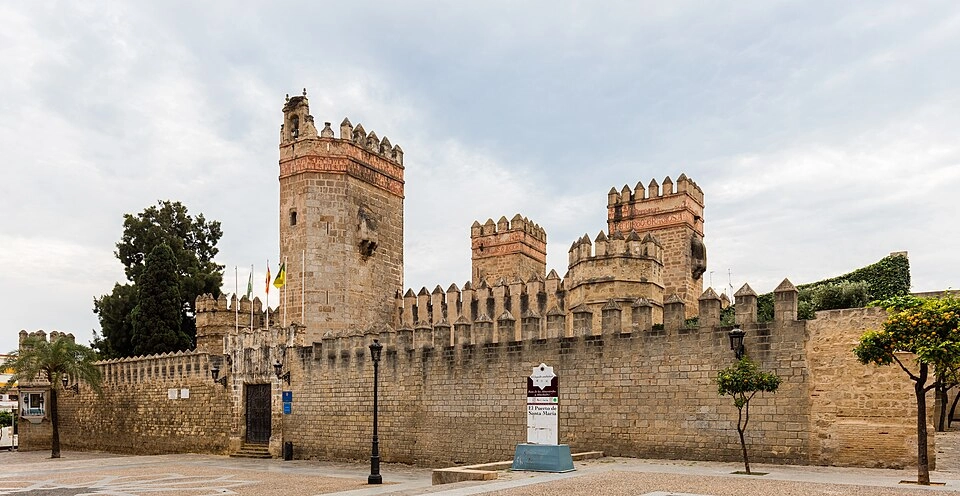 Castle of San Marcos in El Puerto de Santa María – Photo by Diego Delso via Wikimedia Commons (CC BY-SA 4.0).
13. Castellar de la Frontera
Few towns in Cádiz inspire as much immediate fascination as Castellar de la Frontera. This fortified village, built within a 13th-century castle, is one of the very few examples in Spain of a populated settlement located entirely inside a medieval fortress. Its cobbled streets, whitewashed houses adorned with flower pots, peaceful atmosphere, and views over the Guadarranque Reservoir and Los Alcornocales Natural Park create an ambiance that feels transported from another era.
In the 1960s, most residents moved to Castellar Nuevo, a purpose-built settlement at the foot of the hill. However, some inhabitants remained within the castle walls. Over time, artists and international travelers arrived, transforming the old village into a unique hub of alternative and creative living that today coexists harmoniously with cultural tourism.
Castellar de la Frontera is included in the list of Spain’s Most Beautiful Villages and is undoubtedly one of the province’s most distinctive and lesser-known destinations.
Must-do: enter the walled enclosure through the castle gate and wander leisurely through its streets. The viewpoint overlooking the reservoir at sunset is truly spectacular.
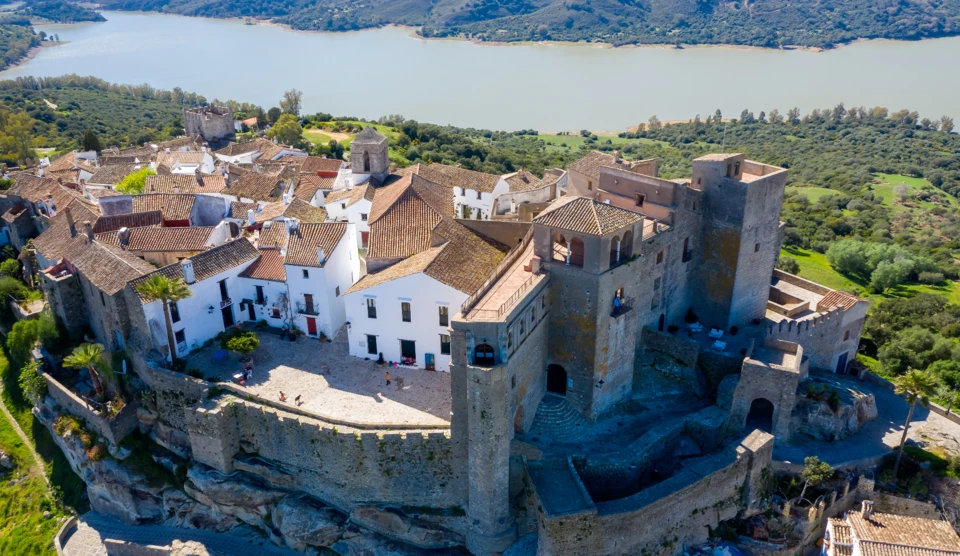 Castellar de la Frontera, Cádiz – Photo by Norhum via Wikimedia Commons (CC BY-SA 4.0).
Vincci Costa Golf 4*: Your Base for Exploring the Best Towns in Cádiz
If you are looking for a resort where you can relax while remaining well connected to the most charming towns in Cádiz, our recommendation is Vincci Costa Golf 4*.
 Room at Vincci Costa Golf 4*.
Located within the prestigious Novo Sancti Petri development in Chiclana de la Frontera, Vincci Costa Golf 4* is one of the finest hotels in the province of Cádiz, situated next to the magnificent La Barrosa Beach. The hotel spans 45,000 square meters of landscaped gardens, facilities, and swimming pools equipped with every comfort and convenience, making it ideal both for families and for those seeking relaxation and tranquility.
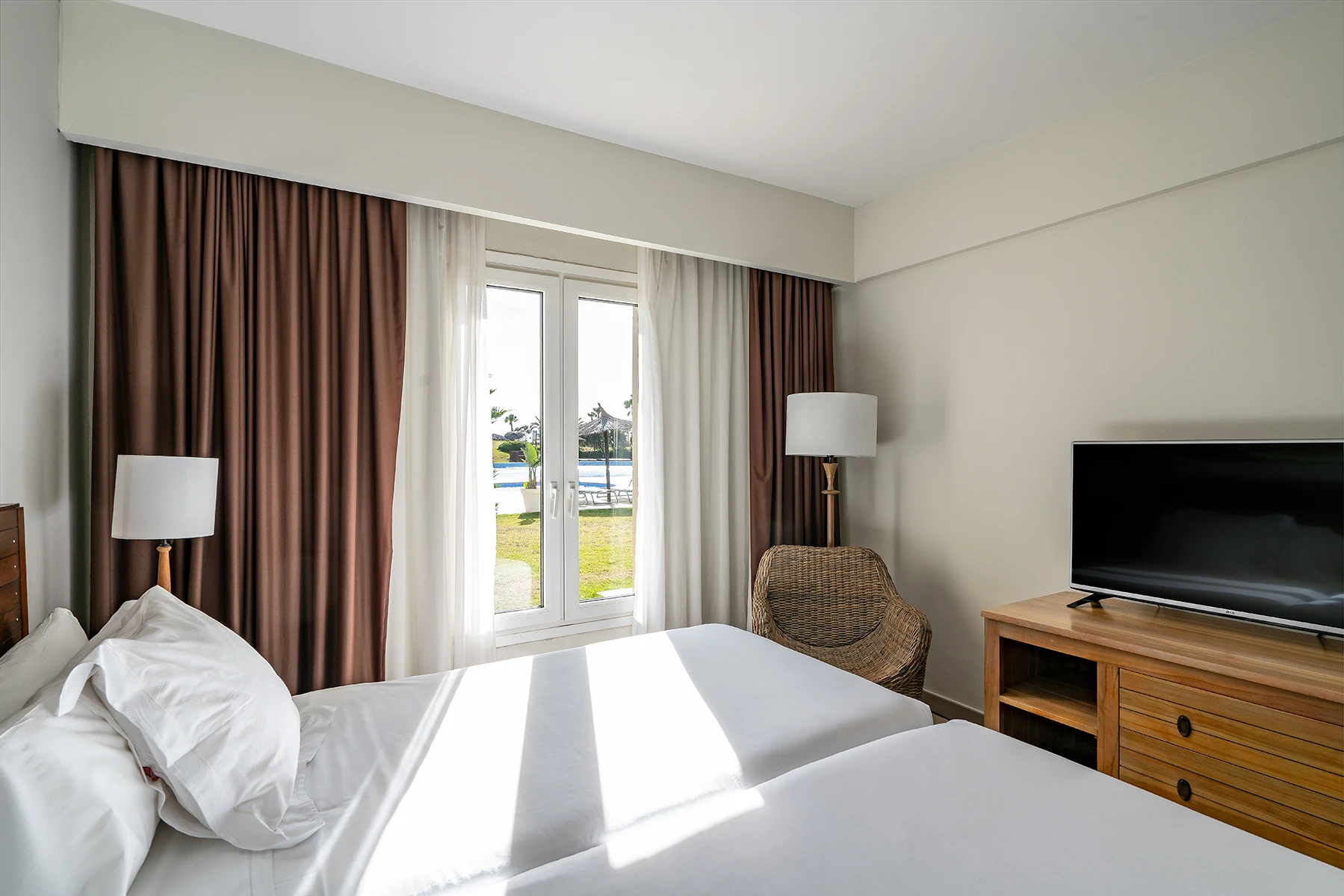 Junior Suite Room at Vincci Costa Golf 4*.
Vincci Costa Golf 4* features 195 rooms and a comprehensive range of facilities designed for all types of travelers. Highlights include its large outdoor swimming pool surrounded by palm trees and sun loungers, alongside the Pool Bar, perfect for enjoying cocktails, light dishes, and desserts outdoors. Guests can also enjoy a children's pool, an adults-only pool, an indoor pool, and the exclusive Nammu Spa Areas, a 450 m² wellness space dedicated to treatments, spa circuits, and hydrotherapy. Its culinary offering includes a café with a finger-food concept, a buffet restaurant, Bar Bimbai serving snacks and cocktails in a relaxed atmosphere, and El Mercado Night & Grill Restaurant, open during summer and focused on fresh locally sourced products. The hotel also boasts an attractive beach bar where guests can savor Cádiz specialties by the sea, as well as a gym, complimentary paddle tennis courts for guests, entertainment for adults and children, and a Mini Club with children's activities, creating a complete holiday experience that combines relaxation, gastronomy, leisure, and wellness in an exceptional setting.
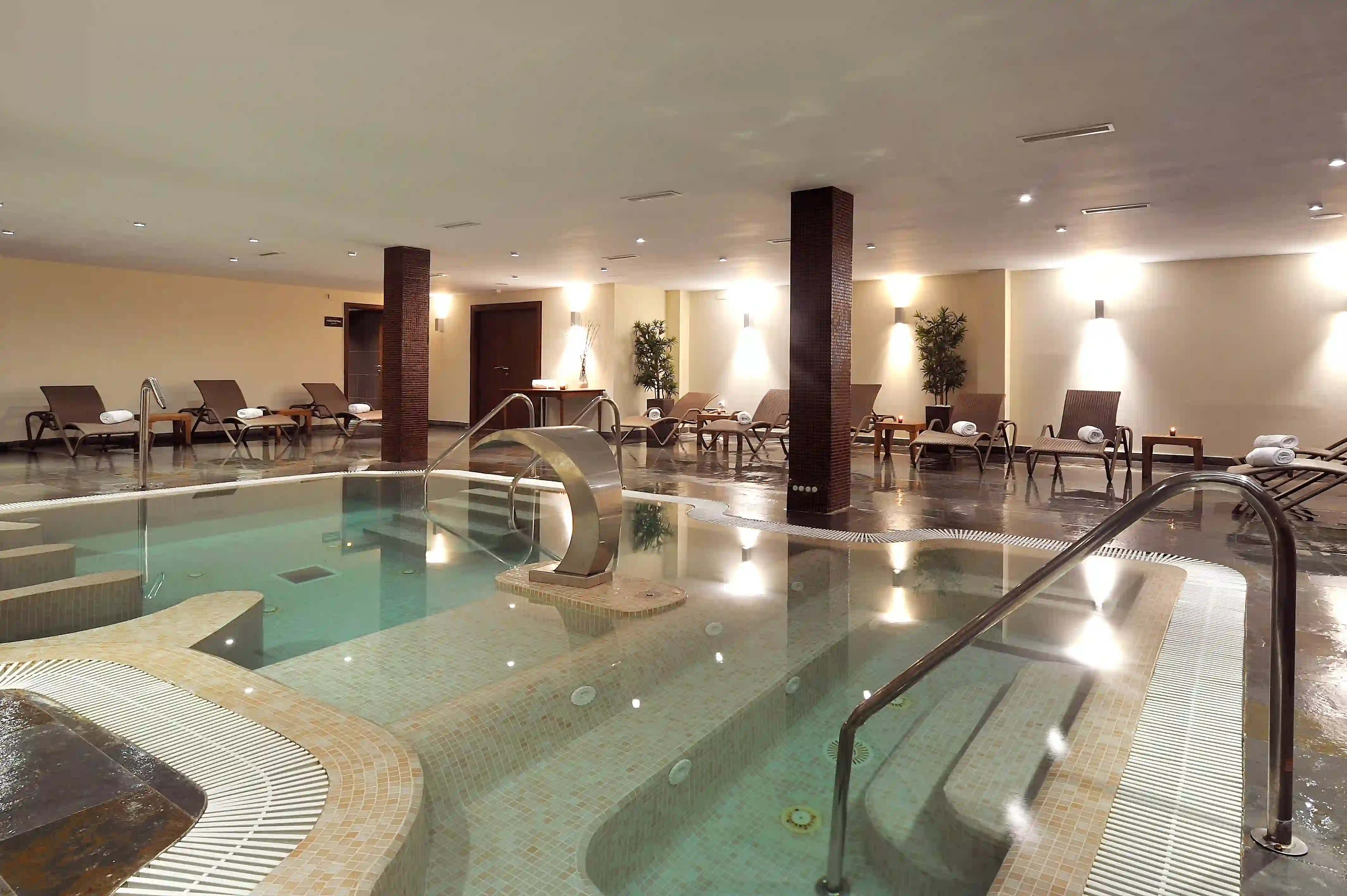 Spa at Vincci Costa Golf 4*.
The Sancti Petri area is a paradise on the southern side of the Bay of Cádiz, where visitors can enjoy the clarity of its crystal-clear waters. Its strategic location also makes it ideal for visiting some of the most beautiful towns in Cádiz: Conil, Vejer, Medina Sidonia, and Arcos de la Frontera are all less than an hour away by car, while Setenil, Grazalema, and Zahara de la Sierra are perfect destinations for a full-day excursion.
Conclusión
The province of Cádiz has the rare ability to satisfy every type of traveler and travel style without disappointing anyone. If you love the coast, Conil, Chipiona, Sanlúcar, and Tarifa will give you everything you are looking for and more. If you are drawn to inland landscapes, mountains, and history, Grazalema, Zahara, Olvera, Setenil, and Arcos will leave you speechless. If your passion is history and gastronomy, Medina Sidonia, El Puerto de Santa María, and Sanlúcar de Barrameda are destinations that enrich both the soul and the palate. And if you enjoy discovering unique and lesser-known places, Castellar de la Frontera and Vejer de la Frontera will capture your heart forever.
What all these towns share —and what makes them some of the best places to visit in Cádiz— is their ability to make time stand still. They invite you to slow down, look more carefully, and truly appreciate the beauty of simplicity and authenticity. In an age when destinations are becoming increasingly crowded and homogenized, the province of Cádiz remains true to itself. And that, today, is priceless.
To continue inspiring your next trip and discover even more about this unique destination, we invite you to listen to Episode 11 of our podcast Vincci Talks "The Art of Living in Cádiz" on our YouTube and Spotify channels, a journey through the culture, landscapes, and lifestyle of Cádiz.
Enjoy your travels more
subtitle_categories_andromeda
Vincci Talks
Our podcast, a series of close encounters where relaxed conversations are held on various topics of general interest, with special guests who bring their expert and unique insights.
View moreVincci Expert
Immerse yourself in Vincci Local Expert and explore the best of each destination where our hotels are located. From local events to exclusive activities at our establishments, here you will find everything you need to live a Vincci experience.
View moreVincci Experiences
Explore the space where we store all the unique experiences you can have with us.
View moreVincci Getaways and destinations
Discover in our blog all the information about getaways and holiday destinations you need.
View moreVincci Gastronomy
Explore our posts section about the exquisite gastronomy we offer.
View moreUnique Events
Explore our posts section, the place to discover detailed information about special events, both social and corporate.
View moreTravel tips and recommendations
Our selection of posts offering an indispensable guide to finding tips and recommendations that inspire every journey.
View moreVincci Sustainable and responsible
Discover in our posts section about our sustainable and responsible initiatives.
View moreVincci Corporate Hotels
Our section of highlighted news reflecting the excellence and trajectory of our hotel chain.
View more