Madrid on Film: A Journey through the Cinematic Locations of the Capital Vincci Hoteles

Madrid on Film: A Journey through the Cinematic Locations of the Capital
Madrid on Film: A Journey through the Cinematic Locations of the Capital

The Madrid of Pedro Almodóvar
Almodóvar, one of the most internationally recognised filmmakers, has made Madrid a recurring protagonist in his filmography. His vision, capable of capturing human emotions in urban and contemporary settings, invites us to explore the city from a unique perspective. The recent location map he has created guides us through some of the most representative places in his films.
Iconic Corners

Telefónica Building (Gran Vía)This symbol of modernity appears in Women on the Verge of a Nervous Breakdown. With its imposing presence and blend of tradition and modernity, it adds an urban touch to the narrative.
Casa Costus: A refuge of the Madrid Movida, it became the setting for Pepi, Luci, Bom and Other Girls on the Heap. Its transgressive atmosphere reflects the freedom and spirit of the 80s in the capital.
El Rastro and La Bobia: These feature in thrilling scenes in Labyrinth of Passions, showcasing the everyday multicultural life of Madrid. Their vibrancy and energy make them the perfect setting to explore the complexities of identity.
Plaza de Santa Ana (Saint Anne Square): A cultural and social meeting point that appears in films like High Heels, Talk to Her and Tie Me Up! Tie Me Down!. Surrounded by theatres and restaurants, it witnesses multiple meetings and partings.
Plaza Mayor: With its monumental architecture, Plaza Mayor serves as the backdrop in The Flower of My Secret, where it becomes a symbol of love and nostalgia, adding emotional depth to the narrative.
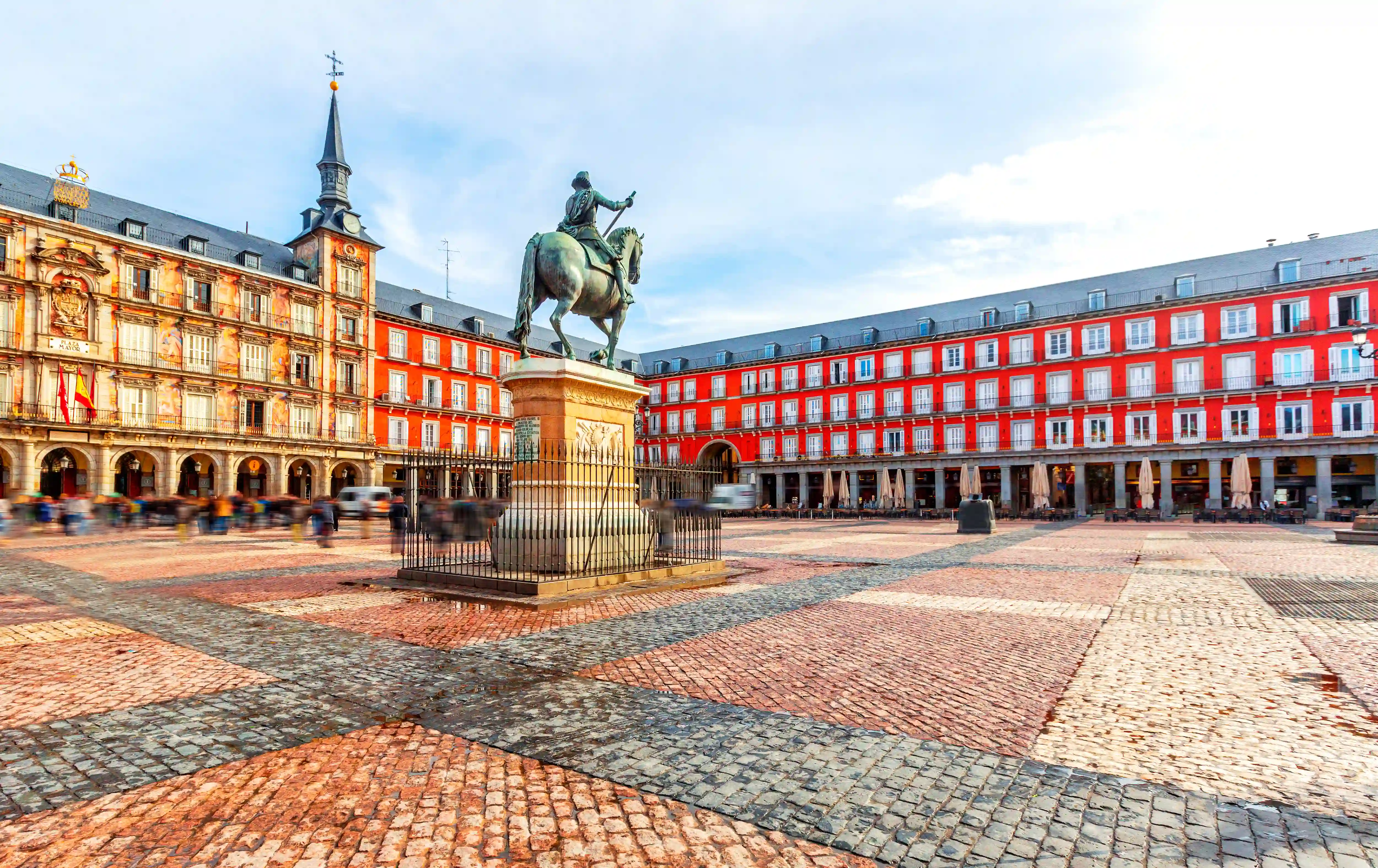 Plaza Mayor
Puerta de Moros and San Francisco el Grande: In The Flower of My Secret, these locations provide an intimate and poetic atmosphere, blending the sacred and the everyday as the characters' inner struggles are explored.
Segovia Viaduct: This bridge, featured in Matador, I'm So Excited and Bad Education, symbolises the connection between different eras and worlds, encapsulating Madrid’s essence as a crossroads.
Plaza del Alamillo: In High Heels, this square becomes an urban space where characters confront their emotions, intensifying the drama they experience.
Puerta de Alcalá: In Live Flesh, this iconic monument stands as a symbol of Madrid's history and identity, adding a layer of depth to Almodóvar’s narrative.
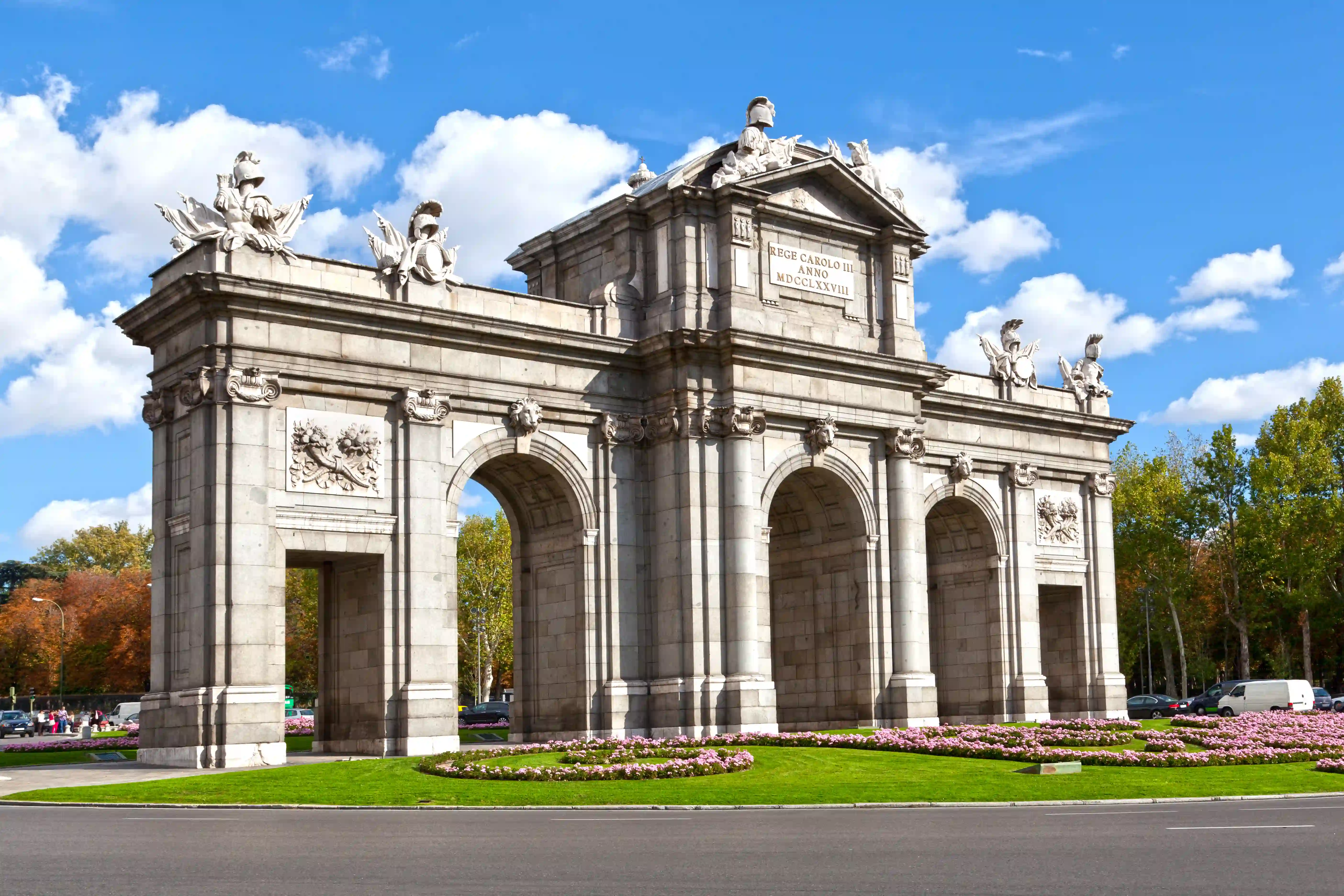 Puerta de Alcalá
Centro Cultural Conde Duque: Appearing in Law of Desire, this space showcases how art and life intertwine, reflecting the city’s artistic vitality.
Círculo de Bellas Artes and Teatro Bellas Artes: These locations feature in All About My Mother and Women on the Verge of a Nervous Breakdown, representing the intersection between cinema and performing arts in Almodóvar's work.
Cine Doré: A renowned cinema in Madrid and featured in Talk to Her and The Flower of My Secret, it is a refuge for film lovers with its vintage charm and nostalgic atmosphere.
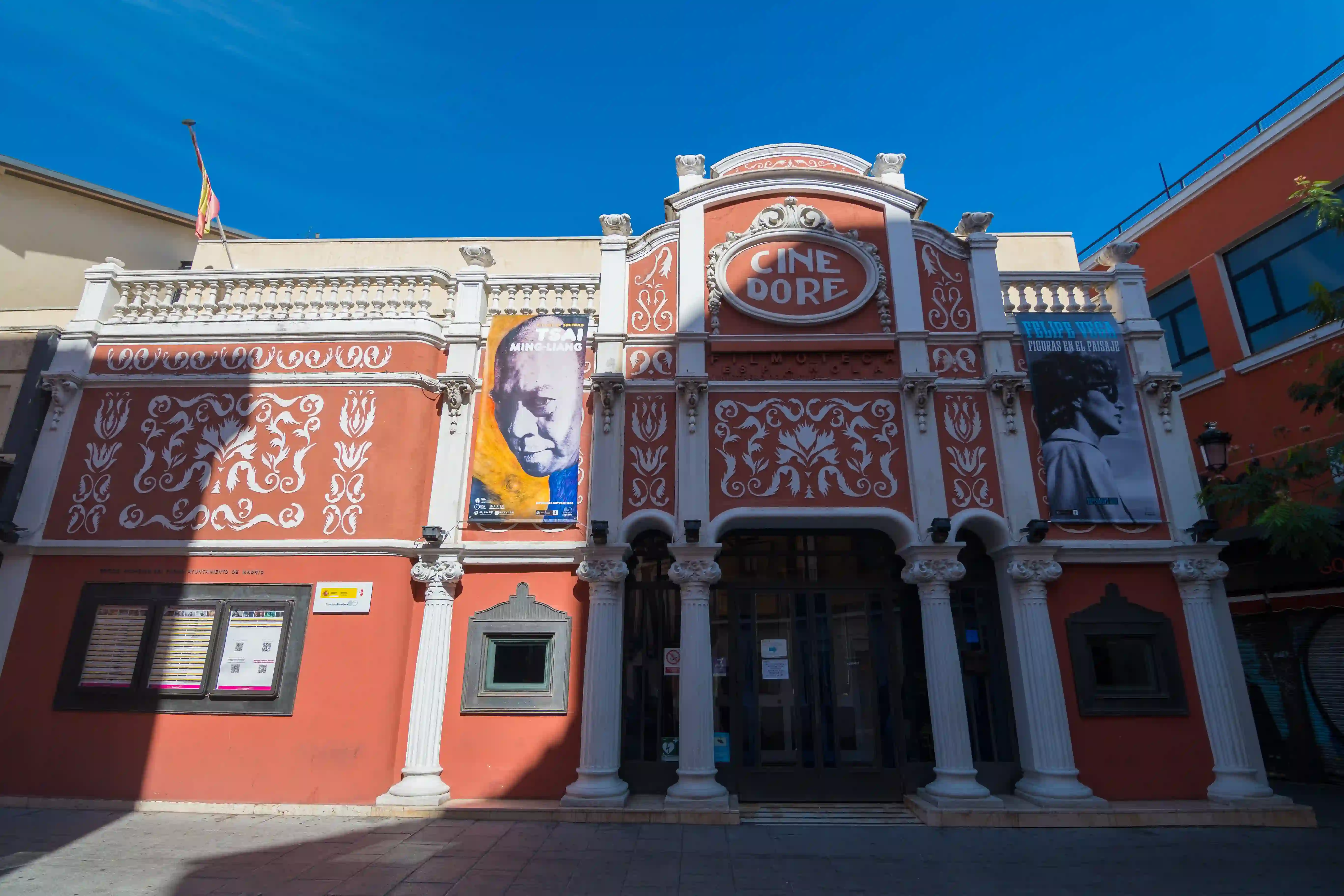 Cine Doré
Teatro Lara: Featured in High Heels and Law of Desire, this theatre showcases Madrid’s rich culture and the link between theatre and film.
Museo Chicote: This iconic bar on Gran Vía appears in Broken Embraces, serving as a meeting place reflecting the glamour and history of the city since the 1930s.
Villa Rosa: In High Heels, this restaurant is a space of celebration and emotion, reflecting Madrid's social life.
Chueca District and Taberna Ángel Sierra: In Tie Me Up! Tie Me Down! and The Flower of My Secret, these locations represent the diversity and vibrancy of the Madrid community.
Taberna Alhambra: In What Have I Done to Deserve This?, this tavern symbolises everyday life in Madrid, portraying the city's social and family dynamics.
Farmacia Cardona: Located in Malasaña, it appears in Women on the Verge of a Nervous Breakdown, adding a nostalgic touch with its vintage aesthetic.
Calle Almirante: In Law of Desire, this street in Chueca becomes a backdrop for exploring desire and complex relationships.
Casa Diego: In High Heels, this Madrid tavern is where characters reveal their emotions, reflecting the city’s social life.
Ocho y Medio Bookshop: In All About My Mother, this bookshop for film enthusiasts represents Madrid’s film culture, fostering an atmosphere of reflection and encounter.
Illustrated Cultural Maps: The City as an Artistic Canvas
Madrid is not only a film set; it’s also a canvas for artists and illustrators. Illustrated cultural maps offer a unique vision of the city, blending history, culture, and art. These maps are a tribute to figures like Luis García Berlanga and Ava Gardner, who left an indelible mark on the capital.
Berlanga's Madrid
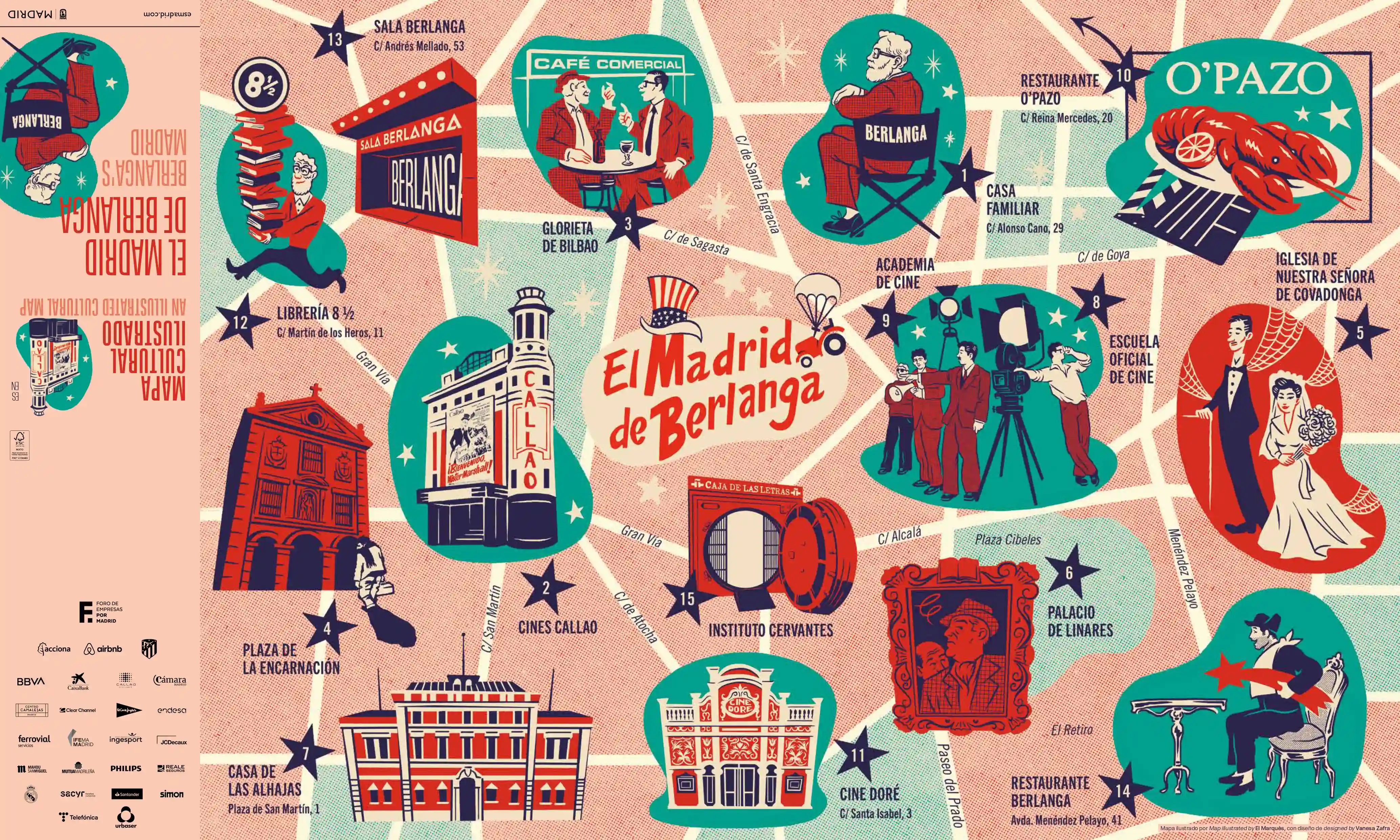
The map "Berlanga's Madrid" is a tribute to one of the most influential and beloved filmmakers in Spanish cinema, Luis García Berlanga. This map invites us to immerse ourselves in his cinematic universe, visiting the places that shaped both his personal and professional life. One of its most notable stops is the Berlanga Theatre on Calle Andrés Mellado, a space dedicated to the screening and promotion of Spanish cinema, where Berlanga's work has been celebrated and rediscovered on numerous occasions.
Another essential stop on this tour is the Academy of Cinema on Calle Zurbano, which preserves the memory and history of national cinema. It also serves as a meeting point for directors, actors, and film lovers.
The map also leads us to the iconic Café Comercial in Glorieta de Bilbao, a place where Berlanga often met with colleagues and friends from the world of cinema. This emblematic café, with over a century of history, evokes the spirit of a bohemian and creative Madrid, immortalising the director’s connection with the city. Equally, the Cine Doré, with its charming façade and nostalgic atmosphere, stands as a must-see stop. Here, the most memorable films of Spanish cinema have been and continue to be shown, making it a space where Berlanga remains ever-present. The colours and retro aesthetic of the "Berlanga's Madrid" map transport us to the golden age of Spanish cinema, inviting us to explore the city through the eyes of a master who skilfully and humorously portrayed the light and dark sides of Spanish society.
Ava's Madrid
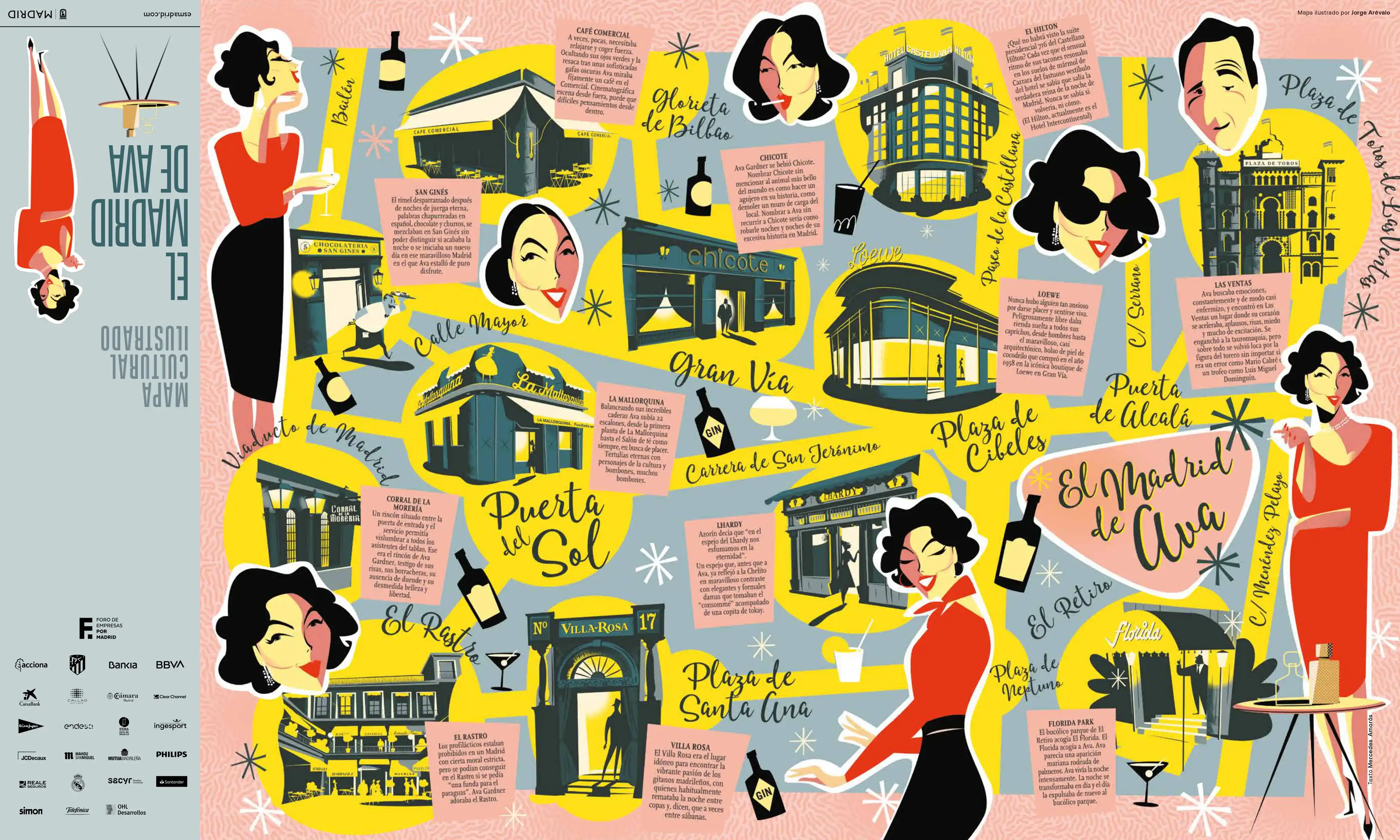
The "Ava's Madrid" map immerses us in the fascination that the Spanish capital exerted on the American actress Ava Gardner during her stay in the city. Her life in Madrid was marked by a free spirit and a love for bohemian culture, leading her to frequent places that became iconic settings. The map highlights the legendary Museo Chicote, located on Gran Vía. This elegant bar, known for its sophisticated atmosphere and legendary cocktails, was one of Ava’s favourites. There, amidst drinks and conversations, she shared nights with great personalities from the worlds of cinema and culture, marking a turning point in Madrid’s nightlife.
Another essential stop is Plaza de Santa Ana, a place rich in history and culture, surrounded by theatres like the Teatro Español, where the actress enjoyed the bohemian and festive atmosphere that characterised the capital. Nearby, in the Literary Quarter, the essence of Madrid’s literary and artistic spirit is palpable, with taverns and cafés that combine tradition and modernity, reflecting Ava Gardner’s own duality: glamorous, yet also a lover of the simple and authentic.
The map also invites us to explore other corners such as Villa Rosa, a flamenco tablao that symbolises the fusion of the traditional and the cosmopolitan, and El Rastro, a market that represents the vitality and diversity of the city. This journey illustrates how Madrid was more than a refuge for the actress; it was a space of freedom where she could be herself and leave an indelible mark.
These illustrated cultural maps are more than just guides; they are visual narratives that allow us to travel through a city that has witnessed countless stories. Madrid reveals itself as a cultural mosaic, inviting us to explore its streets and rediscover each corner with a new perspective. Whether through the eyes of Almodóvar, Berlanga, Ava Gardner or any other artist, the city emerges as a space in constant evolution, a living work of art that beckons to be explored again and again..
For those who wish to immerse themselves in the cinematic atmosphere of the capital and stay in a hotel on Gran Vía, one of the city’s most emblematic and filmed avenues, our Vincci Vía 66 4* and Vincci Capitol 4* hotels not only offer a unique experience due to their privileged location but are also surrounded by the very same settings immortalised on the big screen.
Vincci Vía 66 4*
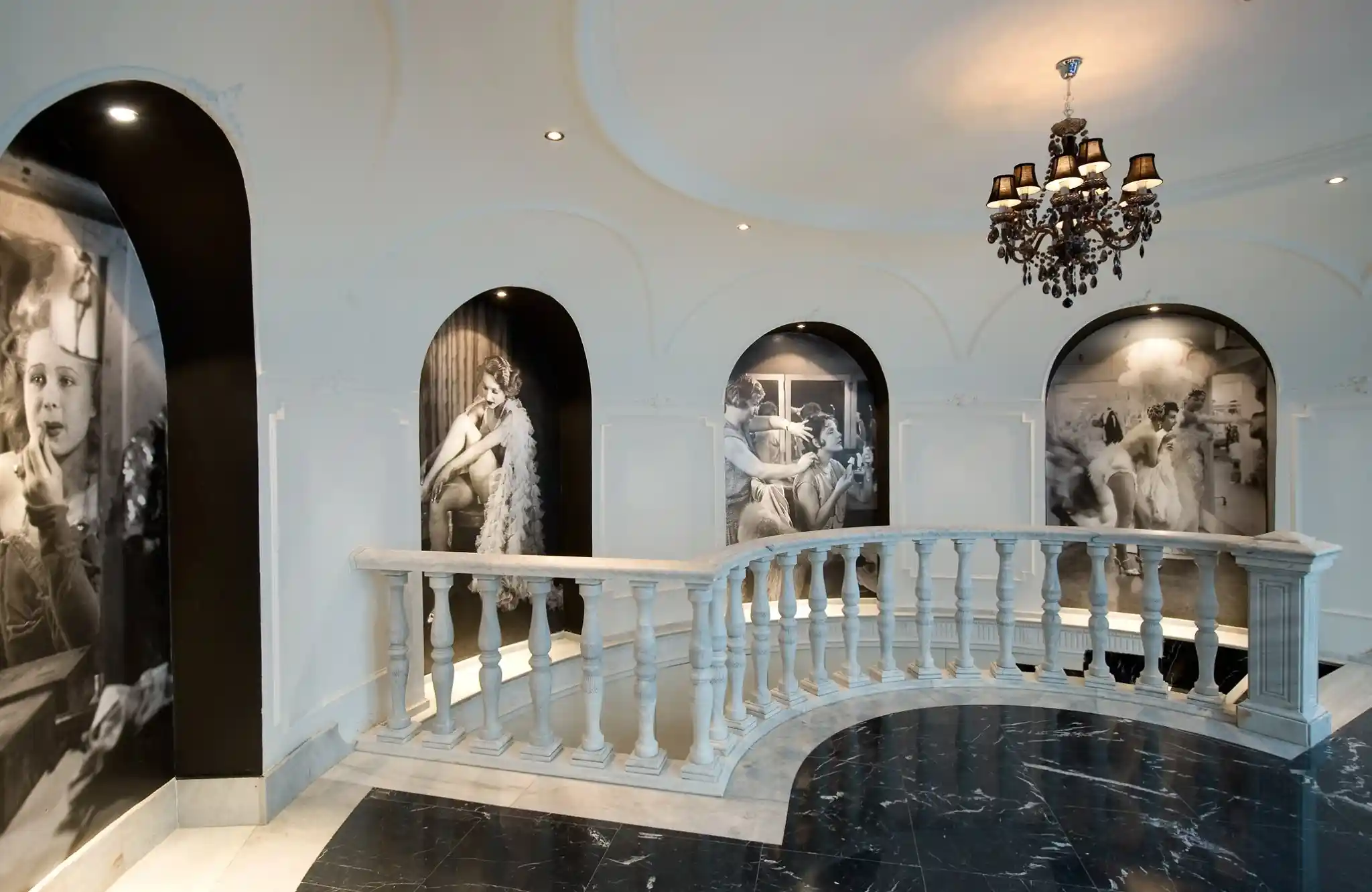 Vincci Vía 66 4*
Located on the iconic Gran Vía, the Vincci Vía 66 4* is a four-star hotel that stands out for its elegant and contemporary design. Strategically situated in the heart of the city, it offers easy access to key attractions such as Plaza de España and the Royal Palace, making it an ideal choice for those who wish to explore the cultural and artistic life of Madrid.
Vincci Capitol 4*
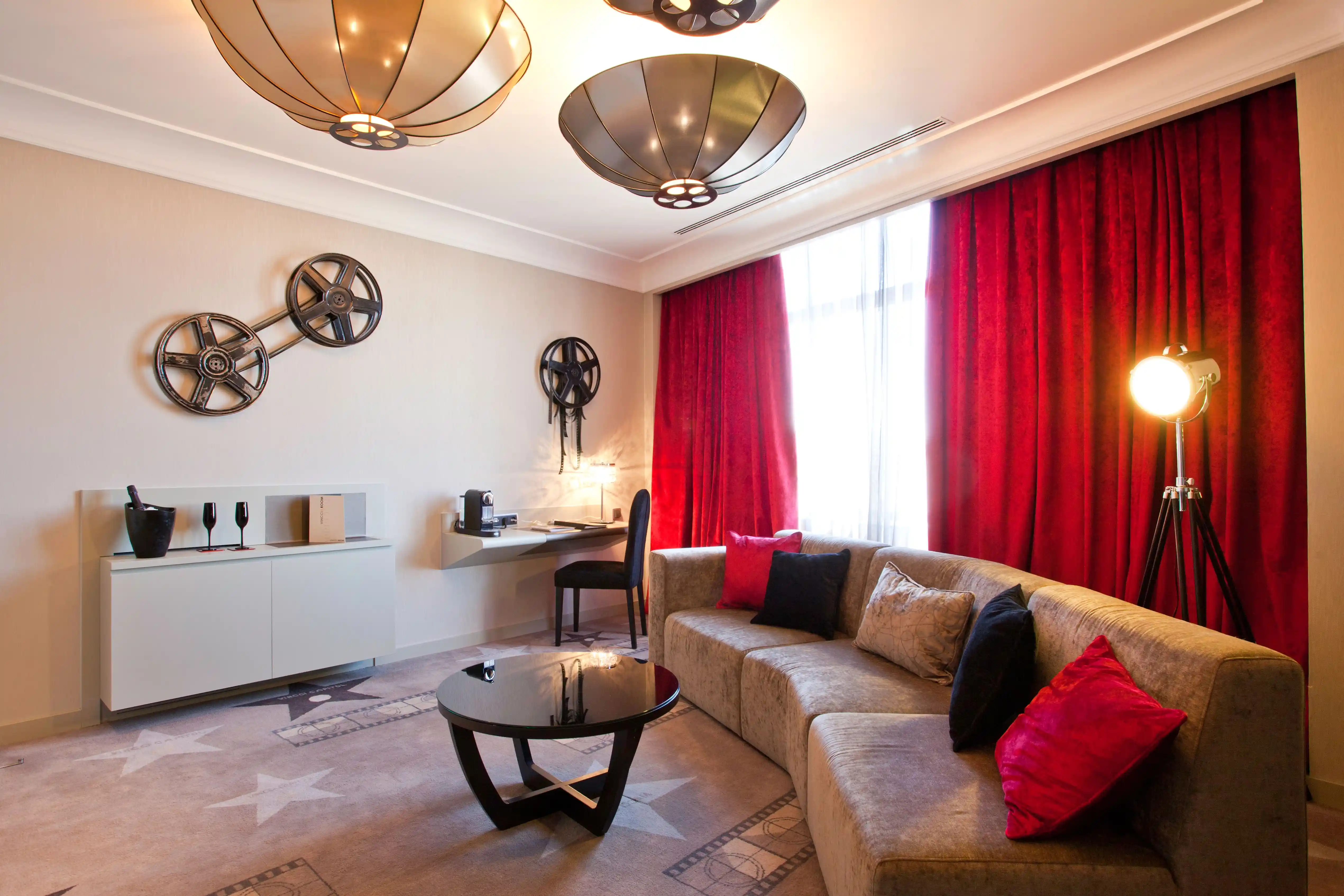 Vincci Capitol 4*
Situated in another iconic building on Gran Vía, the Vincci Capitol 4* hotel is known for its Art Deco architecture. This place offers a unique experience for film lovers, as it is located within the same building as the famous Capitol Cinema, one of the city’s most recognised theatres. Its façade also hosts the legendary Schweppes sign, a luminous symbol that has become an iconic image of Madrid and has appeared in numerous films, such as The Day of the Beast by Álex de la Iglesia, where the sign plays a crucial role in one of the film’s most memorable scenes, symbolising the chaos and intensity of the city. This connection to cinema, along with its film-themed rooms, makes Vincci Capitol 4* a place rich in history and culture, a must-visit destination for those who wish to immerse themselves in the cinematic essence of the capital.
"Come. Be surprised. Discover more than 40 four- and five-star hotels where every experience is unique. Open your eyes. Look out. Enjoy the most privileged locations. See. Touch. Feel a design and style that is appreciated in every detail. Rest. Relax. Let yourself be cared for by a service where you are the focus. Dream. Smile. Live. You are in a Vincci."
TRAVEL.LIVE.VINCCI.
Enjoy your travels more
subtitle_categories_andromeda
paragraph_categories_andromeda
Vincci Talks
Our podcast, a series of close encounters where relaxed conversations are held on various topics of general interest, with special guests who bring their expert and unique insights.
View moreVincci Expert
Immerse yourself in Vincci Local Expert and explore the best of each destination where our hotels are located. From local events to exclusive activities at our establishments, here you will find everything you need to live a Vincci experience.
View moreVincci Experiences
Explore the space where we store all the unique experiences you can have with us.
View moreVincci Getaways and destinations
Discover in our blog all the information about getaways and holiday destinations you need.
View moreVincci Gastronomy
Explore our posts section about the exquisite gastronomy we offer.
View moreUnique Events
Explore our posts section, the place to discover detailed information about special events, both social and corporate.
View moreTravel tips and recommendations
Our selection of posts offering an indispensable guide to finding tips and recommendations that inspire every journey.
View moreVincci Sustainable and responsible
Discover in our posts section about our sustainable and responsible initiatives.
View moreVincci Corporate Hotels
Our section of highlighted news reflecting the excellence and trajectory of our hotel chain.
View more


